
 English
 中文简体
中文简体 русский
 فارسی
فارسی عربى
عربى Deutsch
PVC Multi-Layer Laminating Machine: Working Principles and Selection Guide
Content
- 1 What a PVC Multi-Layer Laminating Machine Actually Does
- 2 Core Components and How They Work Together
- 3 Types of PVC Multi-Layer Laminating Machines
- 4 Material Compatibility: What Can Be Laminated
- 5 Key Production Parameters to Understand
- 6
- 7 What to Look for When Comparing Equipment
- 8 Common Defects and How to Prevent Them
- 9 Maintenance Practices That Protect Machine Performance
What a PVC Multi-Layer Laminating Machine Actually Does
A PVC multi-layer laminating machine is a piece of industrial equipment designed to bond multiple layers of PVC film, sheet, or card material into a single unified structure using a combination of heat, pressure, and — depending on the system — adhesive. The output is a laminated composite with properties that none of the individual layers could deliver on their own: improved rigidity, surface durability, visual clarity, or embedded functionality such as RFID inlays, holograms, or printed data layers.
This type of equipment sits at the center of production lines for ID cards, bank cards, access control cards, loyalty cards, PVC overlays, and a range of industrial sheet products. The "multi-layer" designation is important — it distinguishes this class of machine from simple single-ply laminators used in office or graphic arts settings. A PVC multilayer laminating press is engineered to handle structured layer stacks, maintain precise alignment across the bond cycle, and apply consistent pressure and temperature across the full platen area to avoid delamination, warping, or layer shift in the finished product.
Core Components and How They Work Together
Understanding the main components of a PVC multi-layer lamination machine helps when evaluating equipment specifications or diagnosing production issues. Each subsystem plays a direct role in the quality and consistency of the laminated output.
Heating Platens
The platens are the flat heated surfaces that apply temperature to the layer stack during the lamination cycle. In most PVC laminating presses, platens are heated by electric resistance elements embedded within the platen body, with temperature uniformity across the surface being a critical performance parameter. High-quality machines maintain platen temperature uniformity within ±2°C across the full working area. Uneven heating is one of the most common causes of bond inconsistency, surface blistering, or warping in laminated PVC card and sheet products.
Hydraulic or Mechanical Press System
Pressure is applied through either a hydraulic cylinder system or a mechanical toggle mechanism, depending on the machine design. Hydraulic systems offer finer pressure control and are more common in high-output production environments, where consistent clamping force across varying stack thicknesses is important. The applied pressure during the lamination cycle typically ranges from 80 to 200 kg/cm² for PVC card lamination, though exact parameters depend on the number of layers, total stack thickness, and the specific PVC formulation being processed.
Cooling Section
After the heat-and-pressure bonding cycle, the laminated stack must be cooled under continued pressure before it is released. This cooling stage is not optional — releasing pressure while the PVC is still above its softening temperature causes warping and dimensional distortion. Machines with integrated cooling platens circulate chilled water through the platen body to bring the stack temperature down to a safe release point, typically below 40°C. The cooling cycle length is a significant factor in overall machine throughput.
Layer Alignment and Fixture System
Multi-layer PVC lamination requires precise registration between layers, particularly when the stack includes printed graphics, magnetic stripes, RFID inlays, or holograms. Most machines use steel registration pins and precisely machined carrier frames or books to hold the layer stack in alignment throughout the cycle. The accuracy of this fixture system directly affects the positional tolerance of features in the finished card or sheet — a critical parameter for ID and payment card production where ISO/IEC 7810 compliance requires strict dimensional control.
Types of PVC Multi-Layer Laminating Machines
The market for PVC lamination equipment covers a range of machine configurations suited to different production volumes, product types, and levels of automation. The main categories are worth understanding before making any equipment decision.
Flatbed Hydraulic Laminating Press
The most widely used configuration for PVC card lamination. Flatbed presses process a fixed-size sheet or card book per cycle, with heating and cooling either handled in the same platen or in separate stations. Single-opening presses process one book at a time; multi-opening presses can handle several stacks simultaneously, significantly increasing throughput without increasing floor footprint. These machines are the standard choice for ID card bureaus, card manufacturers, and personalization centers.
Continuous Roll Laminating Machine
Roll-to-roll or roll-to-sheet multilayer PVC laminators feed material continuously through heated rollers rather than processing discrete books in a batch press. This configuration suits high-volume production of PVC overlay film, protective laminate, and flexible sheet products where dimensional uniformity over long runs is more important than the precise layer registration required for card production. Output rates are significantly higher than flatbed presses, but setup and material handling are more complex.
Automated Multi-Station Lamination Lines
For high-volume card manufacturers producing millions of cards per year, fully automated lamination lines integrate book assembly, press loading, heat-and-cool cycling, unloading, and inspection into a single continuous system. These lines reduce manual handling, improve cycle consistency, and support traceability requirements for secure document and payment card production. Capital cost is significantly higher, but labor cost per card and defect rates are substantially lower than semi-manual flatbed press operations.
Material Compatibility: What Can Be Laminated
PVC multi-layer laminating equipment is primarily designed around rigid and semi-rigid PVC, but the range of compatible materials is broader than the name suggests. The following table outlines common materials processed on PVC multilayer laminators and the relevant considerations for each.
| Material | Typical Application | Key Processing Note |
| Rigid PVC sheet | ID cards, bank cards, loyalty cards | Bonds without adhesive at correct temperature and pressure |
| PVC overlay film | Surface protection layer on cards | Typically 30–100 micron; clear or holographic |
| PETG sheet | Secure ID and e-passport data pages | Requires adjusted temperature profile vs. standard PVC |
| ABS sheet | Durable card cores for access control | Higher lamination temperature required |
| RFID inlay | Contactless smart cards and fobs | Pressure and temperature must not damage antenna or chip |
| Magnetic stripe material | Payment and access cards | Must be positioned on correct layer face before lamination |
| Holographic overlay | Security and anti-counterfeiting labels | Sensitive to excess temperature; requires precise cycle control |
Key Production Parameters to Understand
Getting consistent, defect-free output from a PVC multi-layer lamination machine depends on dialing in a set of interdependent process parameters. These are not one-time settings — they need to be validated for each new material combination and revisited when materials or environmental conditions change.
- Lamination temperature: Standard rigid PVC laminates at between 140°C and 180°C depending on the formulation and layer count. Running too low results in incomplete bonding and delamination; too high causes surface marking, color shift in printed layers, or damage to embedded components. Always validate temperature at the platen surface, not just at the controller setpoint.
- Cycle pressure: Pressure must be high enough to ensure full contact bonding across the entire stack surface but not so high that it causes material squeeze-out at the sheet edges or damages embedded inlays. Starting points for rigid PVC card lamination are typically in the 100–150 kg/cm² range, adjusted based on stack thickness and material response.
- Heat cycle duration: The time the stack spends under heat and pressure affects how fully the PVC layers fuse. Thicker stacks or more complex layer structures require longer heat dwell times to ensure the core temperature reaches the bonding threshold. Insufficient dwell is a common cause of internal delamination that is not visible at the surface during initial inspection.
- Cooling cycle duration and exit temperature: The stack should not be released until its temperature is reliably below 40°C throughout its cross-section. Rushing the cooling cycle to improve throughput is one of the most common causes of post-lamination warping in PVC card and sheet production.
- Stack construction and layer count: The sequence in which layers are assembled — core sheets, printed layers, overlays, and any embedded components — must follow a validated build specification. Layer sequence errors are not always detectable until the product fails in the field or during quality inspection.
What to Look for When Comparing Equipment
Selecting the right PVC multilayer laminating press involves more than comparing platen size and maximum pressure. The following factors have a significant impact on long-term production quality and operating cost and are worth examining carefully during equipment evaluation.
Platen Temperature Uniformity
Ask suppliers for documented temperature mapping data across the full platen area under operating conditions. A specification of ±2°C or better is the benchmark for reliable PVC card lamination. Machines that cannot demonstrate this level of uniformity will produce inconsistent bond quality across the sheet, with areas near the platen edges or heating element junctions often showing different characteristics than the center zone.
Number of Openings
Multi-opening presses process several card books simultaneously within a single heat-and-cool cycle, multiplying output without extending cycle time. A four-opening press processing the same cycle time as a single-opening press delivers roughly four times the throughput. For operations planning to scale volume, the number of openings is often the single most important throughput lever in flatbed lamination equipment.
Control System and Programmability
Modern PVC laminating machines should offer PLC-based control with touchscreen interfaces that allow multiple lamination programs to be stored and recalled by product type. This is important for operations running multiple card or sheet specifications, as manually reconfiguring temperature, pressure, and cycle time parameters between jobs introduces the risk of operator error. Look for systems that log cycle data for traceability purposes, which is increasingly required by customers in the payment card and secure ID sectors.
Cooling System Design
Water-cooled platens with a dedicated chiller unit provide faster and more consistent cooling than air-cooled alternatives. Confirm the cooling water flow rate, chiller capacity, and the minimum achievable exit temperature at the rated production cycle speed. In high-throughput environments, inadequate cooling capacity is a frequent bottleneck that limits effective output regardless of how fast the heating cycle runs.
Frame Rigidity and Parallelism
The machine frame must be rigid enough to maintain platen parallelism under full operating pressure. Frame flex under load causes uneven pressure distribution across the stack, resulting in bond quality variation from one side of the sheet to the other. Inspect the frame construction and ask for parallelism specifications under full load — a tolerance of 0.05mm or better across the platen area is a reasonable benchmark for card-grade lamination equipment.
Common Defects and How to Prevent Them
Most quality issues in PVC multi-layer lamination can be traced back to a small number of root causes. Knowing what to look for — and where to look for it — makes troubleshooting significantly faster.
- Delamination: Separation between layers after the lamination cycle is complete. Usually caused by insufficient temperature, pressure, or dwell time, or by contamination on the layer surfaces before assembly. Ensure material surfaces are clean and dry before stacking, and validate that cycle parameters reach bonding conditions at the core of the stack, not just the surface.
- Warping or bowing: Curved or non-flat finished sheets or cards. Most commonly caused by uneven temperature across the platen, asymmetric layer construction, or premature pressure release during cooling. Check platen uniformity and ensure cooling cycles are completed fully before unloading.
- Surface marking or texture transfer: Visible marks, texture, or impressions on the finished card surface. Often caused by contaminated or worn separator plates or steel books. Inspect and clean separator plates regularly, and replace them when surface condition degrades.
- Layer misregistration: Printed graphics, overlays, or embedded components are out of position relative to each other in the finished product. Caused by worn or incorrectly sized registration pins, loose fixture frames, or incorrect layer assembly. Inspect registration tooling regularly and validate stack assembly against a written build specification.
- Blistering or bubbling: Air or gas pockets trapped between layers, visible as raised areas on the finished surface. Often caused by moisture in the PVC material or by lamination temperature rising too quickly before air has time to escape. Pre-dry materials if moisture absorption is suspected, and review the temperature ramp rate in the heating cycle profile.
Maintenance Practices That Protect Machine Performance
A PVC multi-layer laminating machine is a precision piece of equipment, and its long-term output quality depends heavily on how consistently it is maintained. The following practices form the basis of a sound preventive maintenance program for this type of equipment.
- Platen surface inspection and cleaning: Inspect platen surfaces at the start of each production shift for contamination, residue buildup, or surface damage. Clean with appropriate solvents and inspect for flatness periodically. Even minor surface irregularities transfer to the laminated product surface.
- Temperature calibration: Verify platen temperature accuracy using a calibrated surface thermocouple or thermal mapping system at scheduled intervals — at minimum quarterly, or more frequently in high-volume operations. Controller display temperatures and actual platen surface temperatures drift over time as heating elements age.
- Hydraulic system maintenance: Check hydraulic fluid level, condition, and pressure regularly. Replace fluid at manufacturer-specified intervals and inspect hoses, seals, and cylinder condition for leaks or wear. Hydraulic pressure inconsistency translates directly into bond quality variation.
- Cooling circuit maintenance: Flush and treat cooling water circuits to prevent scale buildup and biological contamination in the platen channels. Scale accumulation reduces heat transfer efficiency and leads to uneven cooling across the platen surface over time.
- Registration tooling inspection: Check registration pins and fixture frames for wear, deformation, or dimensional drift at regular intervals. Replace worn components before positional tolerances in the finished product fall outside specification limits.
Recommended Products
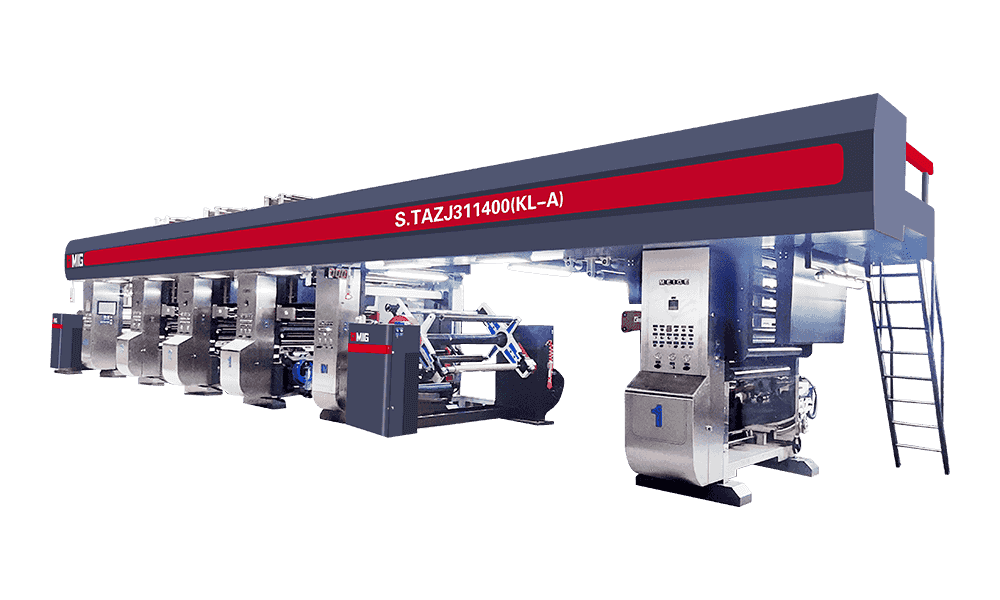
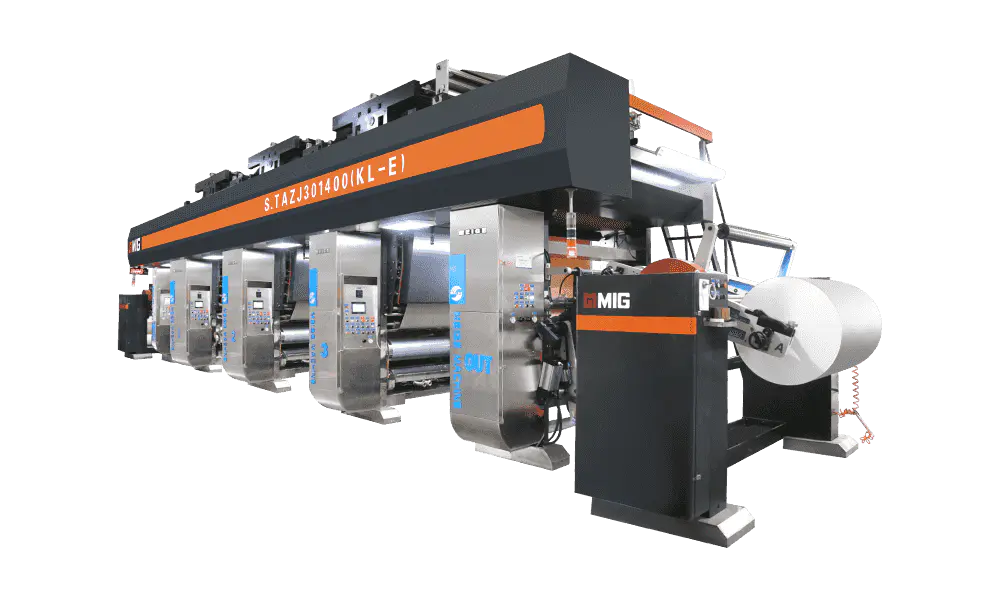
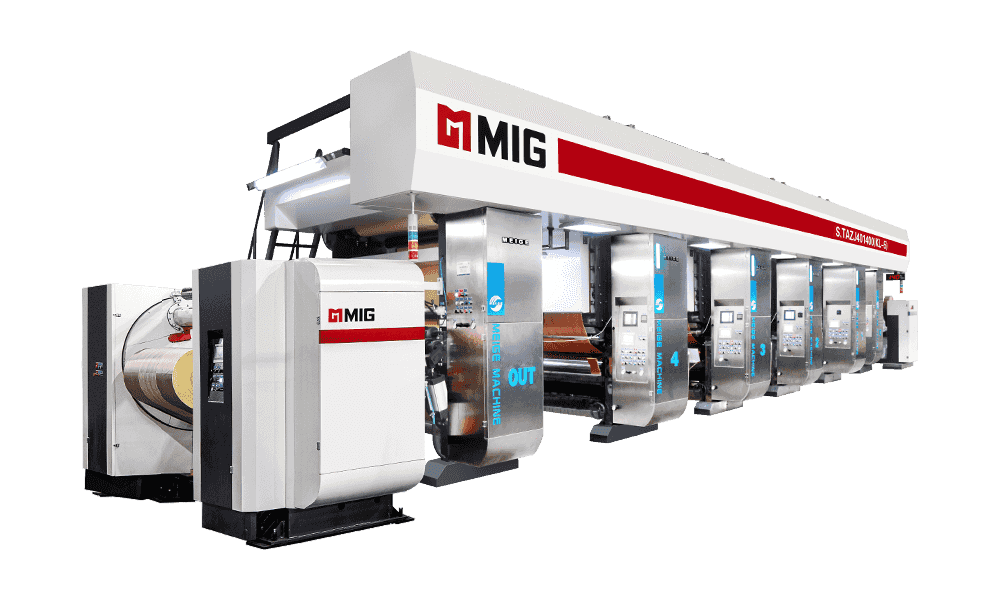
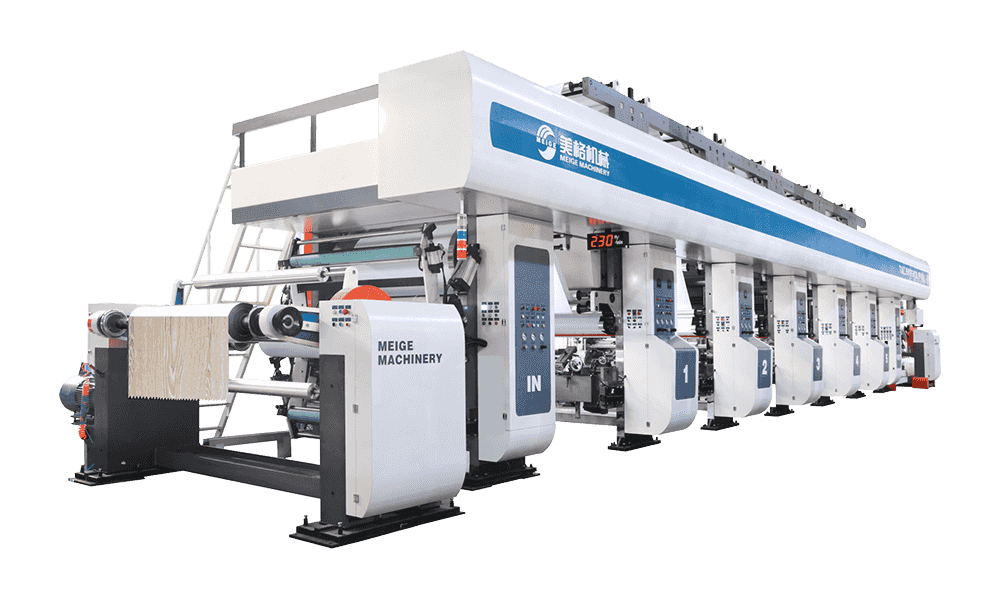
The variety of models, to meet the development needs of various regions in the world.
Message Us Right Now!
Quick Links
Products
Contact Us
- Phone: +86-13067738802 (Manager Hua)
- Tel: +86-0571-61071715
- Fax: +86-0571-61071706
- Mail: [email protected]
- Add: No.32 Wujiatou, Qingke Village, Jincheng Street, Lin'an District, Hangzhou City, Zhejiang Province

Copyright © Zhejiang Meige Machinery Technology Co., Ltd. All rights reserved.
 Privacy Rotogravure Printing Machine Manufacturers