
 English
 中文简体
中文简体 русский
 فارسی
فارسی عربى
عربى Deutsch
Rotogravure Printing Machine: How It Works, What It Prints, and How to Choose the Right One
Content
- 1 How a Rotogravure Printing Machine Actually Works
- 2 Key Components of a Rotogravure Press
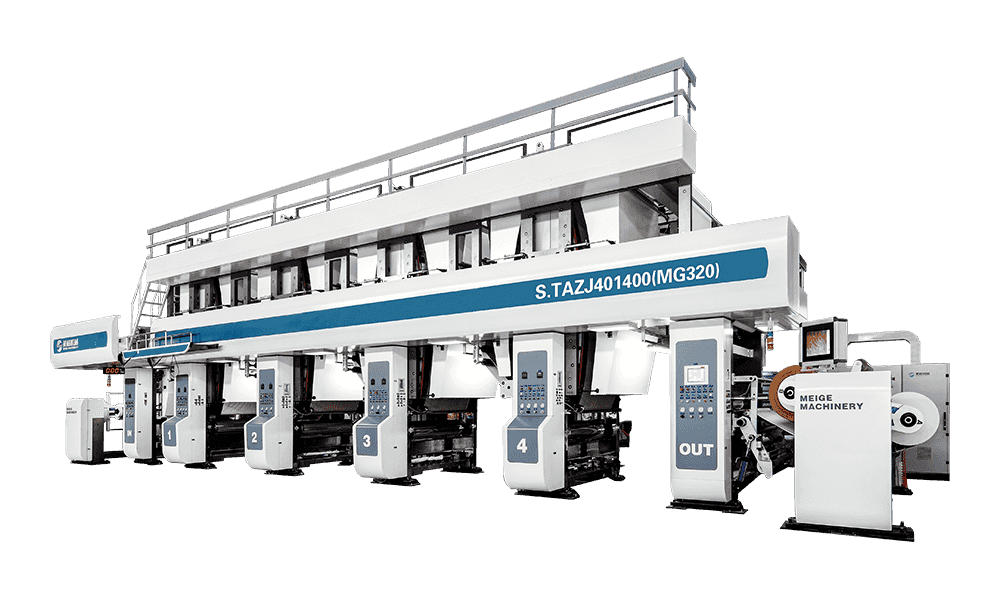
- 3 Types of Rotogravure Printing Machines
- 4 What Substrates Can a Rotogravure Machine Print On?
- 5 Rotogravure vs. Flexographic vs. Offset Printing: Key Differences
- 6 Print Quality Advantages of Rotogravure
- 7 Common Print Defects on Gravure Presses and Their Causes
- 8 What to Evaluate When Buying a Rotogravure Printing Machine
How a Rotogravure Printing Machine Actually Works
A rotogravure printing machine — also called a gravure press or intaglio rotary press — transfers ink onto a substrate by means of an engraved cylinder. The fundamental principle is straightforward: the surface of a chrome-plated copper cylinder is engraved with millions of tiny recessed cells arranged to form the image. The cylinder rotates through an ink trough, filling every cell with liquid ink. A doctor blade — a thin, rigid steel or polymer blade held against the cylinder surface — then scrapes the excess ink from the non-image (non-recessed) areas, leaving ink only in the engraved cells. As the substrate passes between the engraved cylinder and a rubber-covered impression roller, pressure forces the substrate into contact with the ink-filled cells, transferring the ink onto the material. The result is a print that picks up ink directly from the recessed image carrier — the defining characteristic of intaglio printing.
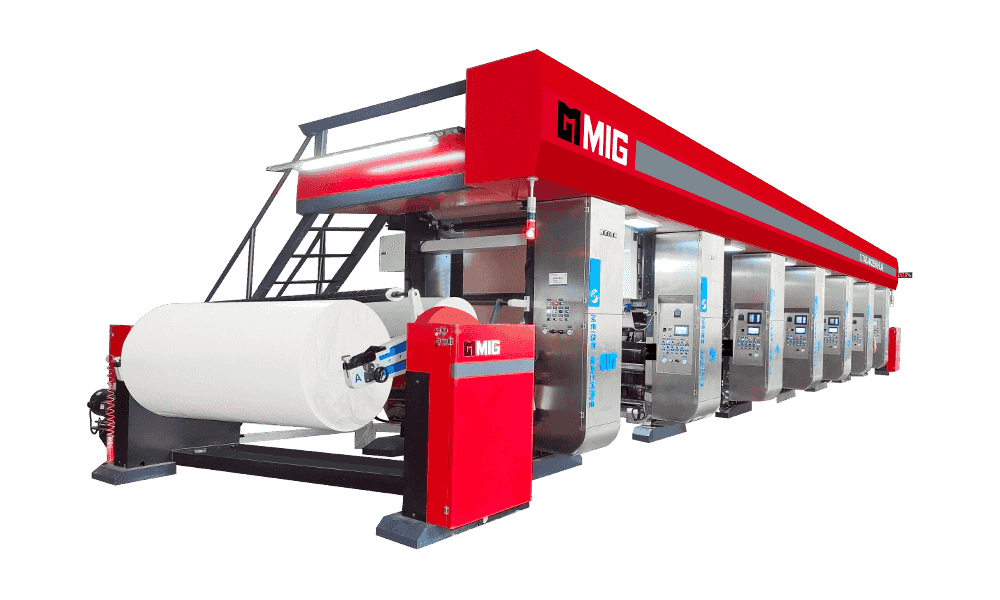
This process is repeated at each print station on the machine — one station per color. A modern rotogravure press for packaging typically has 6 to 12 color stations arranged in-line, each with its own engraved cylinder, ink system, and drying unit. The web of substrate (film, foil, or paper) passes continuously through all stations at speeds ranging from 100 to over 500 meters per minute, emerging at the end as a fully printed, multi-color product ready for downstream converting such as laminating, slitting, or pouching.
Key Components of a Rotogravure Press
Understanding what each part of the machine does helps with both evaluating equipment specifications and diagnosing problems when print quality issues arise.
The Gravure Cylinder
The engraved gravure cylinder is the heart of the entire process. A base steel cylinder is electroplated with a layer of copper — typically 100–150 microns thick — which is then engraved using either electromechanical diamond stylus engraving or laser engraving. After engraving, the cylinder is chrome-plated to a hardness of 900–1,000 Vickers to protect the cells from doctor blade wear during long production runs. The geometry of the cells — their depth, width, opening angle, and volume — determines how much ink is deposited and therefore the tonal density and color saturation of the printed image. Cell depths typically range from 12 to 45 microns depending on the ink density required. The cylinder circumference determines the print repeat length, which must match the bag, pouch, or label dimensions in the final product.
The Doctor Blade System
The doctor blade is a critical precision component that must maintain consistent, uniform contact pressure across the full width of the cylinder. Blades are typically 0.10–0.20 mm thick steel (or sometimes carbon fiber composite for abrasive substrates) and are held in a blade holder at a set angle — usually 55–65 degrees to the cylinder surface. Blade contact pressure must be optimized carefully: too light and residual ink on the non-image areas causes background haze and dot gain; too heavy and blade wear accelerates rapidly, shortening blade life and increasing the risk of cylinder scoring. Modern rotogravure machines include closed-loop doctor blade pressure control and oscillating blade mechanisms that spread wear evenly across the blade width, extending service life from hours to shifts or even full production runs.
The Impression Roller
The impression roller — a rubber-covered roll that presses the substrate against the engraved cylinder — controls the ink transfer efficiency and print uniformity across the web. Rubber hardness (Shore A) is selected based on substrate type and thickness: harder rubber (70–80 Shore A) for thicker, stiffer substrates; softer rubber (55–65 Shore A) for thin films and delicate materials. Impression roller condition is one of the most commonly overlooked factors in gravure print quality — a worn, deformed, or eccentric impression roller causes print mottle, missing dots, and inconsistent density across the print width. Impression rollers should be inspected and re-ground on a defined schedule based on run hours and substrate type.
The Ink Circulation and Doctor Blade Pan System
Gravure inks are low-viscosity, solvent-based or water-based liquids — typical working viscosity is 14–25 seconds in a Zahn Cup 2 — that must be continuously recirculated to maintain consistent viscosity, temperature, and color throughout the run. Each print unit has a dedicated ink pan, a recirculation pump, and a viscosity control system that automatically adds fresh ink or solvent to maintain the target viscosity as solvent evaporates during production. Viscosity is monitored either by inline viscometers or by timed cup measurements taken by the press operator at defined intervals. On modern servo-driven machines, viscosity control is fully automated, maintaining ±0.5 second accuracy over multi-hour runs — which directly translates to consistent ink film weight and color density from the start to the end of a production reel.
Drying Units
Between each color station, the substrate passes through a drying tunnel where heated air — typically at 60–120°C — evaporates the solvent or water carrier from the ink film before the next color is applied. Adequate drying between stations is critical: under-dried ink can cause blocking (layers sticking together on the reel), poor inter-coat adhesion, color contamination between stations, and solvent retention in the finished product — a particular concern in food packaging where residual solvents are subject to strict regulatory limits. The drying system represents a major portion of both the machine's energy consumption and its footprint. Infrared-assisted drying and heat recovery systems are increasingly integrated into modern gravure presses to reduce energy costs and comply with environmental regulations on solvent emissions.
Types of Rotogravure Printing Machines
Not all gravure presses are built the same way or designed for the same applications. The main machine configurations differ in how the print units are arranged, how the web is threaded, and what range of substrates and formats they handle.
In-Line (Stack) Gravure Presses
In a conventional in-line gravure press, the print units are arranged sequentially along a horizontal or slightly inclined web path. The substrate travels from an unwind stand through each print unit in succession, with a drying unit between each color station. This configuration is the most common for flexible packaging printing because it allows easy access to each print unit for cylinder changes, ink adjustments, and cleaning, and the web path is straightforward enough to minimize tension control complexity. In-line presses for packaging typically have 6–10 color units with a maximum web width of 800–1,400 mm and run at speeds of 150–400 m/min depending on substrate and print complexity.
Central Impression (CI) Gravure Presses
In a central impression configuration, multiple engraved cylinders are arranged radially around a single large central impression drum rather than in a sequential line. The substrate wraps around the central drum and passes each print station in turn. This design provides exceptional registration accuracy because the substrate is always held against the same central drum throughout all color printing — eliminating the web stretching and position drift between stations that can cause misregister in sequential in-line designs. CI gravure presses are preferred for extremely fine register work such as security printing, high-definition decorative printing, and specialty packaging requiring tight color-to-color fit tolerances below ±0.1 mm.
Publication Gravure Presses
Publication gravure machines are the largest gravure presses made — designed for very high-volume printing of magazines, catalogs, inserts, and advertising supplements on paper. These machines have extremely wide webs (up to 4,000 mm or more), run at speeds of 400–600 m/min, and are typically configured with 4 color units in CMYK for four-color process reproduction. Publication gravure presses are capital-intensive — a new machine can cost $10–30 million or more — and are economically viable only at run lengths in the tens of millions of copies. Their use has declined significantly with the growth of digital media, but they remain the most cost-effective printing method for ultra-high-volume periodical production.
Specialized Gravure Presses
Beyond packaging and publication, rotogravure technology is used in specialized applications including decorative printing of wood-grain and tile patterns on laminates and flooring substrates, security printing of currency and passports, transfer printing of decorative films, and functional printing of conductive inks in electronics manufacturing. These applications often use custom-configured machines with specialized ink handling systems, temperature-controlled web paths, or tension controls optimized for the particular substrate — from thick decorative paper to ultra-thin 6-micron aluminum foil.
What Substrates Can a Rotogravure Machine Print On?
The gravure process is extremely versatile in terms of substrate compatibility. Because it uses low-viscosity inks and gentle impression pressure, it can print on materials that other processes struggle with — including very thin films, metallic foils, and heat-sensitive substrates.
- Plastic films: BOPP (biaxially oriented polypropylene), PET (polyester), BOPA (biaxially oriented nylon), CPP (cast polypropylene), PE (polyethylene) — gravure printing on flexible film substrates is the largest single application of rotogravure machines globally, primarily for food packaging, consumer goods packaging, and pharmaceutical pouches.
- Aluminum foil: From 6-micron ultra-thin foil for pharmaceutical blister pack lidding to 25–40 micron foil for confectionery wrapping, gravure handles foil printing with consistent coverage that other processes achieve with more difficulty.
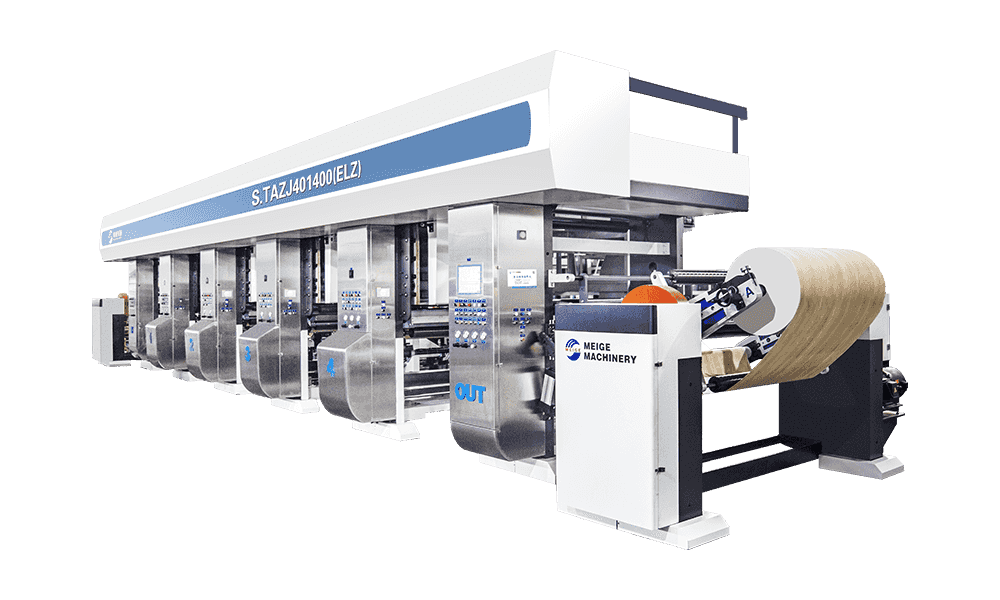
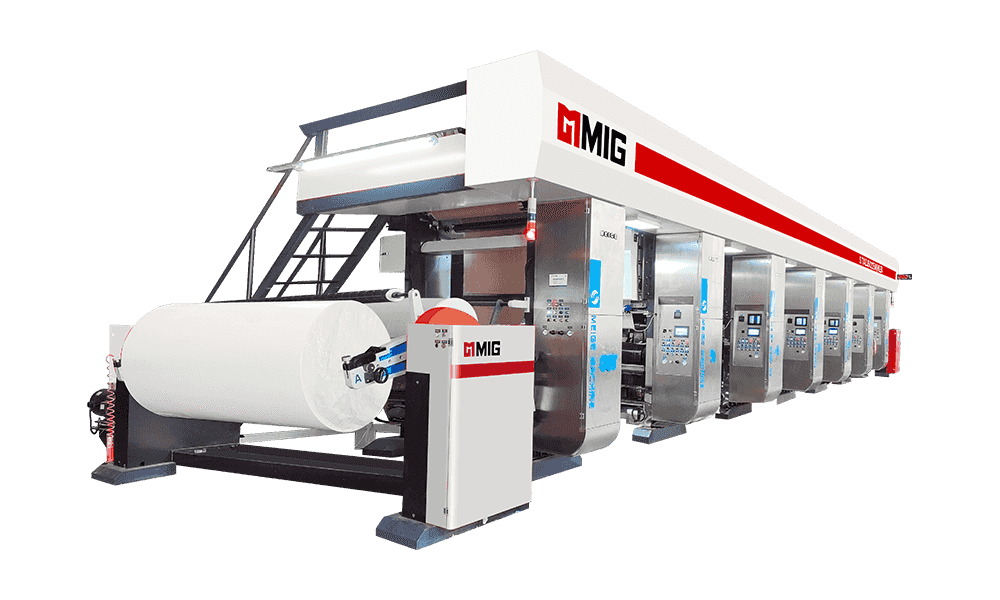
- Paper and board: Coated and uncoated paper grades for publishing, label stock, and flexible carton printing. Gravure's ability to produce smooth halftone gradients on paper makes it the process of choice for high-quality magazine printing.
- Laminated and metallized films: Metallized BOPP, metallized PET, and multi-layer laminates are common gravure substrates in snack food and confectionery packaging where barrier properties and visual metallic effects are both required.
- Non-woven fabrics: Some specialty gravure applications involve printing on non-woven polypropylene or polyester fabrics for healthcare product packaging, hygiene applications, and promotional materials.
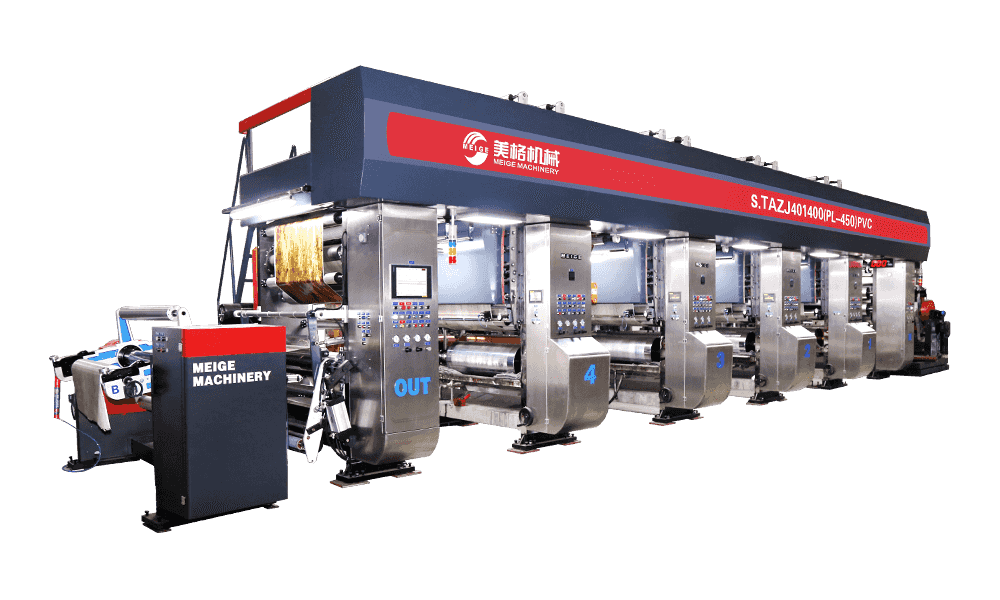
- Decorative substrates: Thick paper, impregnated decorative papers, and PVC films used in furniture laminates and flooring products are printed on gravure machines configured specifically for the high coating weights and large repeat patterns required in these decorative applications.
Rotogravure vs. Flexographic vs. Offset Printing: Key Differences
These three processes dominate commercial and packaging printing, and each has a distinct performance profile. Understanding the practical trade-offs determines which is the right choice for a given application and volume.
| Factor | Rotogravure | Flexographic | Offset (Sheet / Web) |
| Image Carrier | Engraved metal cylinder | Flexible photopolymer plate | Aluminum printing plate |
| Cylinder / Plate Cost | High ($300–$800+ per cylinder) | Medium ($80–$300 per plate) | Low ($20–$80 per plate) |
| Print Quality | Excellent tonal gradients, consistent density | Good to very good, improving with HD plates | Excellent for paper, limited on films |
| Minimum Economical Run Length | Very long (100,000+ linear meters) | Medium (10,000–50,000 m) | Short to medium (depends on format) |
| Production Speed | 150–500+ m/min | 100–400 m/min | Sheet: 10,000–18,000 sheets/hr |
| Substrate Flexibility | Very broad — films, foils, paper | Broad — films, corrugated, labels | Primarily paper and board |
| Changeover Time | Long (cylinder changes, ink washups) | Medium (plate and sleeve changes) | Short to medium |
| Best For | High-volume flexible packaging, publication | Mid-volume packaging, labels, corrugated | Paper, cartons, commercial print |
The fundamental economic reality of gravure printing is its high prepress cost amortized over very large run lengths. Engraving a full set of 8-color gravure cylinders for a new packaging design can cost $3,000–$8,000 or more, compared to $500–$2,000 for a comparable flexo plate set. At 500,000 linear meters of run length, this cost difference becomes negligible per unit — which is why gravure is the dominant process for the highest-volume consumer packaging. For shorter runs, flexo is almost always more economical despite its slightly lower maximum print quality ceiling.
Print Quality Advantages of Rotogravure
Rotogravure produces print quality characteristics that are genuinely difficult to match with other high-speed printing processes, particularly in specific technical areas that matter for premium packaging and publication work.
Smooth Tonal Gradients and Shadow Density
Because gravure deposits ink from physical cells of varying depth and area, it can produce extremely smooth, continuous-tone gradients — from the faintest highlight through mid-tones to deep, saturated shadows — without the visible dot patterns that characterize halftone-based printing processes. In premium confectionery packaging, cosmetics labels, and publication printing where photographic image quality is expected, gravure's ability to reproduce smooth skin tones, food textures, and atmospheric backgrounds is a genuine competitive advantage. Shadow density values of 2.5–3.0 OD (optical density) are achievable on gravure for saturated deep colors, compared to 1.7–2.0 OD typical of flexo.
Consistency Across Long Runs
Once a gravure cylinder is engraved and a job is approved on press, color density and print quality remain extremely stable for the duration of the production run — often hundreds of thousands of meters — because the image carrier (the engraved cylinder) does not change during the run. In flexo and offset printing, plate compression and wear can cause gradual density drift over long runs. For brand owners with strict color standards and very high volumes, gravure's run-length consistency is a significant quality assurance benefit that reduces the reject rate and minimizes the need for color correction stops during production.
Fine Line and Screen Printing
Modern laser engraving of gravure cylinders achieves screen rulings of 200–300 lines per cm (500–750 lpi equivalent), enabling extremely fine detail reproduction — text as small as 2-point can be reproduced cleanly, and fine security pattern printing requires the resolution that only engraved gravure cylinders can provide consistently. This is why gravure remains the process of choice for banknote printing, passport and identity document production, and other security applications where fine feature reproduction is a tamper-resistance requirement.
Common Print Defects on Gravure Presses and Their Causes
Even on well-maintained equipment, gravure printing has a set of characteristic defects that press operators and quality teams need to recognize and address quickly. Understanding the root cause helps pinpoint the fix faster.
- Missing dots (skipping): Small areas of the print appear as white specks or voids within solid or tinted areas. Most commonly caused by ink drying in the cells before transfer (ink viscosity too high or press speed too slow for the dryer temperature), or by a dirty or worn impression roller that fails to press the substrate fully into certain cells. Adjusting viscosity down and checking impression roller condition are the first corrective steps.
- Doctor blade streaks: Thin lines running in the machine direction (parallel to the web travel) through the print image. Caused by a nick, chip, or embedded particle in the doctor blade, or by a hardened ink particle lodged between the blade and the cylinder surface. Requires blade replacement or cleaning; persistent streaking may indicate cylinder chrome damage requiring re-chroming.
- Haze or toning: A faint background of ink color in non-image areas — visible as a color cast across nominally clear or white areas of the print. Caused by insufficient doctor blade pressure or a worn blade that no longer cleanly wipes the cylinder surface. Increasing blade pressure or replacing the blade typically resolves this immediately.
- Misregister: Color-to-color print alignment errors that make the image appear blurred or with colored fringes around fine details. Caused by web tension fluctuations between print units, substrate stretching due to temperature changes in the dryers, or worn register control systems. Requires tension system calibration, dryer temperature optimization, and potentially register control system maintenance or upgrade.
- Mottle: Uneven, patchy ink density in solid print areas — the surface appears blotchy rather than smooth and uniform. Common causes include uneven impression roller hardness (flat spots or worn areas), inconsistent substrate surface energy, or ink viscosity variation across the web width. Impression roller inspection and replacement, along with viscosity control audit, are the primary corrective actions.
- Blocking: Printed layers sticking to each other on the reel — detected when the reel is unwound and the print surface tears or transfers ink to the back of the adjacent layer. Caused by inadequate drying between stations or insufficient final drying before reel-up. Reducing press speed, increasing dryer air temperature or velocity, or adjusting ink formulation to a faster-drying solvent blend are the corrective measures.
What to Evaluate When Buying a Rotogravure Printing Machine
Whether you're investing in a new gravure press or sourcing a used machine, these are the specification areas that have the greatest impact on production capability, print quality, and total cost of ownership.
Web Width and Print Repeat Range
Maximum web width determines what format sizes and how many side-by-side print lanes the machine can handle. Most packaging gravure presses are built in widths of 800 mm, 1,000 mm, 1,100 mm, or 1,300 mm. A wider machine offers more layout flexibility and better economy per square meter at full web utilization, but it costs more, requires larger facilities, and demands wider cylinders that are heavier and more expensive to engrave. The print repeat range — the minimum and maximum cylinder circumference the machine can accept — defines the range of finished bag, pouch, or label heights the machine can produce. A wider repeat range gives more scheduling flexibility but requires a more complex cylinder carrier and print unit design.
Number of Color Units and Press Configuration
A 6-color press covers most general-purpose packaging work (CMYK plus two spot colors or coating units). An 8-color configuration adds flexibility for complex packaging with multiple brand colors, metallic effects, varnishes, or in-line primer and lamination. 10- and 12-color machines are used for the most complex decorative printing or multi-functional jobs requiring print plus coating plus lamination in a single pass. More color units mean higher machine cost, longer changeover time, greater energy consumption, and a longer press footprint — these factors need to be weighed against the revenue from the additional capability.
Drive System and Register Control Technology
Older gravure presses used mechanical lineshaft drives with pneumatic or hydraulic register correction — these systems are robust but slow to respond to register errors and require significant operator intervention to maintain tight color-to-color alignment. Modern presses use individual servo drives on each print unit, with closed-loop electronic register control systems that monitor register marks between each color and make continuous micro-corrections in real time. Servo-driven presses with automatic register control can achieve and maintain ±0.1 mm register accuracy across full-speed production runs, dramatically reducing waste at job start-up and allowing faster speed ramp-up after cylinder changes. If you're evaluating a used press, the age and specification of the drive and register system is as important as the mechanical condition of the cylinders and rollers.
Solvent Recovery and Environmental Compliance
Solvent-based gravure printing generates significant volumes of solvent-laden exhaust air from the drying units. Regulatory requirements in most countries mandate that these emissions be controlled — either through a solvent recovery system (activated carbon adsorption followed by steam or nitrogen desorption to regenerate the solvent for reuse) or a thermal oxidizer (RTO — regenerative thermal oxidizer) that burns the solvent vapor to CO₂ and water. A press without an integrated solvent management system either cannot legally operate in a regulated market or will require a significant additional capital investment in environmental controls. When evaluating any gravure press purchase, the specification of the abatement and recovery system is a critical due diligence item — both for regulatory compliance and for the economics of solvent reuse, which can offset a meaningful portion of ink consumable costs at high production volumes.
Ink System Compatibility: Solvent vs. Water-Based
The majority of gravure presses currently in operation use solvent-based inks, which produce the highest print quality and the fastest drying rates at speed. However, regulatory pressure on VOC emissions and brand owner sustainability commitments are driving significant investment in water-based gravure ink systems. Water-based gravure requires modified drying systems (higher air volume and temperature to evaporate water rather than solvent), corrosion-resistant ink circulation components, and reformulated ink systems that can match the viscosity behavior and press speed of solvent inks. New press purchases in markets with stringent emission regulations are increasingly specified for water-based ink compatibility from the outset, and some major packaging printers are retrofitting existing solvent presses for water-based operation. When specifying a new machine, clarifying whether the press is designed for solvent-only, water-based-only, or dual-capability operation has significant implications for both the machine specification and the long-term ink supply strategy.
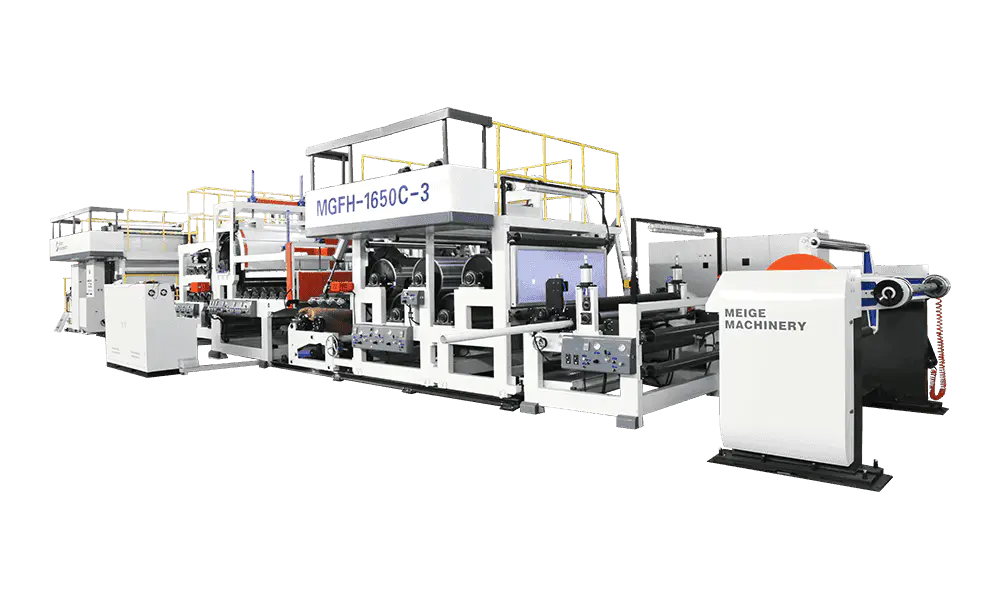
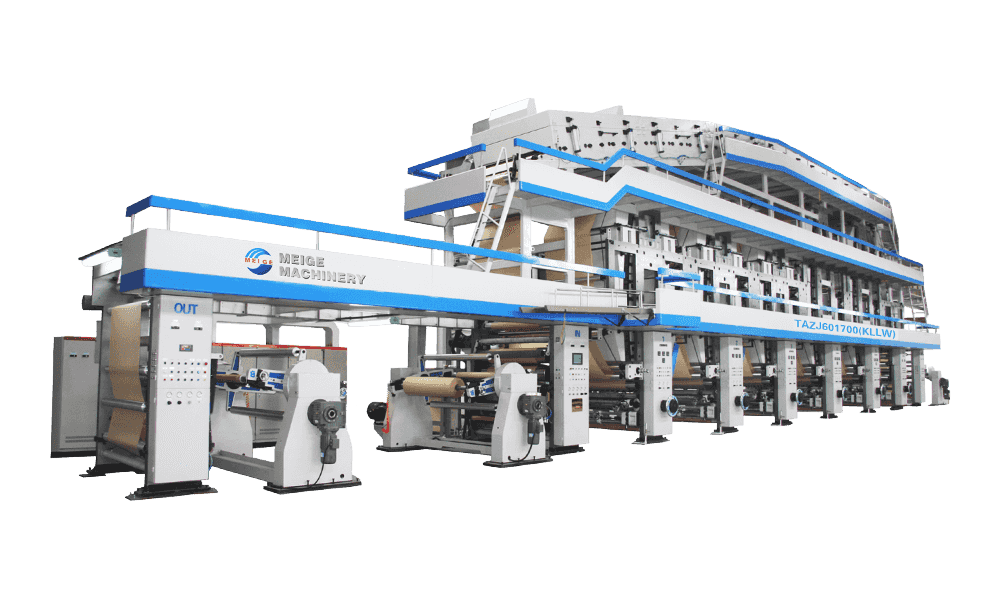
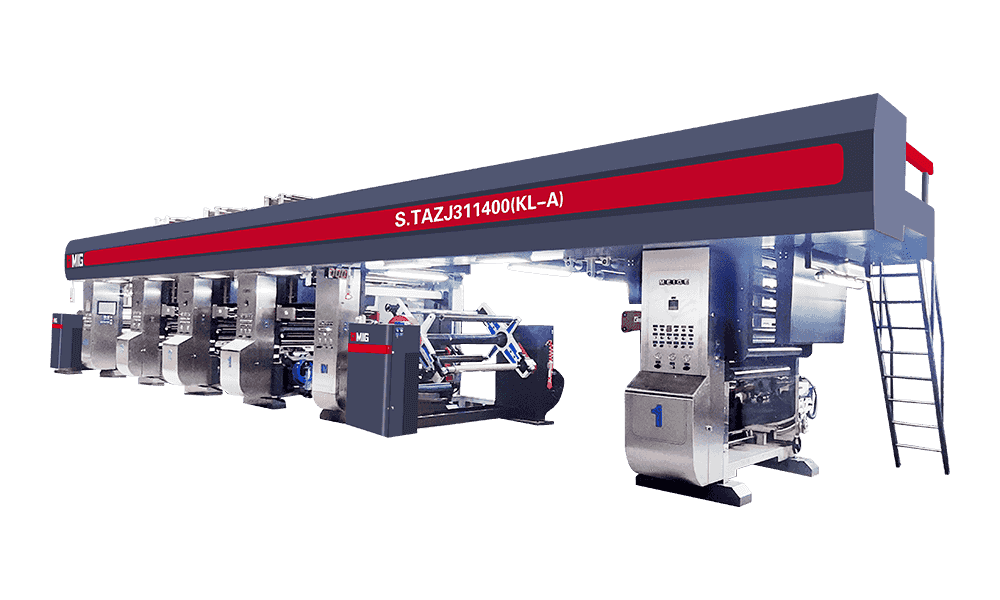
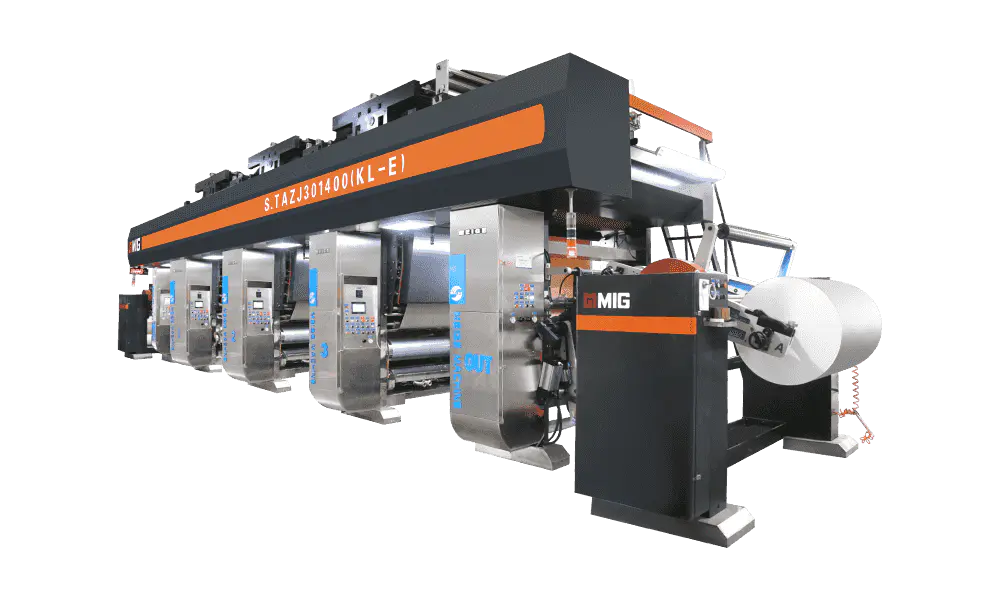
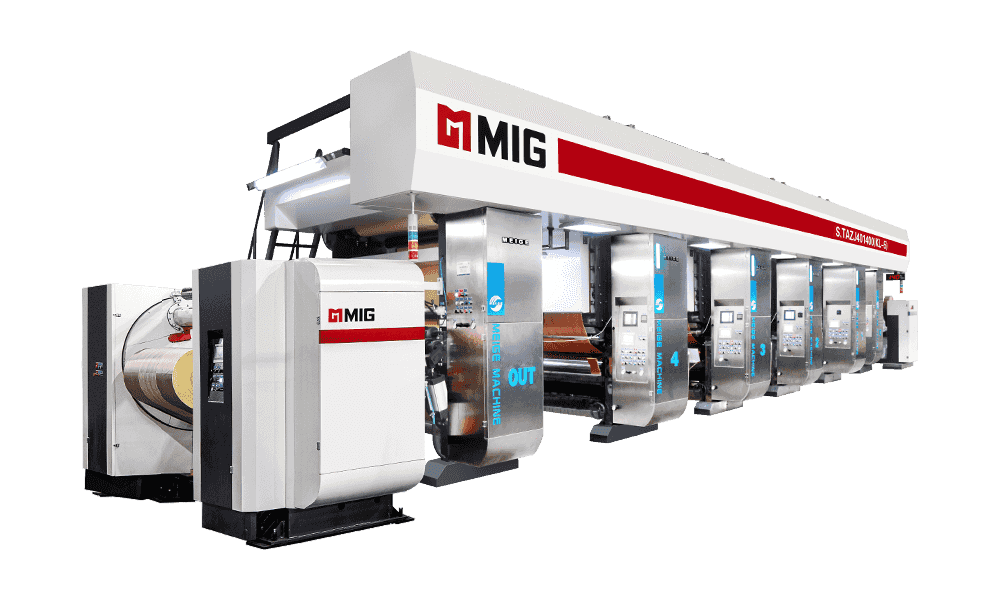
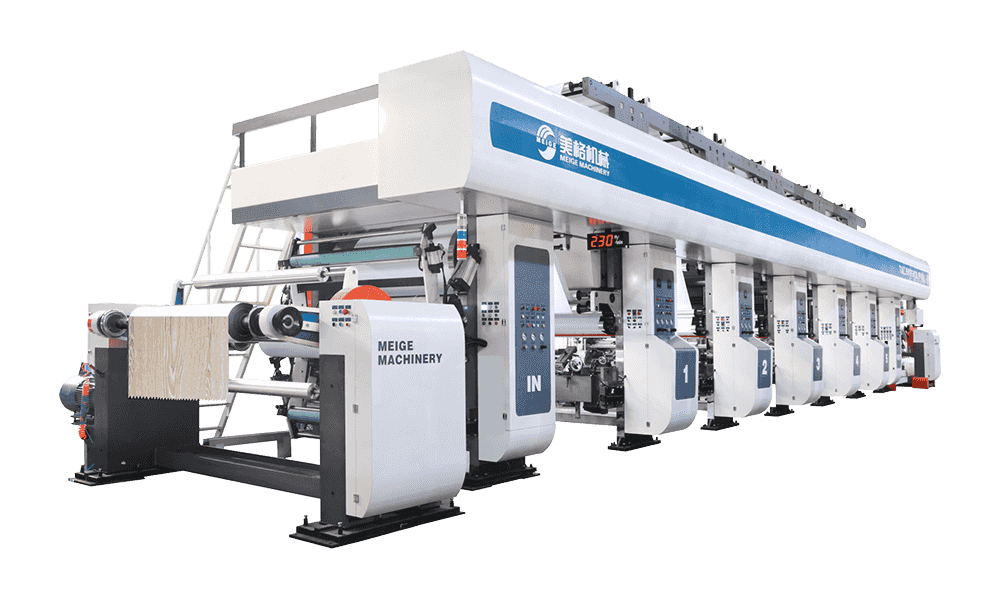
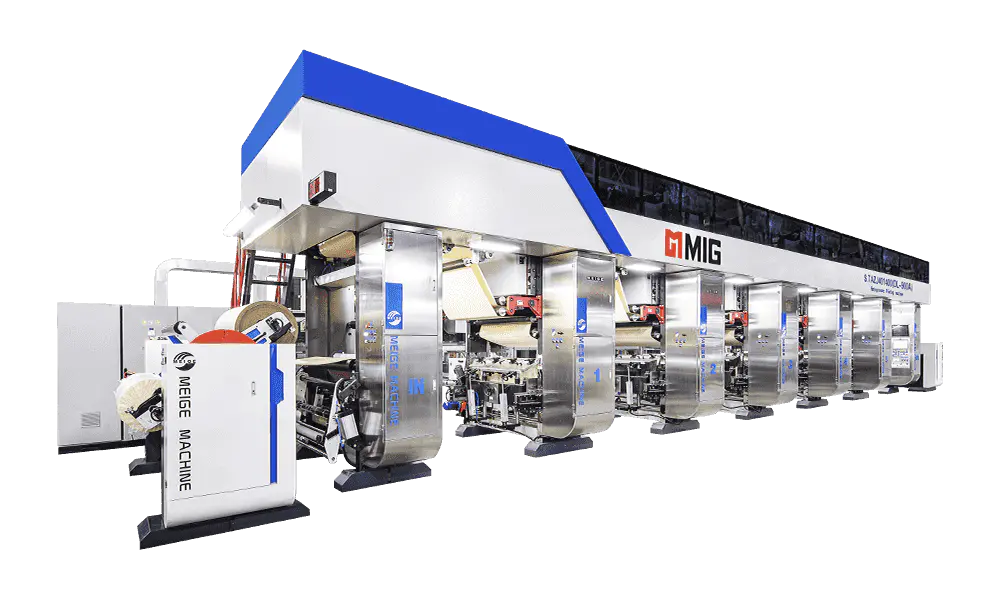
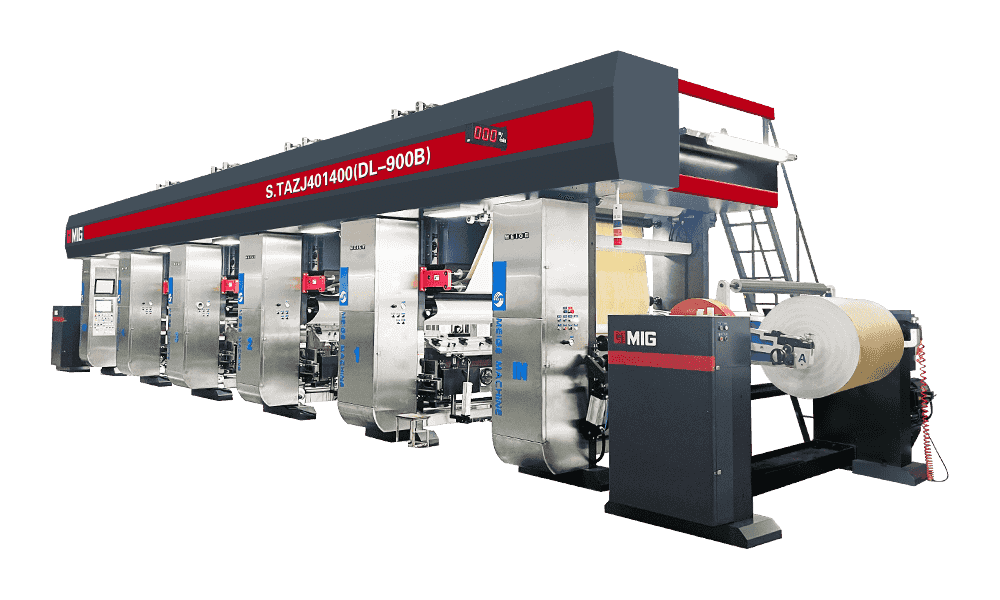
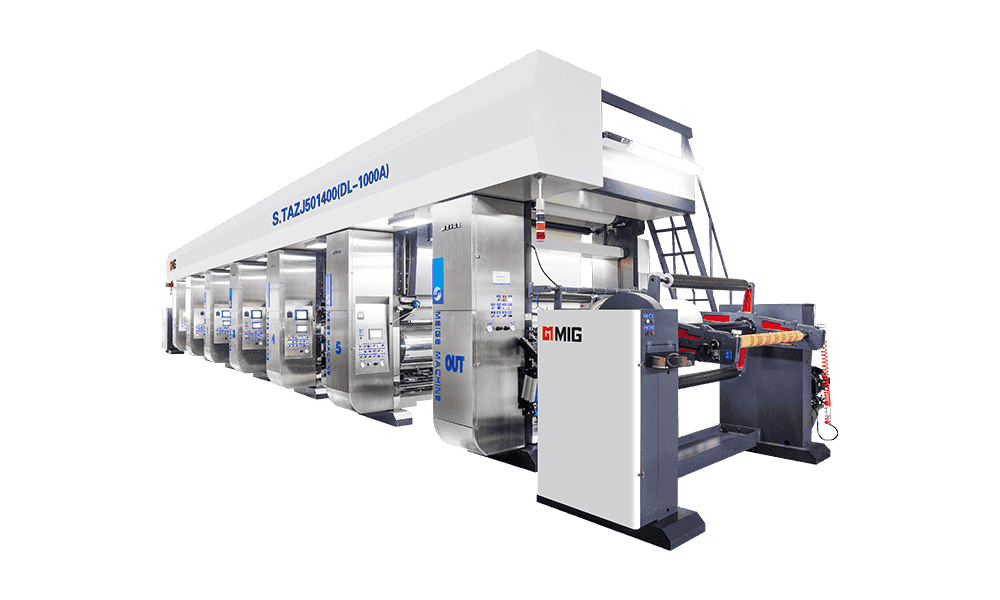
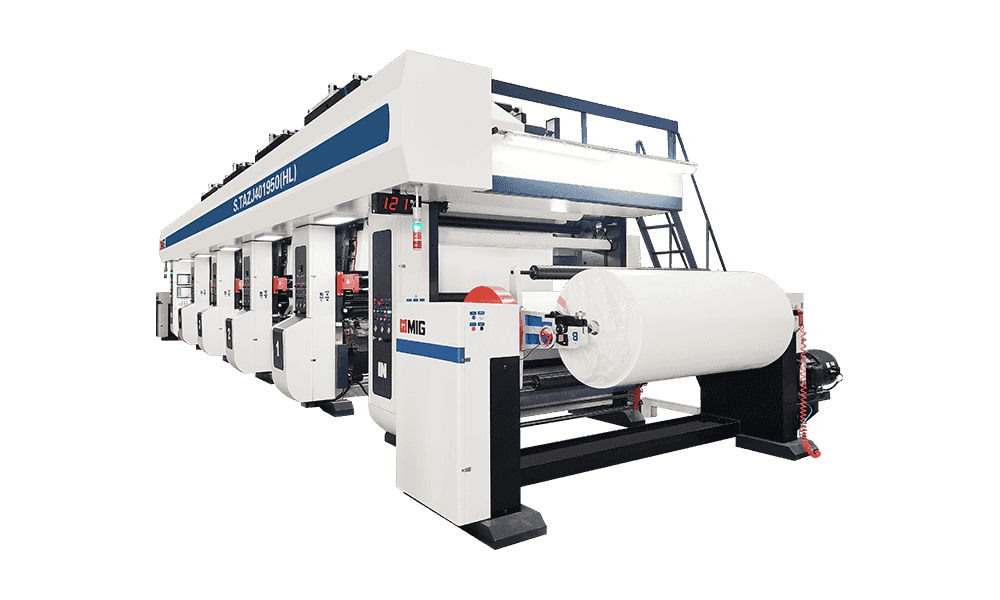
Recommended Products
The variety of models, to meet the development needs of various regions in the world.
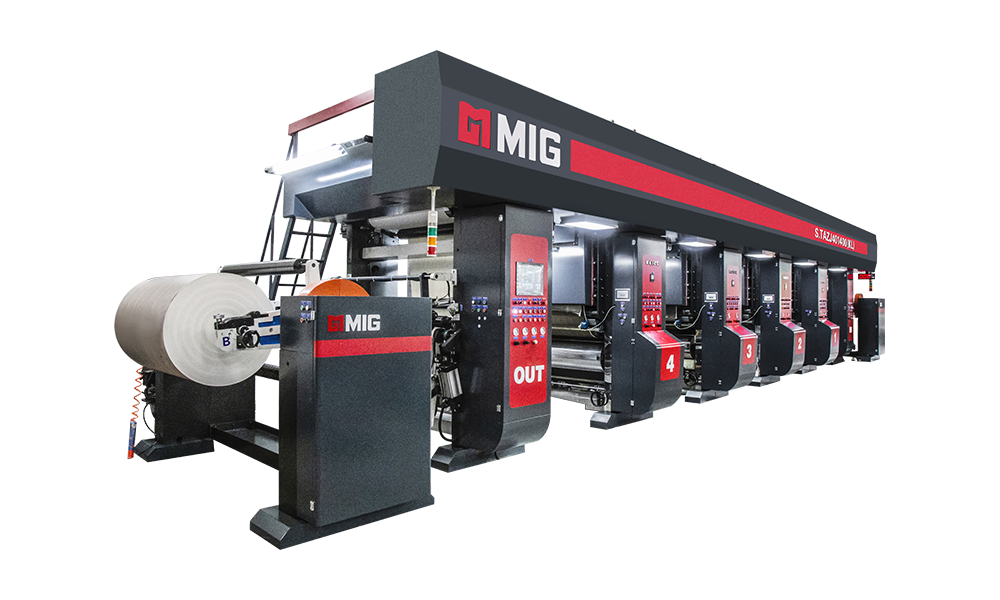
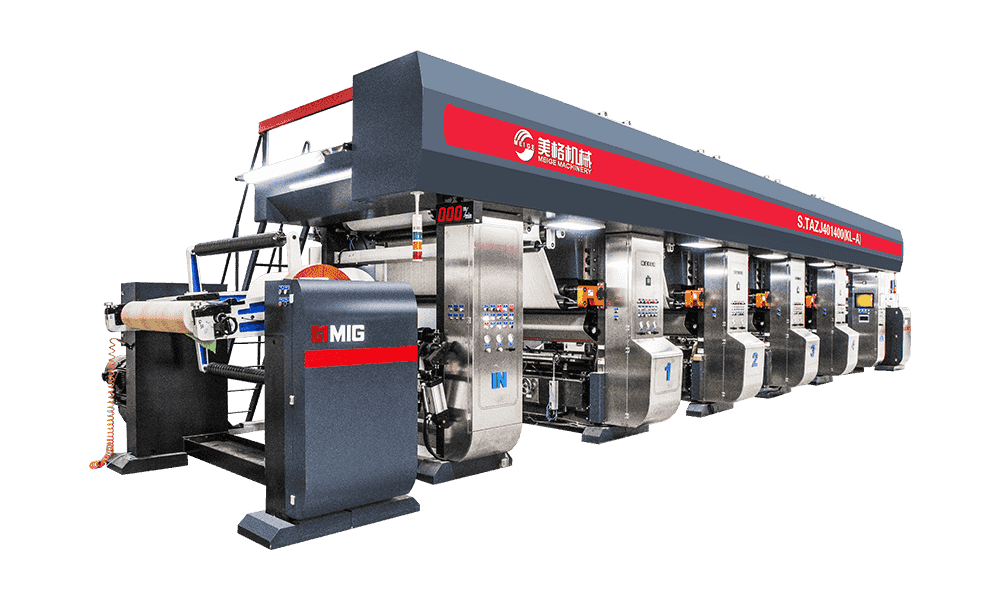
Message Us Right Now!
Quick Links
Products
Contact Us
- Phone: +86-13067738802 (Manager Hua)
- Tel: +86-0571-61071715
- Fax: +86-0571-61071706
- Mail: [email protected]
- Add: No.32 Wujiatou, Qingke Village, Jincheng Street, Lin'an District, Hangzhou City, Zhejiang Province

Copyright © Zhejiang Meige Machinery Technology Co., Ltd. All rights reserved.
 Privacy Rotogravure Printing Machine Manufacturers