
 English
 中文简体
中文简体 русский
 فارسی
فارسی عربى
عربى Deutsch
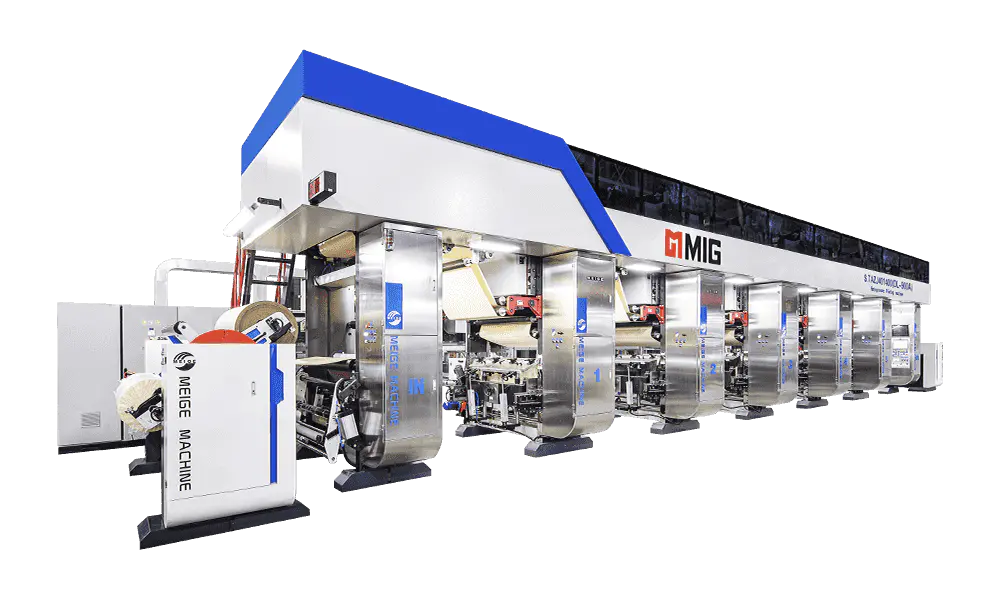
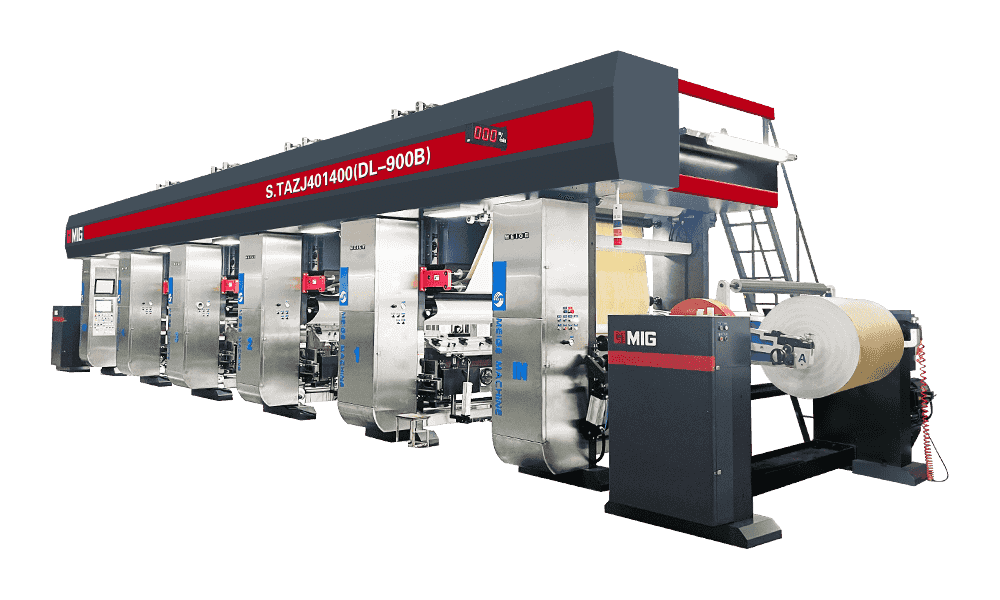
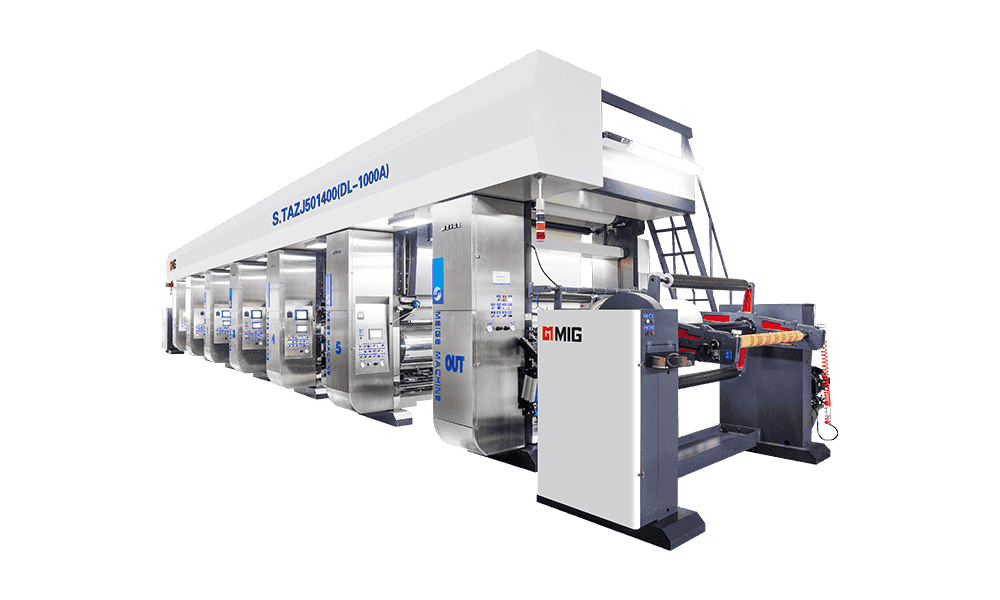
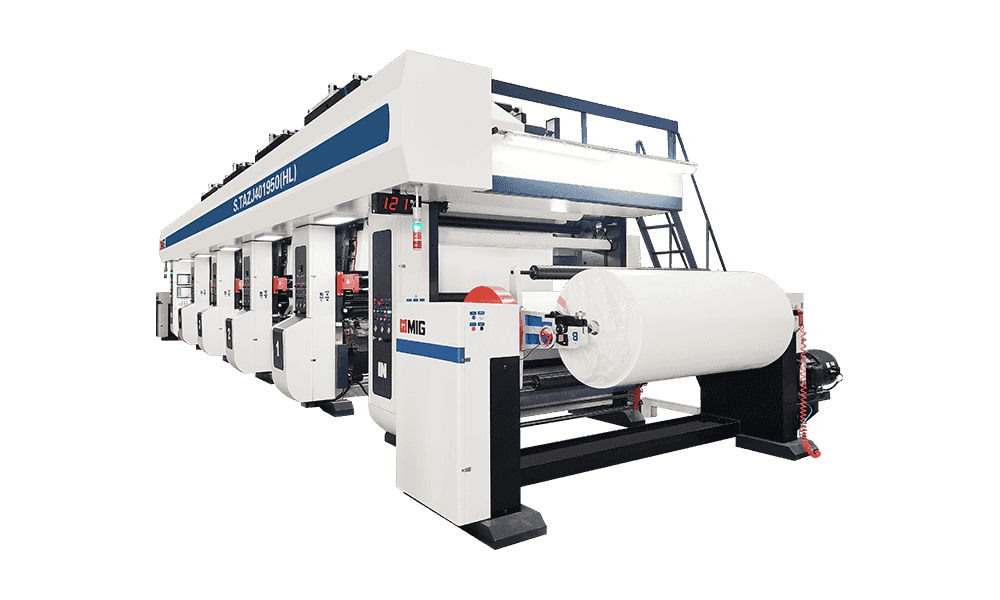
PU Paper Print Machine: Gravure Printing and PU Coating in One Production Line
If you work anywhere near decorative paper production, the phrase PU paper has probably come up more than once in the past year or two. It refers to a printed decorative surface that carries a polyurethane coating, and the machine behind it — a PU paper print machine — sits at the meeting point of two jobs that used to live in separate buildings: gravure printing and coating.
Our company has been building gravure equipment for decorative materials since 1999, so we have watched this shift happen from the factory floor rather than from a brochure. This article walks through what a PU paper print machine actually does, how the line is put together, and what is worth thinking about before you specify one.
Content
- 1 What Makes PU Paper Different from Ordinary Decorative Paper
- 2 Why Printing and Coating Belong on the Same Line
- 3 The Stations That Make Up a PU Paper Print Machine
- 4 Matching the Machine to Your Product Mix
- 5 Where PU Paper Ends Up
- 6 The Support Equipment Nobody Budgets For
- 7 Questions Worth Asking Before You Commit
What Makes PU Paper Different from Ordinary Decorative Paper
Standard decorative paper leaves the press as printed stock. Somewhere downstream it may be laminated, impregnated with resin, or pressed onto a board with adhesive. PU paper takes a different route: the printed surface receives a polyurethane coating during the production run, so the roll arrives at the next stage with most of its final surface already in place.
That coating is not decoration for its own sake. It defines the hand feel of the sheet, adds resistance to scratching, moisture and the everyday wear that furniture surfaces absorb, and lets the converter control gloss level instead of handing that decision to a laminator. For panels where the surface stays visible, this matters a great deal.
The practical consequence is that the printing press can no longer be judged only on how sharp its dots are. It also has to deliver a web that is dry, flat and dimensionally stable enough for the coating station to do its work properly.
Why Printing and Coating Belong on the Same Line
You can print on one machine and coat on another. Plenty of factories still do. But every time a roll is wound, moved, stored and unwound again, the web picks up a little more risk: tension marks, edge damage, dust, and the slow drift of register that comes from re-establishing conditions on a second machine.
Running both operations in line removes those handovers. The web is printed, dried and coated while it is still under controlled tension, so the register you set at the printing units tends to hold all the way through the coating stage. Waste drops, and so does the floor space you need.
Coating also raises the demand on drying. A wet polyurethane layer needs a well-managed temperature profile and enough dwell time to cure without blistering or trapping solvent, which is why heavy-duty coating and drying sections are designed around the coating load rather than the printing load.
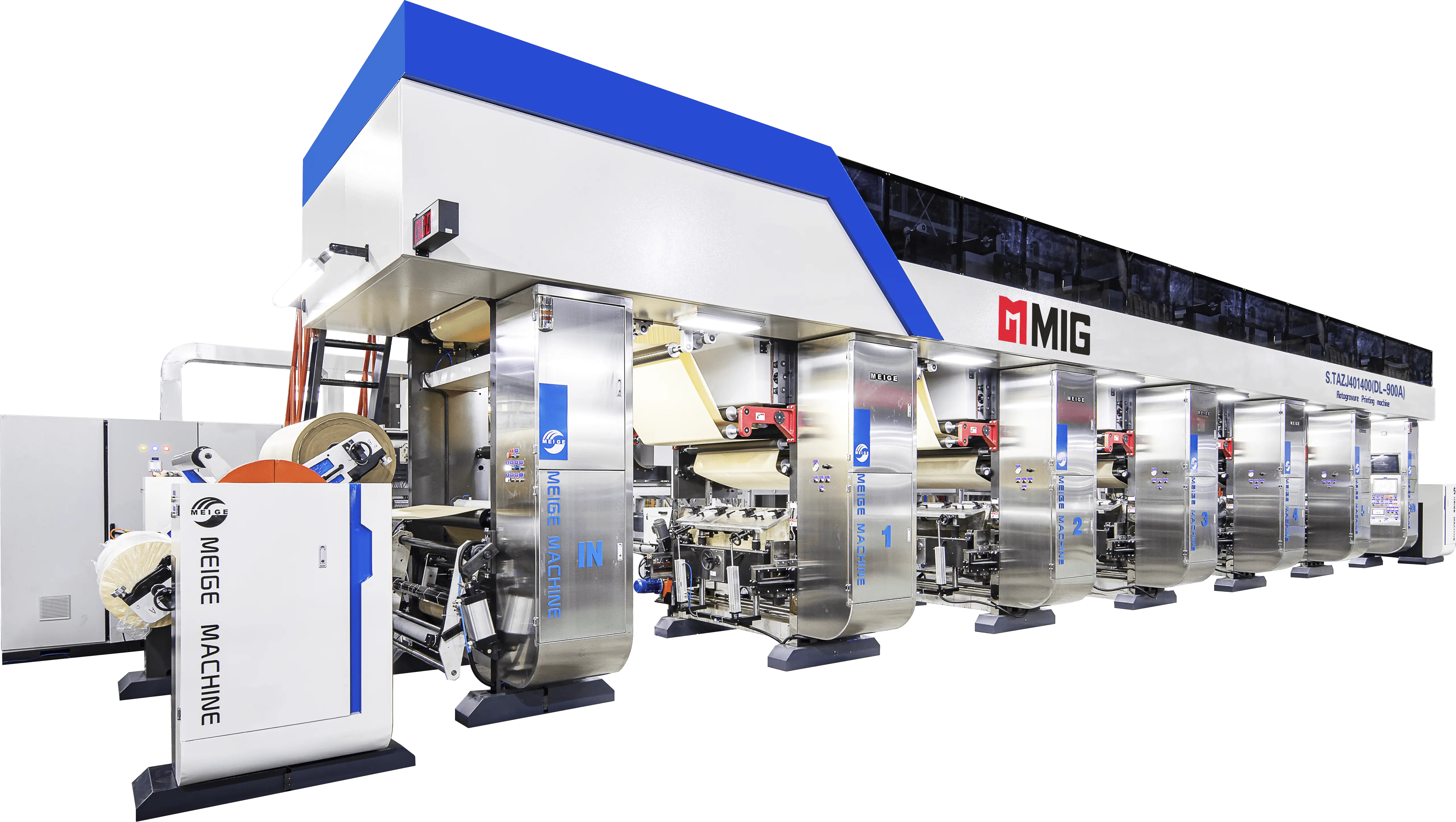
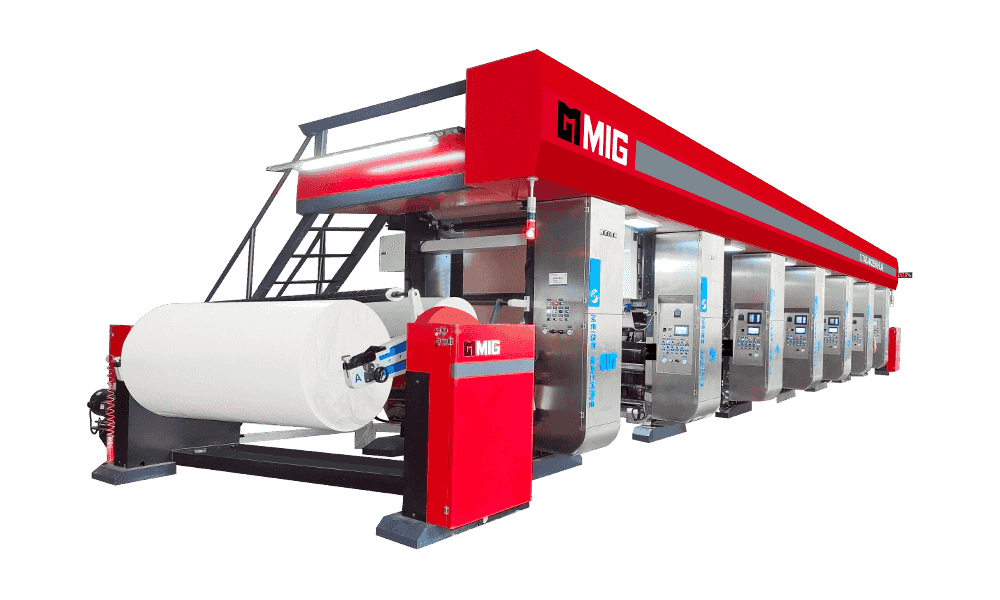
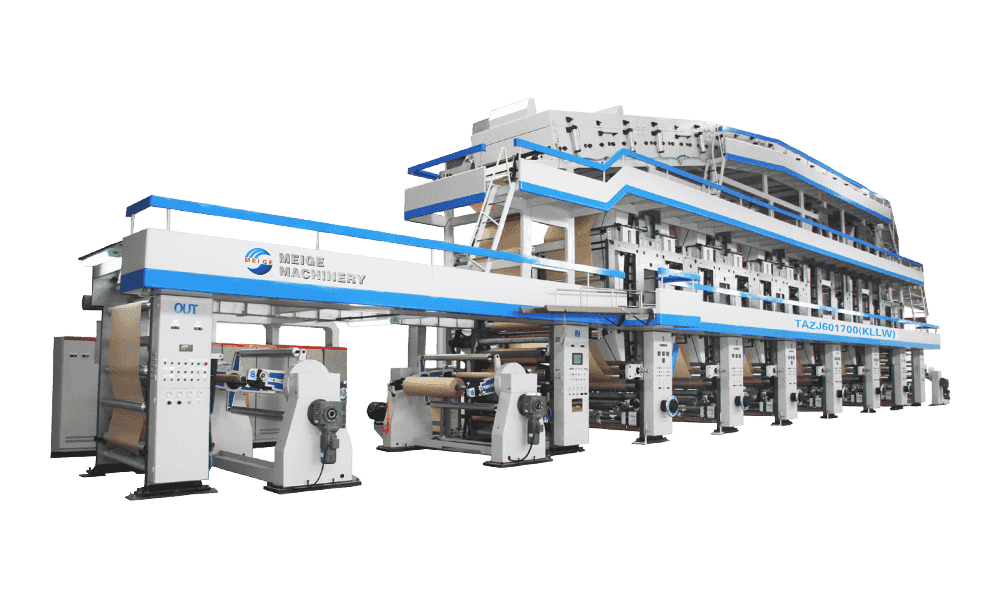 5-Foot PU Gravure Printing and Coating MachineDual printing and coating model for engineered wood decorative paper, with heavy-duty drying design suited to PU coating loads and high-speed production.View Product →
The Stations That Make Up a PU Paper Print Machine
Every line is configured differently, but the sequence is broadly the same whether you are running 4 colours or 7. The table below maps the main stations and what buyers usually want to examine at each one.
| Station | Primary Role | What Buyers Usually Examine |
|---|---|---|
| Unwind and tension control | Feeds the web at a steady rate | Roll diameter capacity, splicer, dancer response |
| Infeed and web guide | Aligns the web before the first print unit | Guide accuracy, register tolerance |
| Gravure printing units | Applies each colour from the engraved cylinder | Colour count, cylinder diameter, drive type |
| Inter-colour drying | Sets the ink between units | Air volume, solvent handling, energy use |
| PU coating unit | Applies the polyurethane layer | Coating weight control, uniformity, roller finish |
| Final drying and cooling | Cures the coating before rewinding | Temperature profile, dwell time |
| Rewind and inspection | Delivers a clean, evenly wound roll | Tension taper, edge quality, defect spotting |
Matching the Machine to Your Product Mix
There is no single PU paper print machine that fits every factory, which is why the specification conversation matters more than the catalogue. In our experience, five variables decide most of the outcome:
- Colour count. Four colours cover many wood grain patterns, while six or seven give you the depth and highlight separation that high-end furniture and flooring papers need.
- Web width. A four-foot line handles the bulk of standard production; wider formats suit panel sizes that demand fewer seams and higher throughput.
- Cylinder diameter. Larger diameters extend the time between engraving changes and help hold pattern consistency across long runs.
- Drive type. Electronic shaft drive keeps register tight when you change repeat lengths, while mechanical shaft configurations remain a solid choice for stable, repetitive work.
- Ink system. Solvent and water-based inks each demand their own drying and cylinder approach, so decide this early rather than retrofitting later.
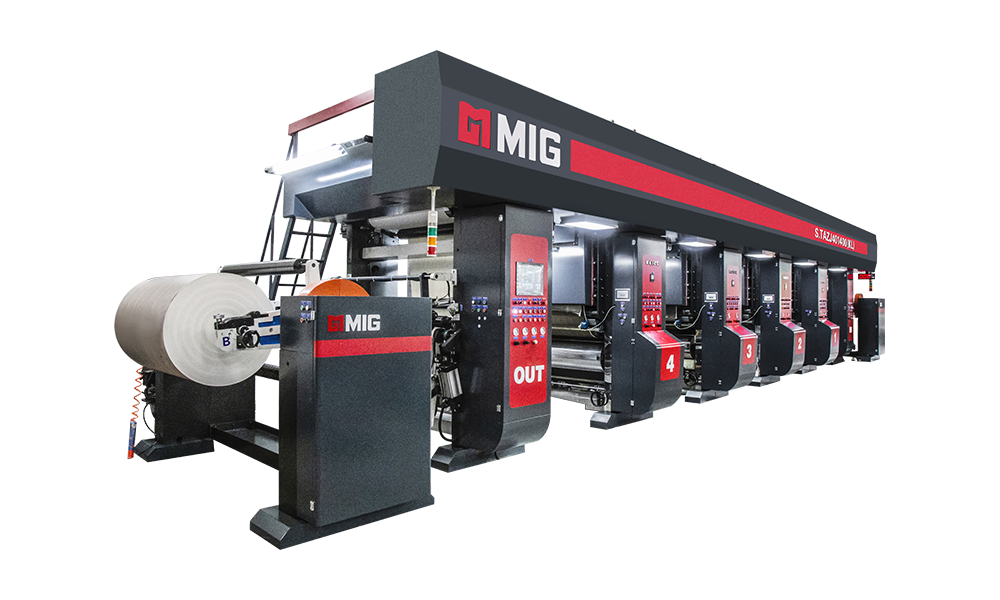
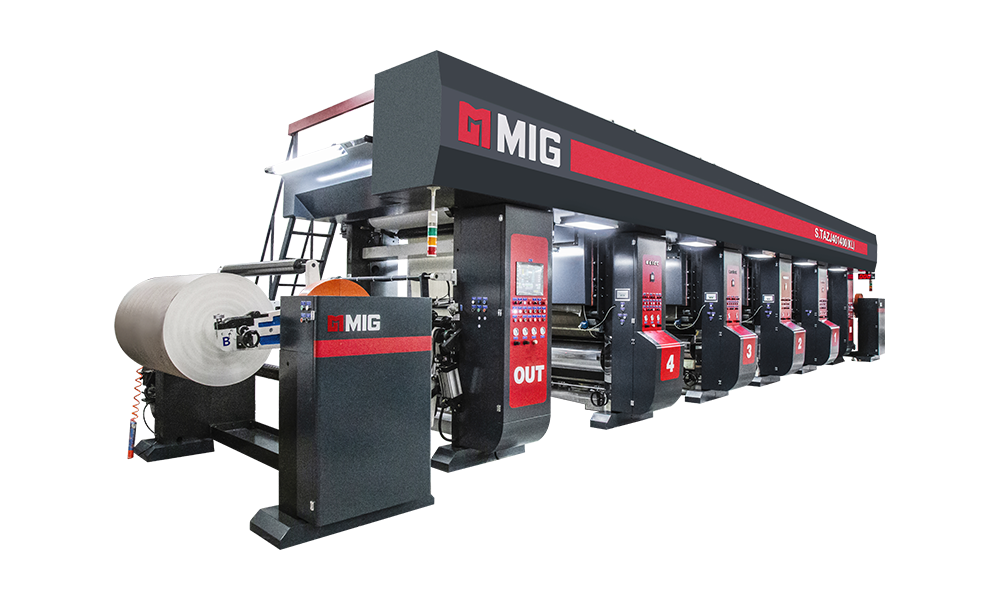 KL Series 4-Foot Medium-High Speed ELS Gravure PrinterMedium-high speed KL-series gravure printer for engineered wood decorative paper, featuring full servo synchronization, automatic material changing, and 200 m/min print speed.View Product →
Where PU Paper Ends Up
The end uses shape the specification more than any technical datasheet does. PU paper is usually destined for surfaces a person sees and touches every day: cabinet doors, wardrobe fronts, desk tops, shop fitting panels, wall cladding and laminated flooring overlays.
Wood grain remains the dominant design, and reproducing it convincingly is a job for the whole line rather than one cylinder. Grain lines have to stay synchronised between colours, highlights have to sit where the light falls on real timber, and the coating has to sit on top without flattening the effect. When a decorator asks for a paper that reads as oak, walnut or a soft neutral ash, the answer lies in register control and colour consistency. Teams working on cabinet panel decorative paper printing tend to care most about repeat accuracy, because a mismatched repeat is far more obvious on a large door panel than on a small sample.
The Support Equipment Nobody Budgets For
Once the printing and coating line is running, the bottlenecks move somewhere unexpected — usually to the jobs that happen before and after printing. Cylinders need washing between pattern changes, and doing that by hand slows every changeover. Cylinders also need somewhere to live; a storage system that keeps them protected and findable saves more time than most people expect. Ink preparation, waste handling and roll inspection all sit on the same critical path.
It is worth planning these from the start rather than treating them as an afterthought. Inspection and rewinding in particular decide how much of your output reaches a customer without complaint, especially with coated surfaces where a small mark is much harder to hide.
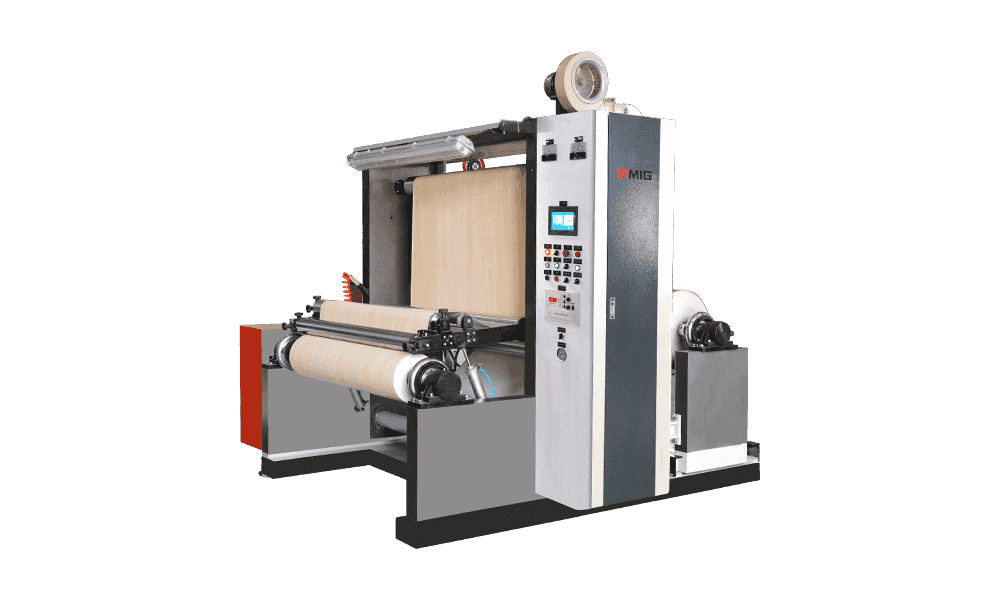 MF-1400-1650 Rewinding and Inspection MachinePost-printing quality inspection and rewinding unit with a large observation surface, optional edge trimming, and up to 300 m/min rewinding speed.View Product →
Questions Worth Asking Before You Commit
- What colour count and cylinder diameter will my main designs actually need over the next three years?
- Will the coating station run at the same speed as the press, or will it become the limiting factor?
- How much changeover time should I budget for each pattern, and how will cylinder handling affect it?
- Which ink chemistry makes sense for our market and our drying capacity?
- How will we inspect and rewind coated rolls without introducing new defects?
- What does the supplier's support look like six years in, not six weeks in?
None of these questions have a universal answer. A factory producing wood grain paper for laminate flooring has a very different set of priorities from a workshop printing short runs of speciality film for interior fit-outs. What they share is the need for a line that behaves predictably, day after day, at the speeds their order book demands.
That is really the whole point of putting printing and PU coating on one machine. It is not about a longer specification sheet — it is about fewer transfers, steadier tension and a finished surface that leaves the line ready for the next operation. If you are planning a line and want to talk through the configuration in plain language, we are always glad to share what we have learned on other factory floors.
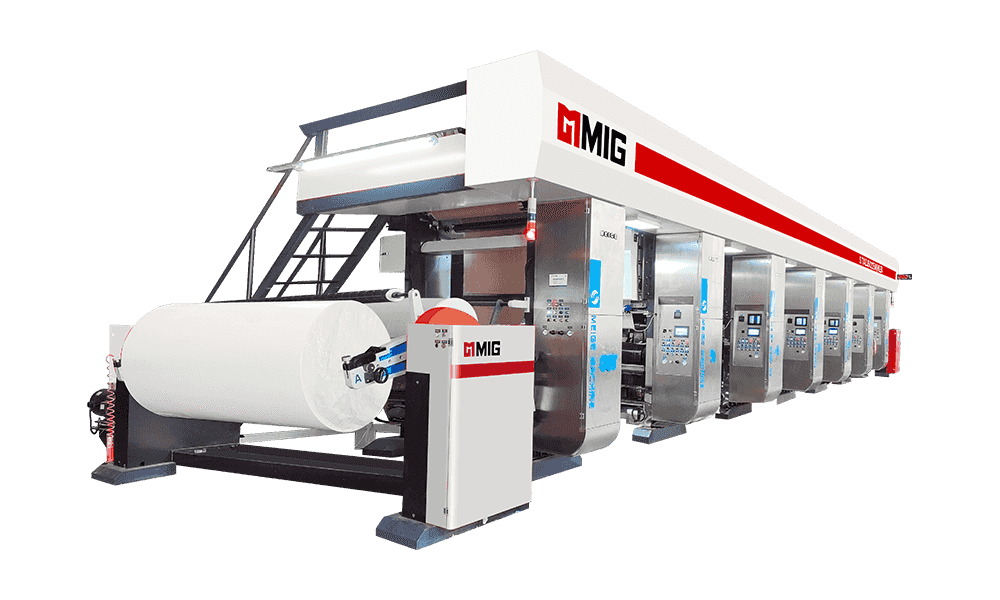
Recommended Products
The variety of models, to meet the development needs of various regions in the world.
Message Us Right Now!
Quick Links
Products
Contact Us
- Phone: +86-13067738802 (Manager Hua)
- Tel: +86-0571-61071715
- Fax: +86-0571-61071706
- Mail: [email protected]
- Add: No.32 Wujiatou, Qingke Village, Jincheng Street, Lin'an District, Hangzhou City, Zhejiang Province

Copyright © Zhejiang Meige Machinery Technology Co., Ltd. All rights reserved.
 Privacy Rotogravure Printing Machine Manufacturers