
 English
 中文简体
 русский
 فارسی
 عربى
 Deutsch
PVC Laminating Embossing Machine: How Bonding, Texture and Line Planning Work
Walk through a decorative film plant and you can usually tell which line is running simply by listening. A PVC laminating embossing machine has its own rhythm: the low hum of unwinds, the steady pressure at the nip, the faint tick of the embossing roll turning in time with everything else. We have been building equipment for surface decoration since 1999, and the questions buyers bring to us have not changed much over the years. They want to know what happens to the film between the first unwind and the final rewind, and whether the texture they saw in a sample can survive daily production. This article walks through both.
Content
What a PVC laminating embossing machine actually does
The name compresses three jobs into one phrase, and that is a fair summary. A PVC laminating embossing machine is a continuous line that brings two or three layers of PVC film together, bonds them under heat and pressure, presses a three-dimensional texture into the surface, and then cools and rewinds the finished sheet. Everything happens in a single pass, which is why the machine is judged as a line rather than as a press.
It helps to separate this equipment from printing. Printing puts colour and pattern onto a film; laminating and embossing build the physical body and surface feel of that film. A matte hand feel, a deep synchronised wood grain, a soft-touch top layer, a floor wear layer that resists scuffing — these come from the composite and embossing stage, not from the ink. Most plants run the two processes in sequence, and the film that leaves the embosser is the one a customer actually touches.
Station by station along the line
Models differ in width, layer count and whether coating is included, but the working sequence stays recognisable. The table below describes a typical arrangement for our FH series multilayer lines.
| Station | What happens | What operators watch |
|---|---|---|
| Unwind | Two or three film rolls feed in at controlled tension | Web alignment, roll diameter change, tension drift |
| Preheat | Layers are brought up to a temperature where they soften evenly | Temperature uniformity across the full width |
| Composite nip | Layers are joined under pressure without adhesive | Nip pressure, roller parallelism, surface cleanliness |
| Embossing | A patterned roll transfers the texture into the still-warm film | Roll temperature, pattern repeat, embossing depth |
| Cooling | The texture is set before the film can relax back | Cooling rate, flatness, residual shrink |
| Coating or rewind | Optional protective layer is applied, then the web is wound | Coating weight, winding tension, edge quality |
The stations are simple to list and harder to balance. A texture that looks perfect on the sample roll can flatten out if cooling starts too late, and a composite that holds well at low speed can show haze at the top of the speed range. This is why we tend to spend more time on commissioning conversations than on specification sheets.
Why glueless composite changes the conversation
Older laminating approaches relied on an adhesive layer between films. It worked, but it introduced a variable that never quite settled: adhesive weight, cure behaviour, and the occasional compatibility problem with a new film formulation. Glueless composite removes that layer entirely. The films bond through controlled heat and pressure at the nip, which means the bond is a function of machine settings rather than of a third-party consumable.
In practice this simplifies three things. Material cost drops because there is nothing to buy and no adhesive waste to manage. Changeovers get shorter, since there is no pot life to lose. And the finished film keeps a cleaner hand feel, because there is no glue line softening the surface before the embossing roll ever touches it.
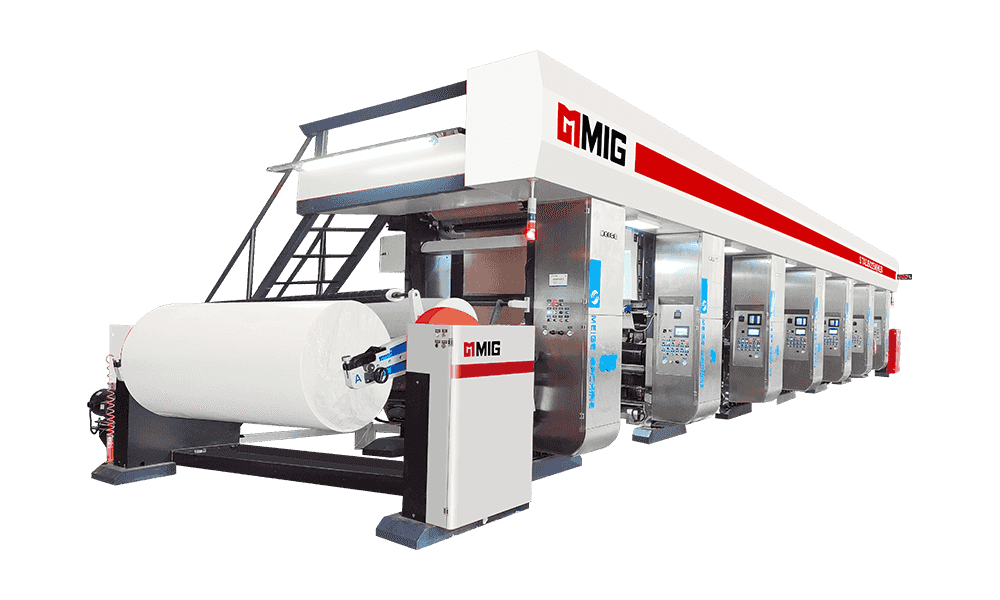
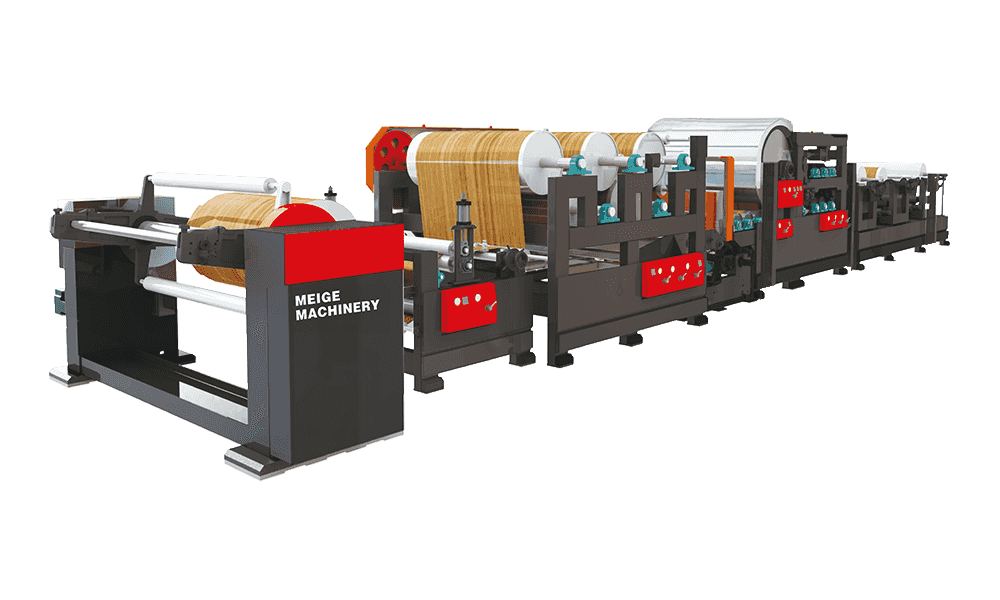 MGFH-1650D-2 PVC Glueless Composite Embossing MachineA PVC two- or three-layer adhesive-free composite embossing machine for engineered wood decorative paper, suited to glue-free lines where consistent temperature and pressure matter.View Product →
The trade-off is discipline. Without glue, temperature and pressure have to be genuinely consistent from edge to edge, and the embossing roll has to be matched to films that were designed for glueless bonding. It is unforgiving equipment in that sense, but it is also equipment that rewards careful setup with long, stable runs.
Matching texture to print and to end use
Texture is where the design department and the production floor most often disagree. A film printer develops a wood grain or stone pattern in ink; the embosser then has to press a relief that lines up with that pattern rather than fighting it. When the alignment is right, you get the deep, synchronised look that sells flooring and furniture panels. When it drifts, the pattern reads as two unrelated surfaces stacked on top of each other.
End use decides most of the rest. Flooring film needs a harder texture and a protective top layer, because a wear surface is expected to survive years of contact. Furniture and cabinet film can be softer, and often goes for a fine matte or a light brush line. Wall panel and ceiling film emphasises even gloss and consistent rolling. It is worth confirming the target application before choosing a pattern roll, since a roll that suits one product family rarely suits all of them.
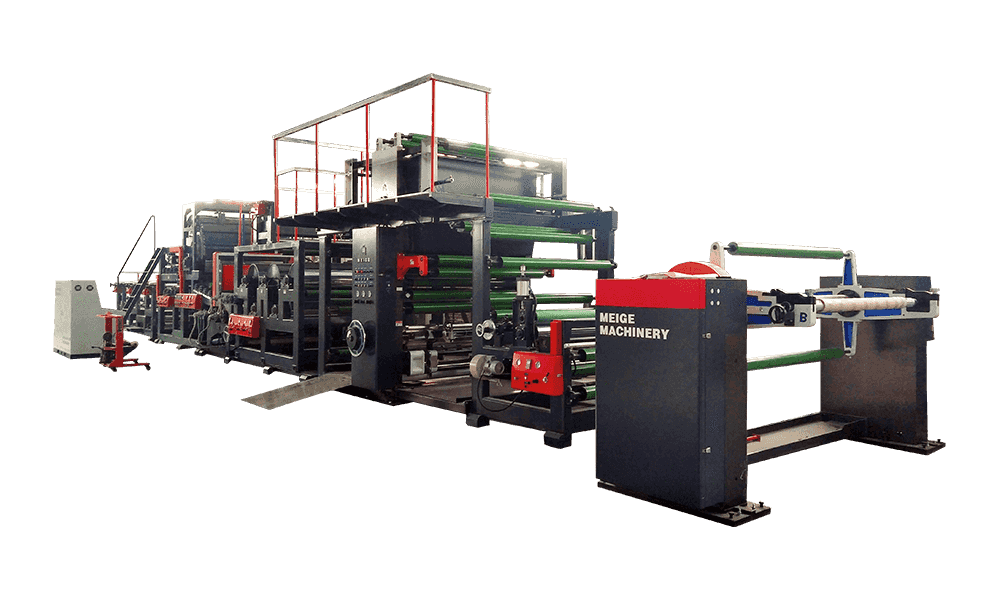 MGFH-1650D-3 PVC Glueless Embossing Coating MachineA PVC two- or three-layer adhesive-free embossing and coating machine with post-embossing protective-layer function, relevant for flooring and other films needing a clear top layer.View Product →
For lines that include a protective layer, the coating station sits after embossing. Applying a clear top layer over a formed texture is different from coating a flat web: the coating has to follow the relief without pooling in the valleys or thinning on the peaks. If that balance is off, the film will look patchy under raking light even though the texture itself is correct.
Where the embosser sits in a wider film line
Very few plants buy a laminating embosser on its own. In most of the projects we work on, it follows a PVC decorative film printing machine, where the pattern is laid down, and it precedes inspection and rewinding, where the finished film is checked and spliced. The upstream printer sets the register and colour; the embosser sets the touch; the rewinder decides whether any of that reaches the customer in good condition.
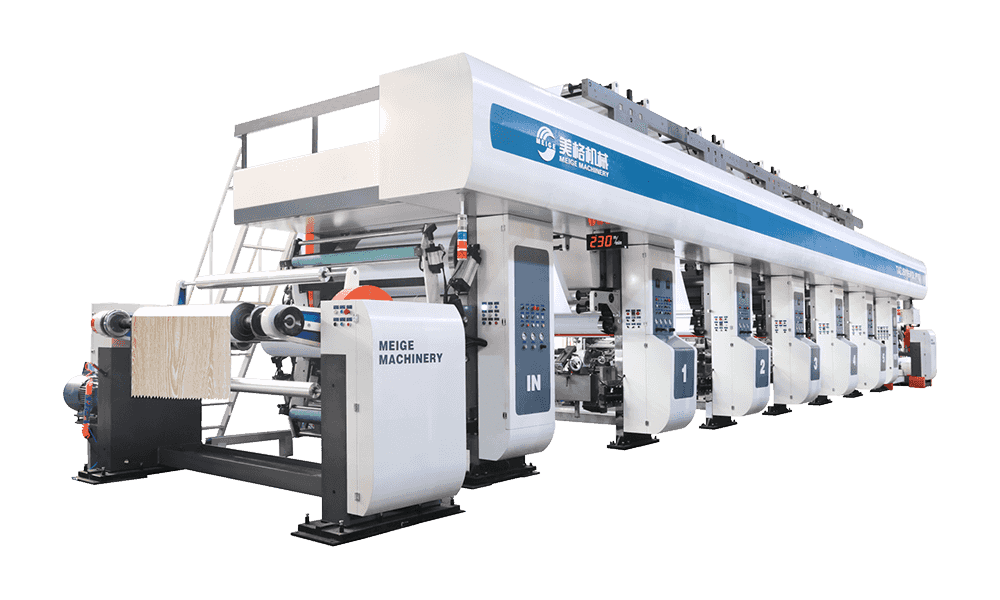 S.TAZJ501650 PL800 PVC Gravure Printing MachineA high-speed four-foot PVC gravure printer for decorative film, positioned upstream of laminating and embossing to set register and colour before finishing.View Product →
Ancillary equipment matters more than buyers expect. Plate washing and roller storage keep cylinders in usable condition between jobs. A sample press lets the lab press test laminates before a full run. Inspection rewinding catches the defects that only show under transmitted light. None of these are glamorous purchases, but a line that skips them tends to lose more time to cleanup and rejects than it gains in throughput.
What to confirm before you commit to a line
Every plant comes to the decision with a different product mix, so there is no universal answer. There are, though, a handful of questions that make the conversation much more productive.
- Which film combinations will run most often, and what is the widest and narrowest of them?
- How many layers are genuinely needed, and is a protective layer part of the plan now or later?
- Which texture families will dominate, and do they have to synchronise with a printed pattern?
- What output per shift is realistic, given changeover time, not just peak line speed?
- Who will run and maintain the line, and how much of the setup can be made repeatable through recipes?
- What floor space, power and compressed air are actually available at the installation point?
Answers to these six tend to narrow the model range quickly. They also surface the questions that no brochure can answer, such as how often a plant expects to change patterns and whether the operators prefer to work from stored recipes or from manual adjustment.
We have watched this equipment evolve from largely mechanical machines into lines where electronic control does much of the steadying. What has not changed is the underlying logic: bonding, texture and line planning are three separate decisions, and a good line simply makes them easier to keep in balance. If you are weighing a new embossing line, the most useful first step is not a specification comparison but a clear description of the film you want to sell two years from now. That description usually tells both sides what the machine needs to be.
Recommended Products
The variety of models, to meet the development needs of various regions in the world.
Message Us Right Now!
Quick Links
Products
Contact Us
- Phone: +86-13067738802 (Manager Hua)
- Tel: +86-0571-61071715
- Fax: +86-0571-61071706
- Mail: [email protected]
- Add: No.32 Wujiatou, Qingke Village, Jincheng Street, Lin'an District, Hangzhou City, Zhejiang Province

Copyright © Zhejiang Meige Machinery Technology Co., Ltd. All rights reserved.
 Privacy Rotogravure Printing Machine Manufacturers