
 English
 中文简体
 русский
 فارسی
 عربى
 Deutsch
PVC Gravure Printing Machine: A Practical Buyer's Guide for Film Printers
A walk through a furniture or flooring showroom tells you a great deal about what a PVC gravure printing machine actually does. The oak grain on a cabinet door, the soft matte finish on a wall panel, the deep register between print and embossing on a vinyl plank — almost every one of those surfaces starts life as ink laid onto film, colour after colour, at speed. Gravure is the process that makes the result convincing, and the press sits at the head of the whole decorative film line.
We are Zhejiang Meige Machinery Technology, and we have been building printing and coating equipment in Lin'an, Hangzhou since 1999. In that time the questions buyers bring to us have changed far less than the technology around them: how fine can the grain go, how fast can the line run without drifting, and how do you keep a three-shift operation repeating the same colour from Monday to Friday?
What follows is a practical walk-through of the machine, the specifications worth comparing, and the details that tend to decide whether a film line earns its keep.
Content
- 1 What a PVC Gravure Printing Machine Actually Does
- 2 The Components That Decide Print Quality
- 3 Specifying the Machine: Numbers Worth Comparing
- 4 Ink, Drying and Registration: Where Yield Is Really Won
- 5 Joining Print to Lamination and Inspection
- 6 Everyday Maintenance That Protects Output
- 7 Questions Buyers Ask Us Most
What a PVC Gravure Printing Machine Actually Does
Gravure printing works from an engraved cylinder. The image is cut into a copper surface as thousands of tiny cells, the cylinder rotates through an ink bath, and a doctor blade wipes the non-image area clean so that ink remains only inside the cells. A rubber-covered impression roller then presses the travelling film against the cylinder, and the ink transfers in one continuous, remarkably consistent pass.
Each colour needs its own station, so a four-colour design runs through four print units, with a dryer after every one. Between stations, tension rolls and web guides keep the film flat and aligned; at the end, the printed roll is rewound under controlled tension so it can travel straight into lamination, embossing or inspection without wandering.
Why gravure suits PVC film so well
PVC decorative film demands long, seamless repeats of woodgrain and stone patterns, and it has to survive heat, tension and downstream embossing without losing register. Gravure handles all three comfortably: ink laydown is uniform across the full web width, fine tonal detail survives the transfer, and a well-kept cylinder will repeat the same job for years. If you want a wider look at how film jobs are set up in practice, our PVC decorative film printing machine overview follows the same process from cylinder to finished roll.
The Components That Decide Print Quality
Two presses with identical headline speeds can produce very different film. In our experience, the difference usually comes down to a handful of assemblies rather than the brochure numbers:
- Engraved cylinders — cell depth and geometry set how much ink each station lays down, and therefore how dense the grain reads.
- Doctor blade system — a worn or badly angled blade leaves streaks that only show up after lamination, when it is far too late.
- Impression roller — hardness and pressure decide dot transfer; uneven pressure shows as mottling in the mid-tones.
- Tension control — PVC film stretches as it warms, so closed-loop tension at unwind, each station and rewind keeps print-to-emboss alignment honest.
- Drying system — airflow and temperature profile govern running speed as much as the cylinders do, especially when solvent load is high.
- Drive and registration — electronic shaft drive keeps every station synchronised without a mechanical line shaft, so register holds through ramp-up and deceleration.
Specifying the Machine: Numbers Worth Comparing
When a customer sends us a film sample and asks which model fits, we rarely start with speed. We start with the widest web they genuinely run, the number of colours in their best-selling designs, and the repeat length of those designs. Everything else follows from those three answers.
| Specification | Why it matters on PVC film | Question to ask |
|---|---|---|
| Web width | Sets which panel, flooring and furniture formats you can run without slitting losses. | What is the widest film we truly run each month? |
| Printing stations | Four colours cover most woodgrains; six or more allow shadow, highlight and a sealing coat in one pass. | Which colours must land in a single pass? |
| Cylinder diameter and repeat | Larger cylinders carry longer pattern repeats and fewer visible joins on long grain designs. | What repeat range do our top designs need? |
| Drive type | Electronic shaft drive holds register as line speed changes, without mechanical compensation. | How is register maintained during speed changes? |
| Drying capacity | Film carries more ink and tolerates less residual solvent than paper, so drying limits real output. | What speed can we hold with our ink system? |
| Tension control | Consistent tension is what keeps print aligned to embossing further down the line. | Is tension closed-loop at unwind, stations and rewind? |
| Rewind and handling | Splicing, trimming and roll hardness decide whether the press can feed the laminator without stops. | How are rolls changed, trimmed and transferred? |
Our PL series is built around this way of thinking: high-speed electronic shaft machines configured by web width and station count rather than sold as a single fixed package. The PL450, PL600 and PL800 share the same drive philosophy and differ mainly in the film formats they are designed to handle.
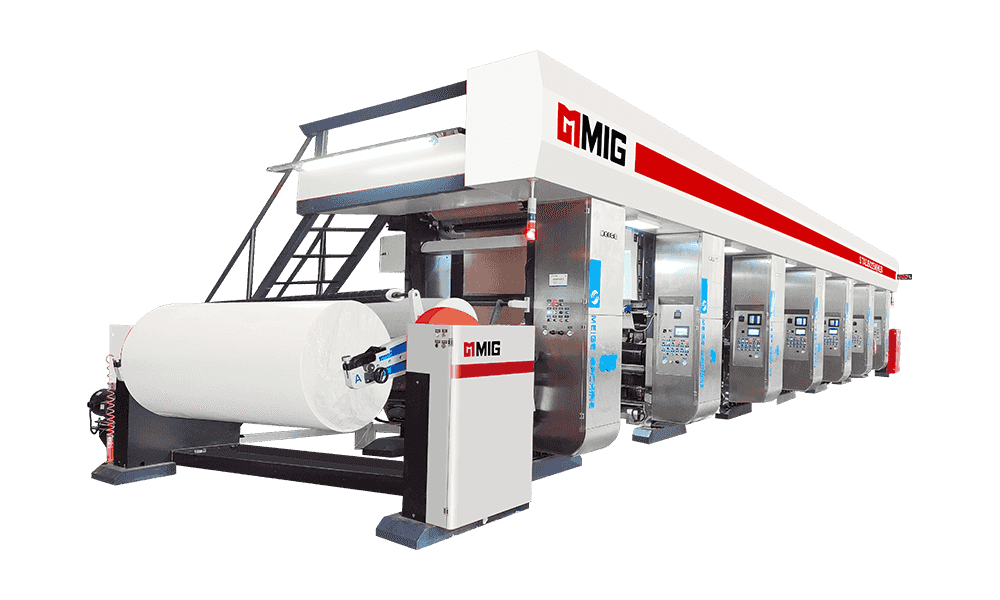
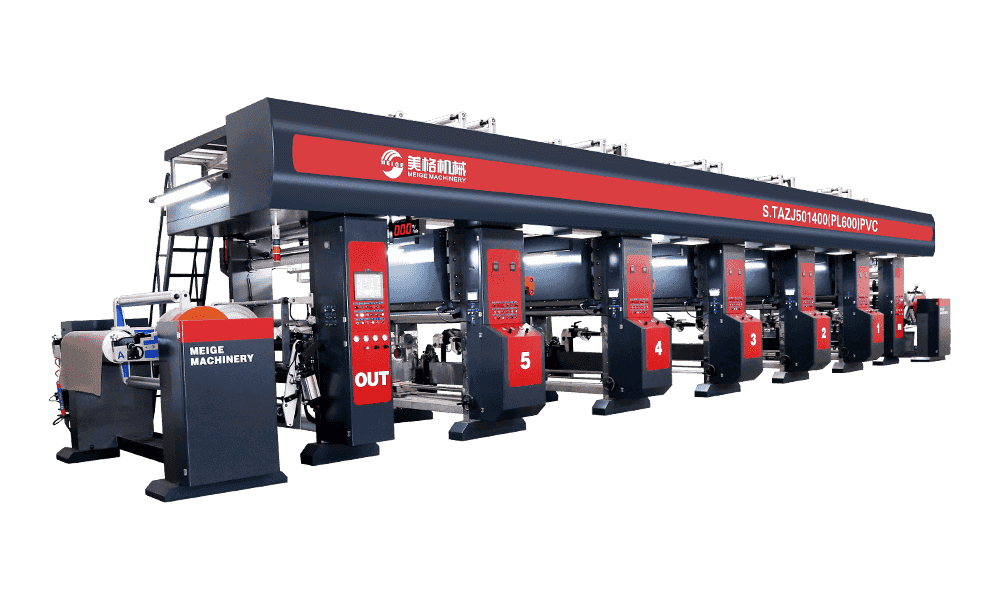 PL600 High-Speed PVC Gravure Printing MachineA four-foot ELS PVC gravure press for decorative film, with full servo control and print speeds up to 180 m/min.View Product →
Ink, Drying and Registration: Where Yield Is Really Won
Most production losses we are called in to solve are not mechanical failures. They are small drifts: a colour that shifts half a millimetre after an hour, a dryer running slightly cool at the edges, a blade that needed changing two shifts ago. On a PVC line these effects compound, because the film goes on to be laminated and embossed, and any misalignment becomes permanent.
Three habits make the biggest difference. First, match the ink system to the film and the dryer rather than to habit — solvent and water-based systems behave very differently on the same cylinder. Second, treat registration as a trend to watch rather than a fault to fix; logging it each shift reveals blade wear and tension drift before they reach the customer. Third, keep the drying profile documented job by job, so a repeat order starts from a known recipe instead of an educated guess. Coating and finishing stages follow the same logic, which is why we treat print and decorative foil printing and coating as one continuous conversation rather than separate purchases.
Joining Print to Lamination and Inspection
A printed roll is only half the product. Decorative film usually needs additional layers, a surface texture, and a final check before it is shipped — and every handover between machines is a chance to lose the register you fought for on the press.
For multilayer work, our FH series glue-less composite embossing machines handle two or three layers with optional coating and protective-layer application, so texture and surface protection are added without an adhesive layer that could cloud the print. Downstream, a rewinding and inspection machine lets you trim, splice and inspect at line speed, catching defects while the roll is still on your own floor.
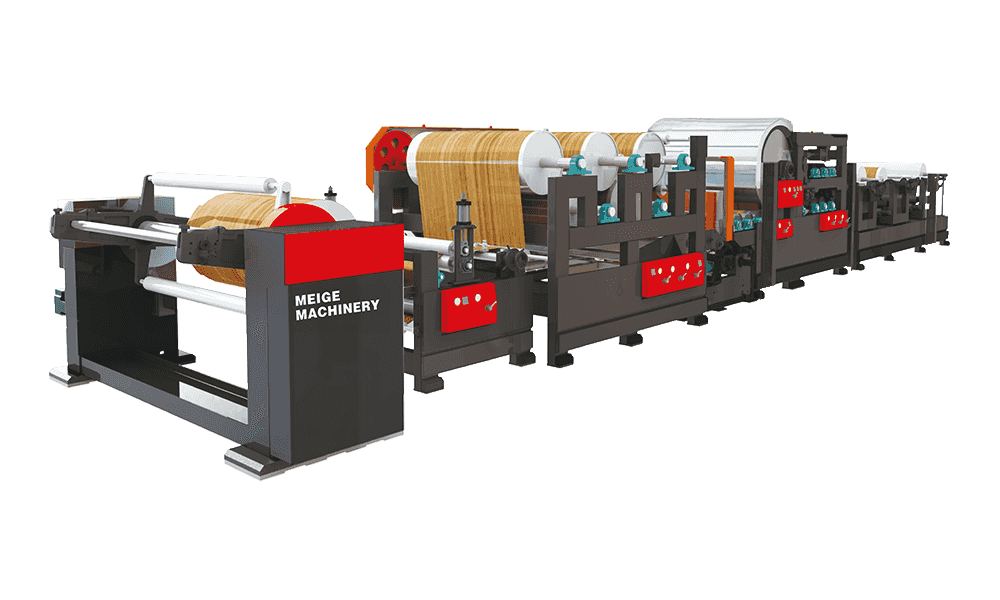 MGFH-1650D-2 Glueless Composite Embossing MachineA two- or three-layer PVC laminating and embossing machine for adhesive-free decorative film production, with hot-roller composite and continuous collection.View Product →
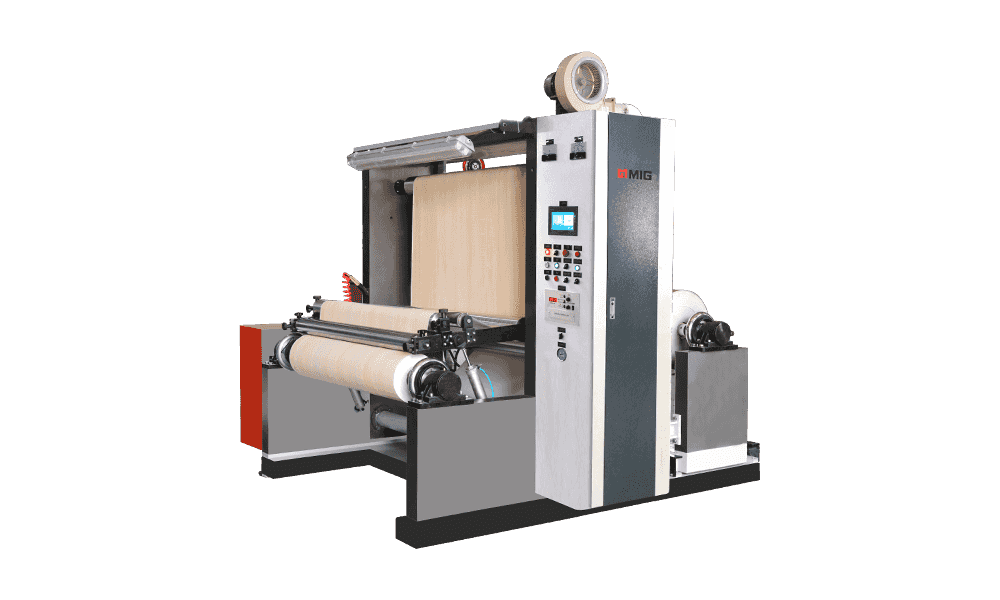 MF-1400-1650 Rewinding and Inspection MachineA post-printing inspection rewinder with automatic correction, tension control and optional edge trimming, helping catch defects before shipment.View Product →
Everyday Maintenance That Protects Output
Gravure presses reward routine more than they reward heroics. The plants that run cleanest tend to be the ones with a short, boring checklist that nobody skips:
- Clean cylinders immediately after each job and store them properly, so dried ink never becomes a permanent cell blockage.
- Inspect and rotate doctor blades on a fixed schedule rather than waiting for a visible streak.
- Check impression roller hardness and pressure settings whenever a new film gauge is introduced.
- Verify dryer temperature and airflow at the start of every shift, not only when quality drops.
- Record tension and register values so trends are visible before they become rejects.
Questions Buyers Ask Us Most
Before a quotation is signed, four questions come up again and again. How many colours do we really need? Usually one more than the current job requires — the extra station pays for itself the first time a customer asks for a highlight or a protective coat. What web width should we choose? The width you can keep busy, not the widest available. How long does commissioning take? It depends far more on cylinder readiness and operator training than on the machine itself. And can one press run both PVC film and paper? Often yes, but the drying and tension settings need to be documented separately for each substrate.
A PVC gravure printing machine is a long-term investment in repeatability. The specifications matter, but what really determines whether the line earns its place is how well the press, the ink system, the laminator and the inspection station are matched to each other — and how disciplined the daily routine around them is.
If you are weighing up a new film line or replacing a press that no longer holds register, send us the film sample and the design you intend to run. Working backwards from the print is usually the fastest route to a machine that fits.
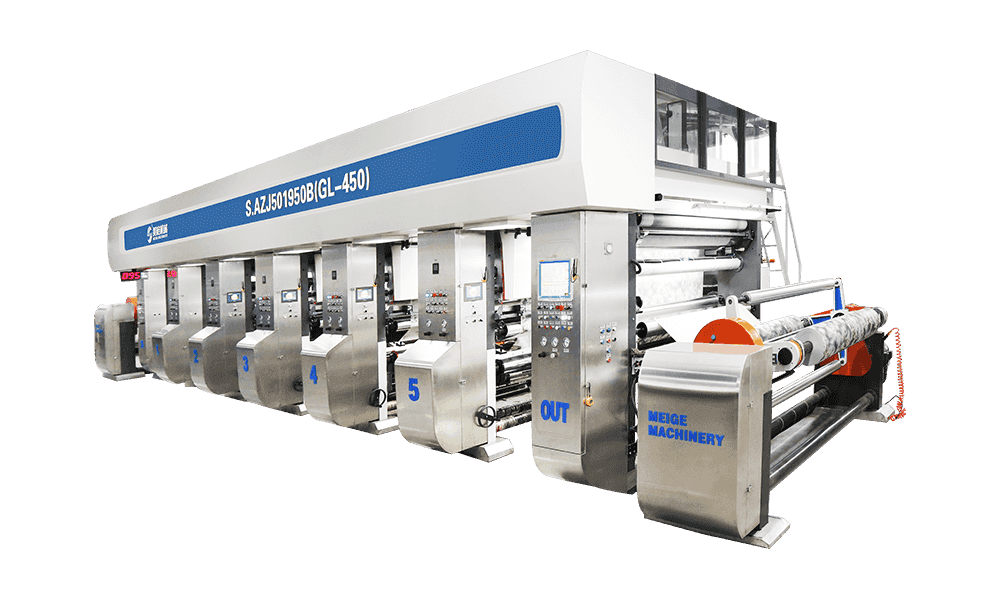
Recommended Products
The variety of models, to meet the development needs of various regions in the world.
Message Us Right Now!
Quick Links
Products
Contact Us
- Phone: +86-13067738802 (Manager Hua)
- Tel: +86-0571-61071715
- Fax: +86-0571-61071706
- Mail: [email protected]
- Add: No.32 Wujiatou, Qingke Village, Jincheng Street, Lin'an District, Hangzhou City, Zhejiang Province

Copyright © Zhejiang Meige Machinery Technology Co., Ltd. All rights reserved.
 Privacy Rotogravure Printing Machine Manufacturers