
 English
 中文简体
中文简体 русский
 فارسی
فارسی عربى
عربى Deutsch
PVC Film Gravure Printing Machine: Configuring a Line for Stable Output
PVC film rarely fails politely. A roll that looks perfect at the unwind can show haze by the third print unit, a slow register drift by the fifth, and a curl that refuses to lie flat once it reaches lamination. After nearly thirty years of building gravure presses in Hangzhou, we have learned that the machine is seldom the only variable in the room, but it is the one variable you can design properly before the first cylinder is ever engraved.
This guide walks through what a PVC film gravure printing machine has to do differently from a paper press, which configuration points genuinely deserve your attention, and how to plan a line that still behaves well when your order book shifts from narrow film to wide film, or from six colors to eight.
Content
- 1 How a PVC Film Gravure Printing Machine Actually Works
- 2 What Changes When the Substrate Is Film, Not Paper
- 3 Configuration Points That Decide Print Quality
- 4 Matching Width, Speed and Color Count to Your Order Book
- 5 Ink, Drying and Register Control on Film
- 6 After Printing: Composite, Embossing and Roll Handling
- 7 A Practical Checklist Before You Place an Order
- 8 Buying a Press Is Really Buying Predictability
How a PVC Film Gravure Printing Machine Actually Works
The core principle is unchanged from any gravure process: an engraved cylinder picks up ink from a pan, a doctor blade wipes the surface clean so only the cells stay filled, and an impression roller presses the web against the cylinder to transfer that ink. What makes film work different is everything surrounding that brief moment of contact.
- The unwind feeds the roll under controlled tension, usually through a dancer or load cell arrangement that keeps the web from stretching.
- An infeed unit establishes a stable web path and, on many film lines, a corona treater raises surface energy so ink can anchor properly.
- Each print unit applies one color, with drying between stations so the next cylinder never presses into wet ink.
- Register control watches marks along the web edge and corrects each unit individually, which is where electronic shaft drive earns its keep.
- The outfeed and rewind pull the printed film away without introducing wrinkles, slack edges or telescoping.
What Changes When the Substrate Is Film, Not Paper
Paper is relatively tolerant. It absorbs solvent, it holds tension, and it forgives a slightly warm drying tunnel. PVC film is thinner, more elastic and far more sensitive to heat, so a press that runs beautifully on decorative paper will not automatically run well on film.
- Tension windows are narrower. Film stretches under load and stays stretched, so register that was perfect at the start of a roll drifts toward the end.
- Heat management matters more. Excessive drying temperature can soften or distort the web, and it can also drive ink solvents out too aggressively, causing surface defects.
- Solvent attack is a real concern. Some inks and solvents interact with certain film formulations, so ink compatibility should be confirmed before the run, not after.
- Static builds quickly on film and attracts dust, which shows up as pinholes in solid areas.
- Web flatness is fragile. Small wrinkles entering a print nip become permanent marks, so roller alignment and web path design are not optional details.
- Roll handling matters at both ends. Film rolls are heavy and easily damaged, which is why controlled unwind and gentle rewind tension are worth specifying.
Configuration Points That Decide Print Quality
When customers ask us how to compare quotations, we usually suggest they ignore the headline speed figure first and look at the structure of the machine instead. Speed is a result, not a specification.
| Configuration point | What to verify | Why it matters for PVC film |
|---|---|---|
| Web width | Maximum and minimum film width | Wide film amplifies any tension imbalance across the web |
| Color units | Number of print stations | More units mean more drying and more register chains to control |
| Cylinder diameter | Print repeat range | Large diameters suit long repeats and help stabilize the web path |
| Drive system | Electronic shaft or mechanical shaft | Independent servo control makes register correction faster and cleaner |
| Drying capacity | Air volume, temperature range, zoning | Film needs drying that is effective without being harsh |
| Unwind and rewind | Roll diameter, tension control type | Small tension errors become visible print defects |
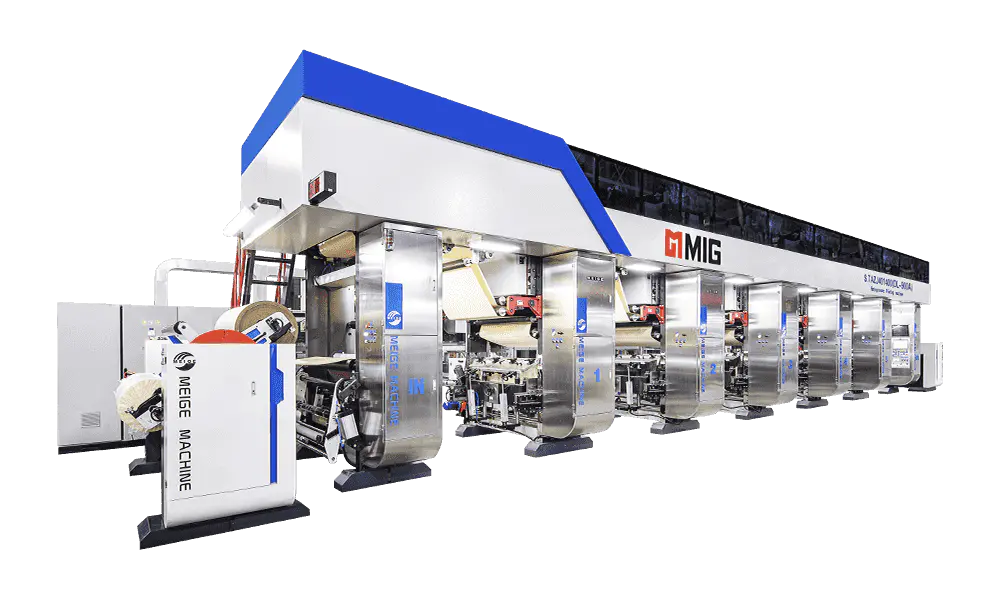
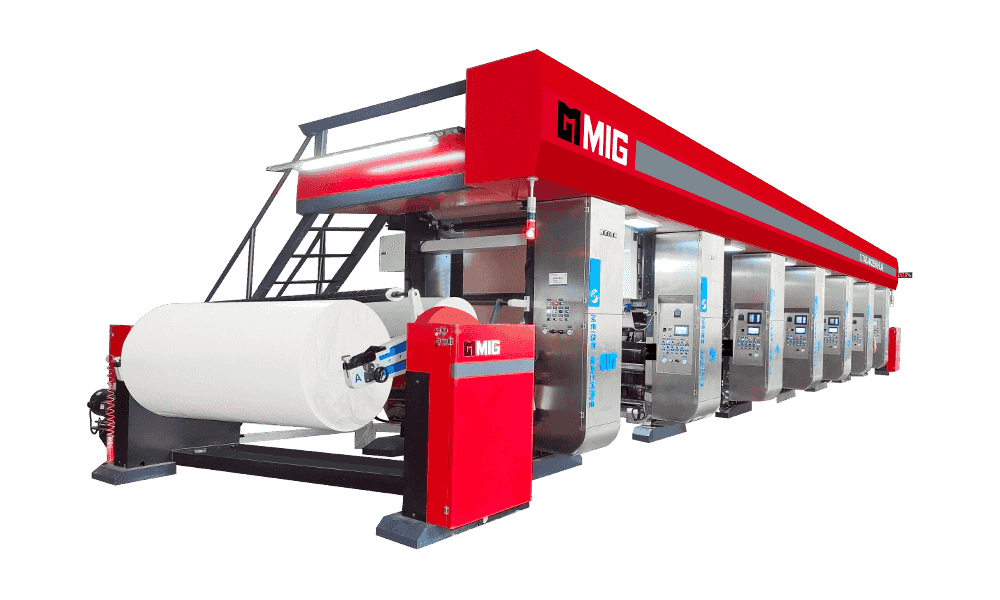
For a first film line, a four-foot, medium-to-high speed press with electronic shaft drive is often the most sensible starting point. That is broadly the position of the PL series, which begins with the compact four-foot, high-speed ELS-type configuration.
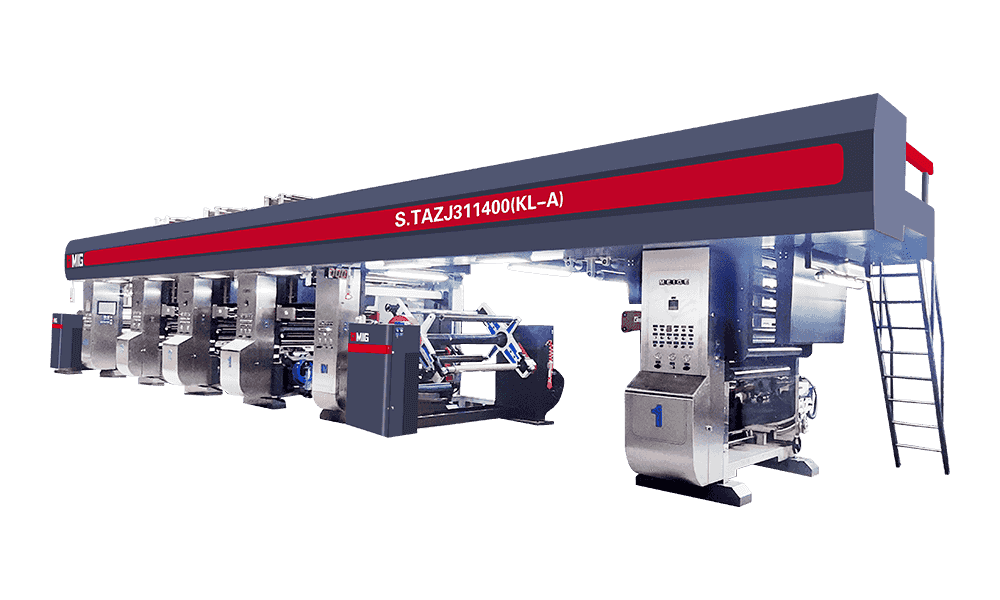
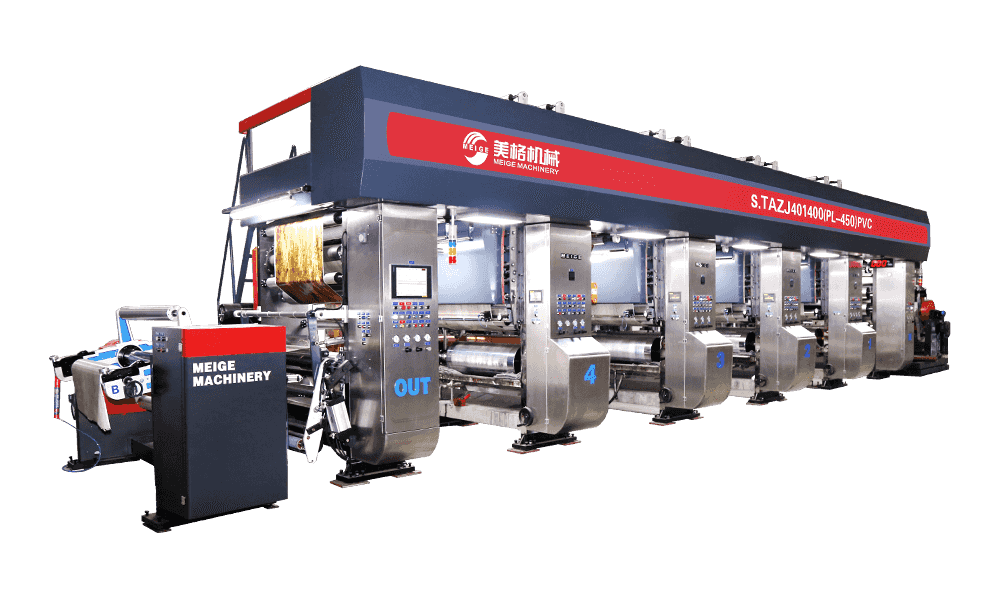 PL450 Four-Foot High-Speed PVC Gravure Printing MachineCompact four-foot ELS-type PVC gravure press for engineered wood decorative paper and PVC film, suitable as a first film line.View Product →
Matching Width, Speed and Color Count to Your Order Book
The most expensive mistake we see is not a badly built machine, it is a well-built machine bought in the wrong size. If most of your work sits between 1,200mm and 1,400mm, a narrow press with tight tension control will outproduce a wide press running at half load. If your orders are moving toward wider film for furniture and panel applications, buying narrow first means buying twice.
It helps to write down three numbers before you talk to any supplier: the widest film you realistically expect to run within three years, the average repeat length of your main designs, and the color count of your most complex artwork. Those three numbers narrow the field faster than any brochure. Our own PVC decorative film printing machine range was built around exactly that logic, which is why the same series spans several working widths rather than forcing one standard footprint on every workshop.
Where wider film and higher output are already on the roadmap, the larger frame in the same family keeps the same drive architecture while giving you more usable web width.
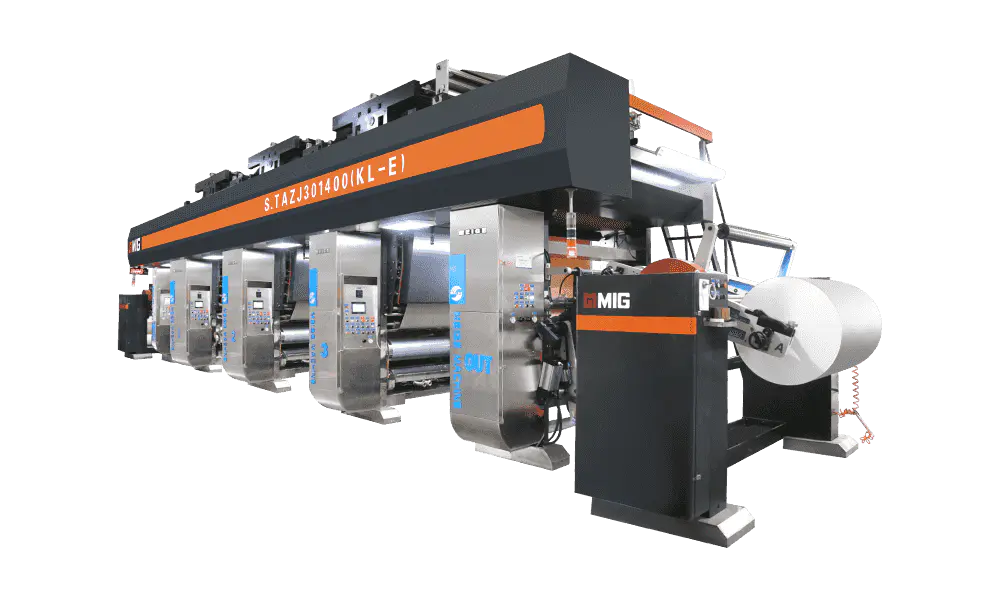
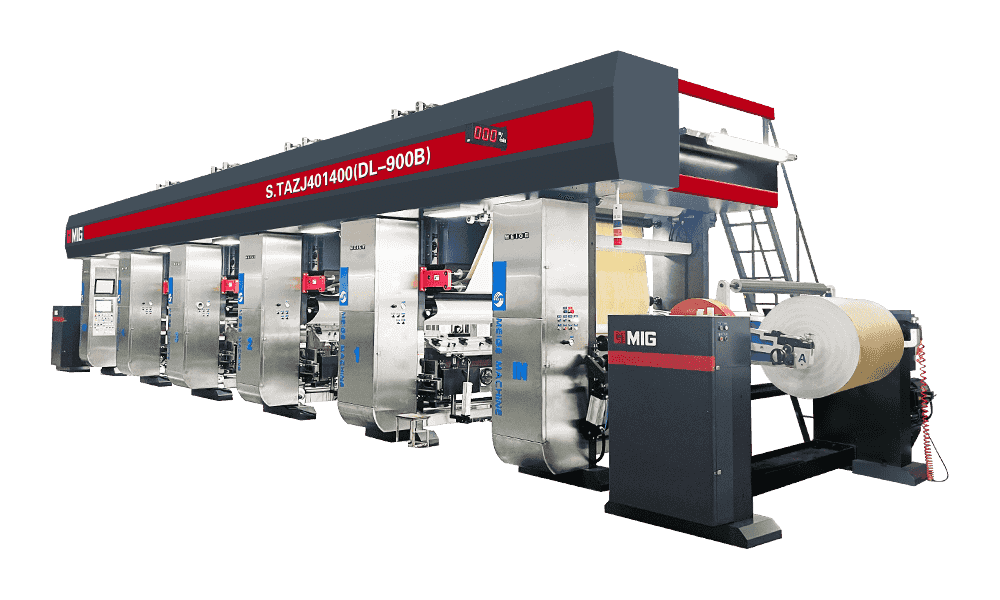
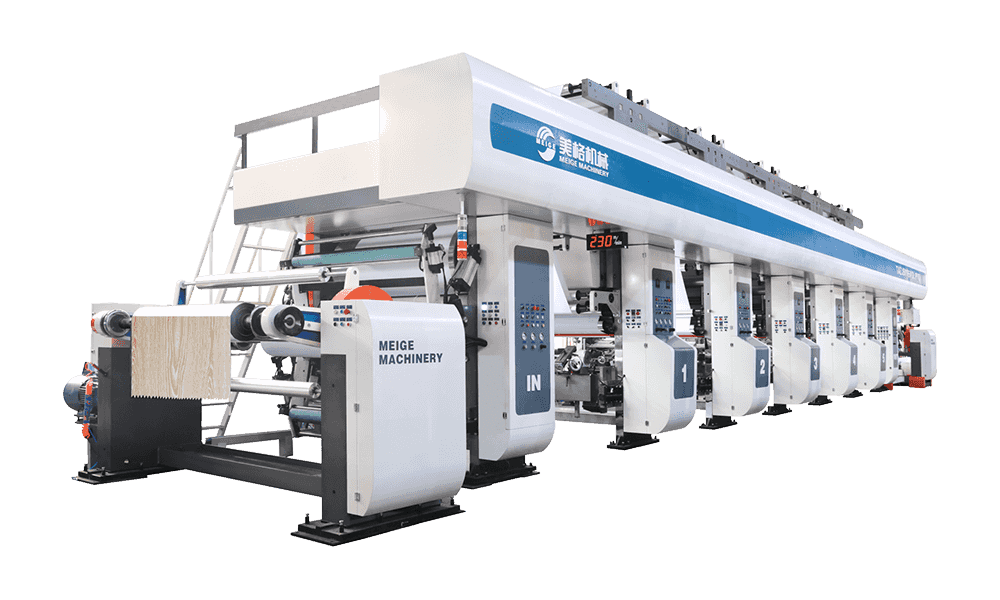 PL800 Large-Diameter PVC Gravure Printing Machine for Wider FilmLarger-frame ELS-type PVC gravure press with 280–800 mm rollers, supporting 4-foot and 5-foot widths for wider film production.View Product →
Ink, Drying and Register Control on Film
Ink selection and drying are inseparable on film. A solvent system that dries quickly may be ideal for output but harder to manage for surface quality; a slower system may print beautifully but limit your line speed. The practical answer is usually to specify drying capacity with some headroom, so you are tuning down rather than pushing equipment to its ceiling on every job.
Solvent-Based, Water-Based and Everything in Between
Solvent-based inks remain the workhorse for film decoration because they wet out and release predictably. Water-based systems are increasingly requested where plant emissions and operator exposure are priorities, and they demand drying sections designed for the job rather than adapted from a solvent platform. Whatever direction you take, ask for drying data at your intended line speed, not at a laboratory speed.
Effective high-speed drying for decorative inks is less about raw temperature and more about air volume, nozzle design and even extraction across the web. Poorly balanced drying shows up as one side of the roll printing differently from the other.
Register control deserves equal attention. On film, the marks you are reading can shift slightly as the web relaxes, so the control system needs fast correction and a reliable way to distinguish genuine drift from measurement noise. This is the strongest argument for electronic shaft drive on any film press.
After Printing: Composite, Embossing and Roll Handling
Printing is usually only part of what the finished product needs. PVC decorative film frequently goes on to be laminated into two- or three-layer structures, embossed for surface texture, and protected with a top layer. If those steps are handled on separate machines with manual transfer between them, you introduce handling damage and inconsistent tension at every handover.
Glue-less multilayer composite and embossing equipment addresses that by combining the steps, which reduces both handling and adhesive-related cost. A three-layer configuration with protective layer capability covers the structure most decorative film producers end up needing.
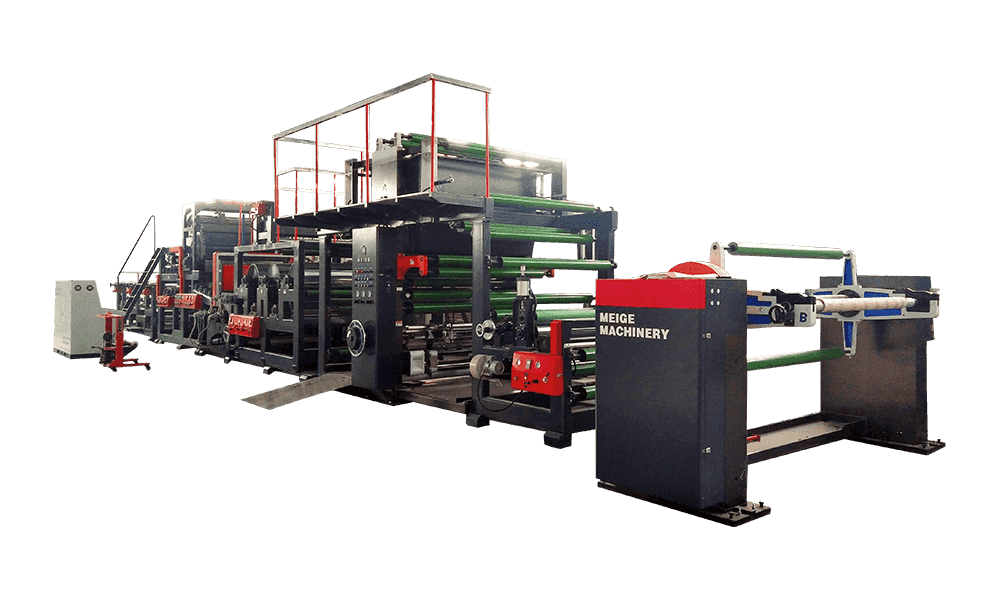 MGFH-1650D-3 Multi-Layer Glueless Composite Embossing Coating MachineThree-layer adhesive-free composite embossing and coating machine that combines steps, reducing handling and adhesive-related costs for decorative film production.View Product →
It is also worth thinking about the unglamorous end of the line. Inspection and rewinding equipment catches defects before they reach a customer, automatic plate washing keeps cylinder condition consistent between jobs, and intelligent plate storage reduces the risk of damaging expensive engraved rollers during changeovers. These items rarely appear on a wish list, but they quietly decide how predictable your output is month after month.
A Practical Checklist Before You Place an Order
If you take nothing else from this article, take these six questions into your next supplier conversation.
- What is the real tension window of this machine on 0.08mm film at maximum speed?
- How does the register system correct drift, and how quickly?
- What drying capacity is available at the speed you have quoted me?
- Which inks have been tested on this configuration, and with what results?
- What happens to the web path when I run at minimum width instead of maximum?
- What support is available for installation, commissioning and operator training?
Buying a Press Is Really Buying Predictability
Nobody buys a PVC film gravure printing machine because they enjoy comparing specifications. You buy it because you need the tenth roll of the shift to look like the first, and the thousandth roll of the year to look like the tenth. That consistency comes from tension control, drying balance, honest register correction and a machine sized for the work you actually run rather than the work you imagine.
If you are at the stage of weighing options, we are happy to talk through your film widths, repeats and color counts without turning it into a sales pitch. Most of the useful conversations start with your order book, not our catalogue.
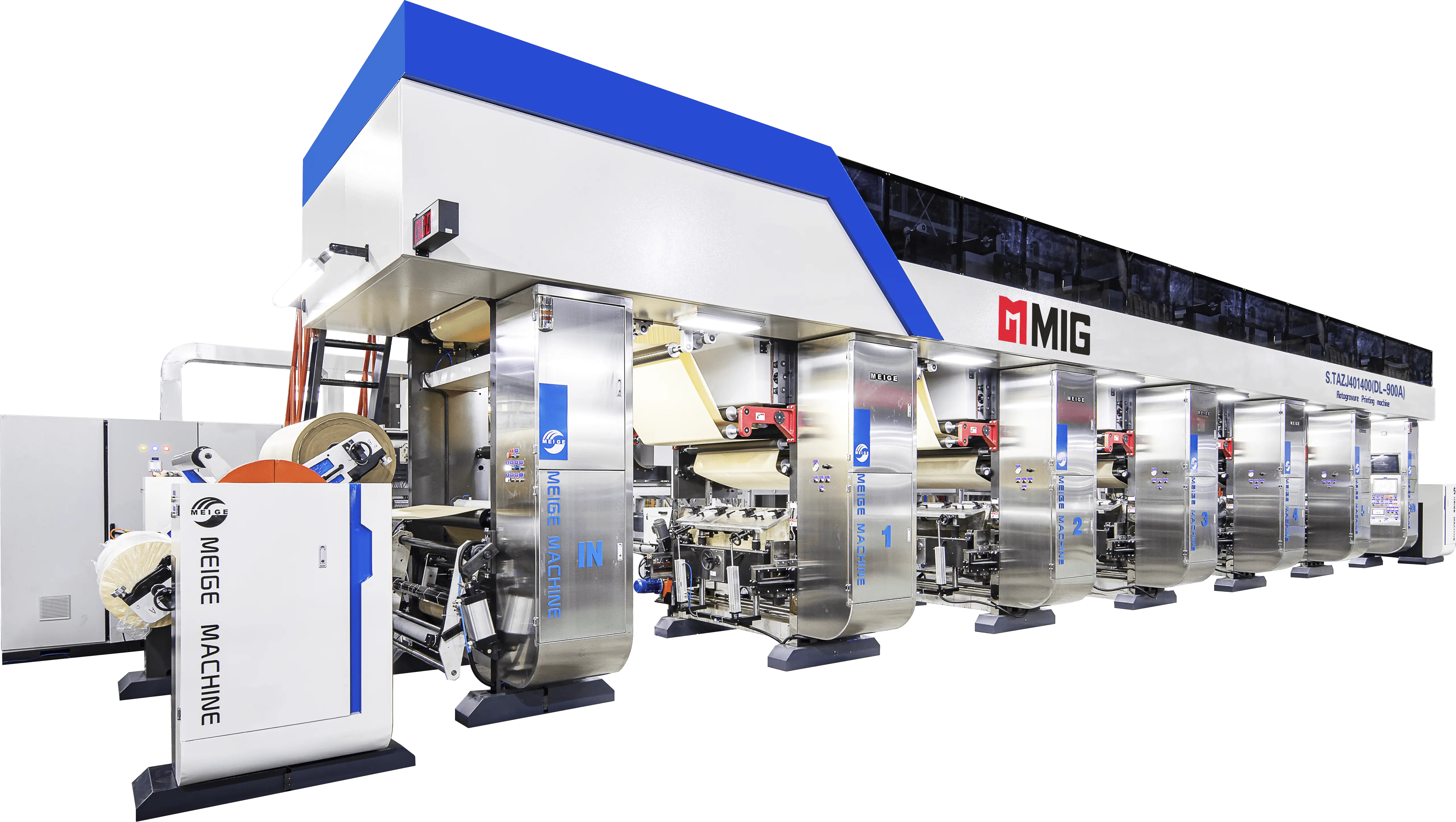
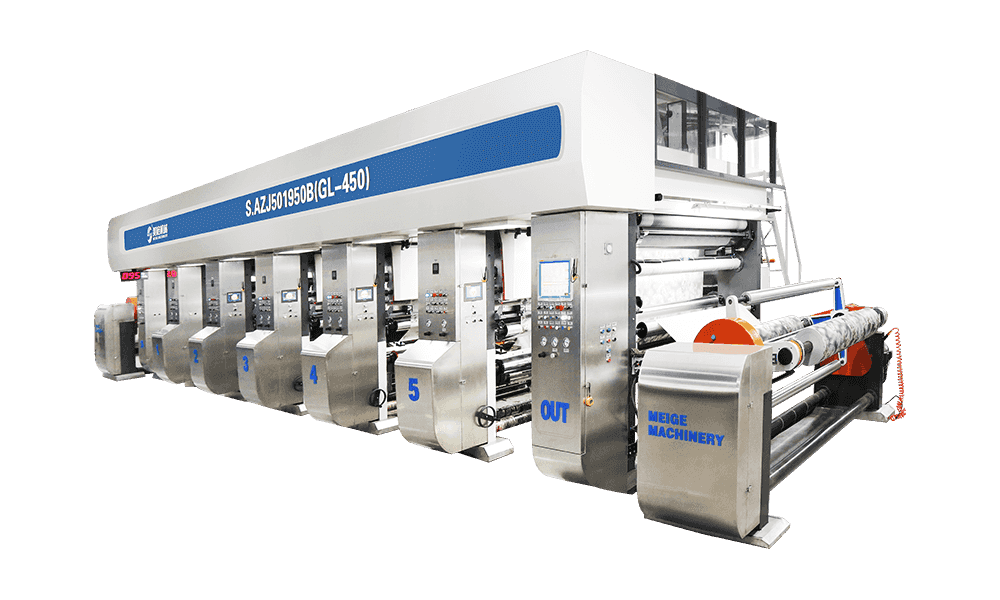
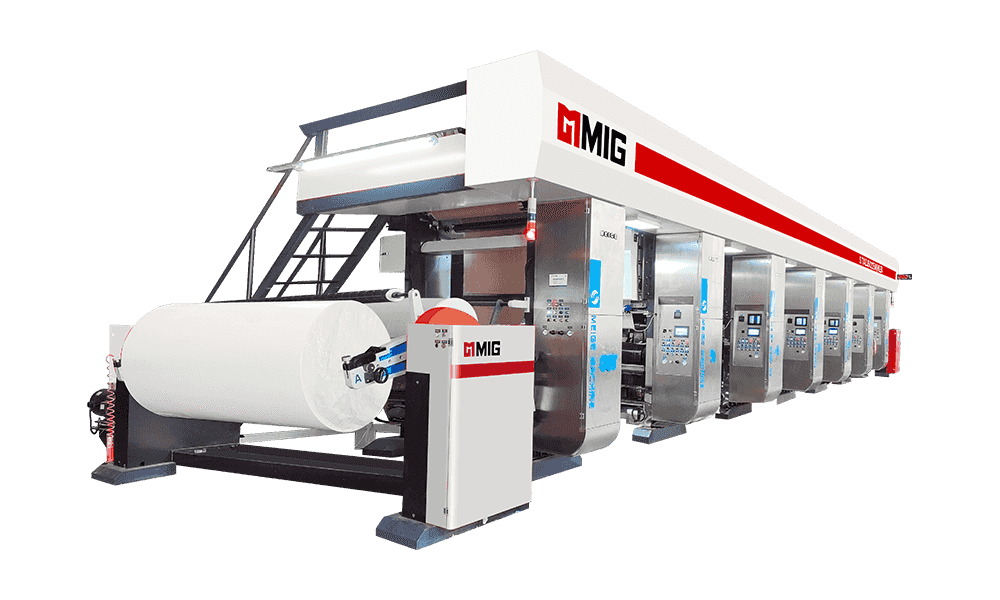
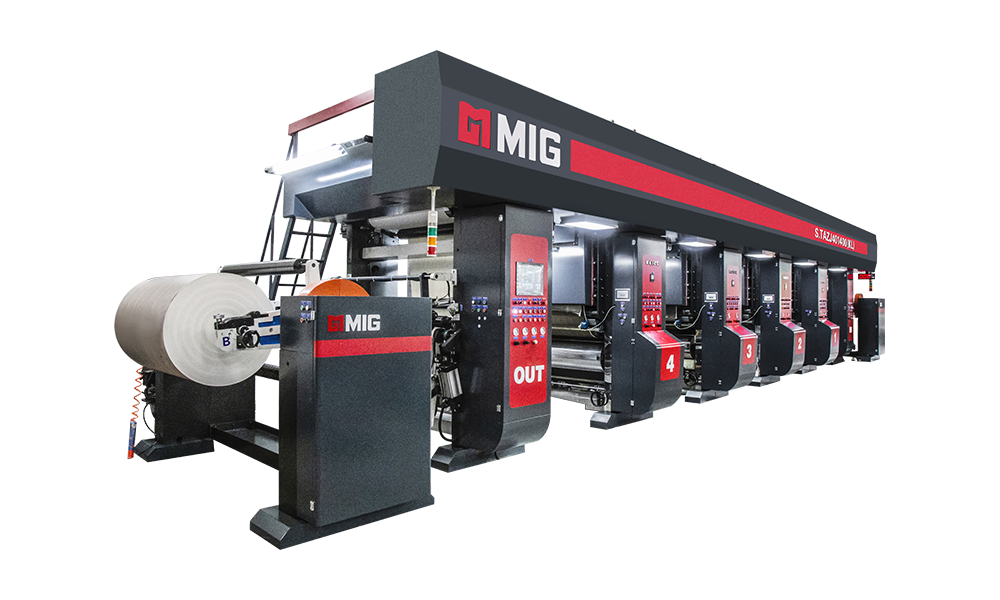
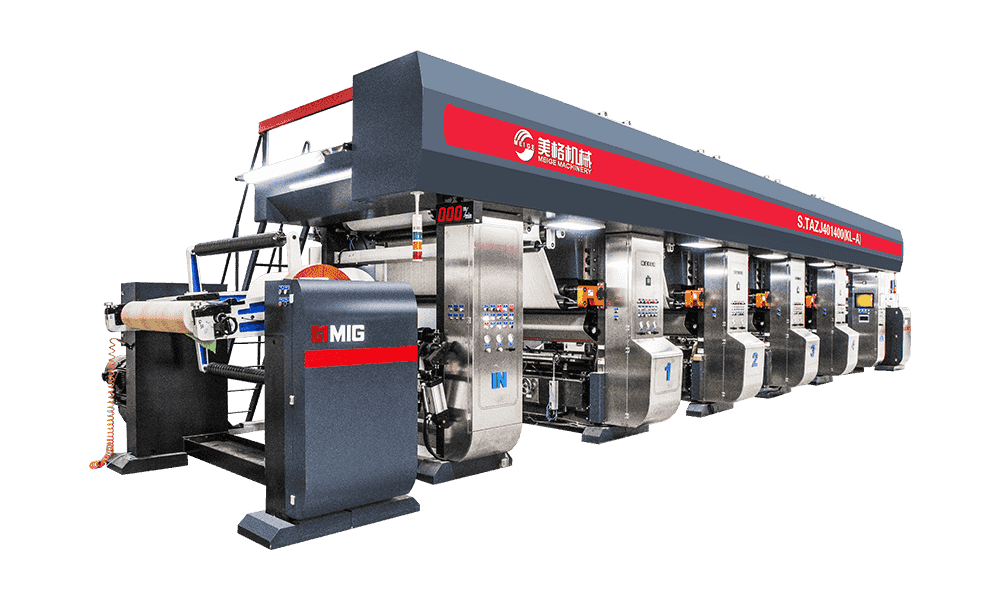
Recommended Products
The variety of models, to meet the development needs of various regions in the world.
Message Us Right Now!
Quick Links
Products
Contact Us
- Phone: +86-13067738802 (Manager Hua)
- Tel: +86-0571-61071715
- Fax: +86-0571-61071706
- Mail: [email protected]
- Add: No.32 Wujiatou, Qingke Village, Jincheng Street, Lin'an District, Hangzhou City, Zhejiang Province

Copyright © Zhejiang Meige Machinery Technology Co., Ltd. All rights reserved.
 Privacy Rotogravure Printing Machine Manufacturers