
 English
 中文简体
 русский
 فارسی
 عربى
 Deutsch
PVC Multi-Layer Laminating Machine: A Practical Guide to Glueless Film Lamination
A PVC multi-layer laminating machine is best understood by the result it leaves on the roll: a decorative film that behaves as one material even though two or three layers have been combined. The work looks simple from the aisle, but the machine is quietly balancing heat, tension, pressure, cooling, and surface texture at the same time. When those variables are in tune, the film feels stable, the embossing holds, and downstream printing or lamination runs with fewer surprises.
Content
- 1 What a PVC Multi-Layer Laminating Machine Really Does
- 2 Where Glueless Lamination Fits in Decorative Film Production
- 3 Process Stages and the Variables That Decide Quality
- 4 Matching the Line to Your Film Structure
- 5 Safety, Uptime, and Operator Confidence
- 6 Quality Checks That Reveal Whether the Line Is Working
- 7 Maintenance and Daily Operation
- 8 A Practical Way to Choose the Right Machine
- 9 Final Thoughts
What a PVC Multi-Layer Laminating Machine Really Does
This is not a printing machine. It takes PVC, PP, or PET films and joins them into a composite structure, usually without an adhesive layer. Heat, pressure, and controlled cooling do the bonding work. An embossing roll or belt can then transfer a wood grain, stone texture, matte finish, or another surface effect while the layers are still responsive to pressure.
That combination of bonding and surface shaping is why the machine matters beyond the laminating nip. It influences hand feel, gloss level, dimensional stability, and how well the film accepts later processing. A line that bonds strongly but cools unevenly can still produce rolls that block, curl, or lose texture definition.
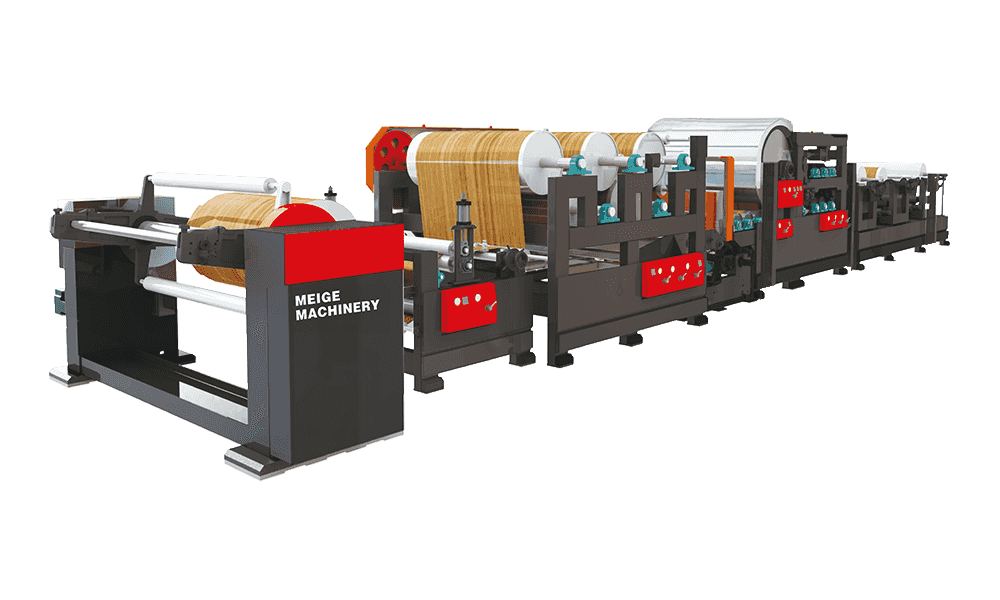 MGFH-1650D-2 PVC Multi-Layer Glueless Composite Embossing MachineFor comparing layer structures and embossing automation, this PVC machine handles 2-3 layer glueless composite embossing with 1580 mm width and 60 m/min mechanical speed.View Product →
In the FH series, the D2 configuration is built around 2-3 layer glueless composite embossing. That kind of configuration is a useful reference point when you are comparing layer structures, embossing requirements, and the amount of automation you actually need.
Where Glueless Lamination Fits in Decorative Film Production
Most PVC decorative film lines begin with printing. The printed film carries the colour and pattern; the laminating machine then adds structure, protection, and texture. A base film may be combined with a printed layer, a clear overlay, or a protective layer, depending on the final application. The sequence sounds straightforward, but the print and the laminate have to be matched for thickness, shrinkage, and surface energy.
If you are still mapping the full process, this overview of the PVC decorative film printing machine is a helpful companion to laminating. Printing establishes the visual effect; laminating decides whether that effect survives handling, storage, and fabrication.
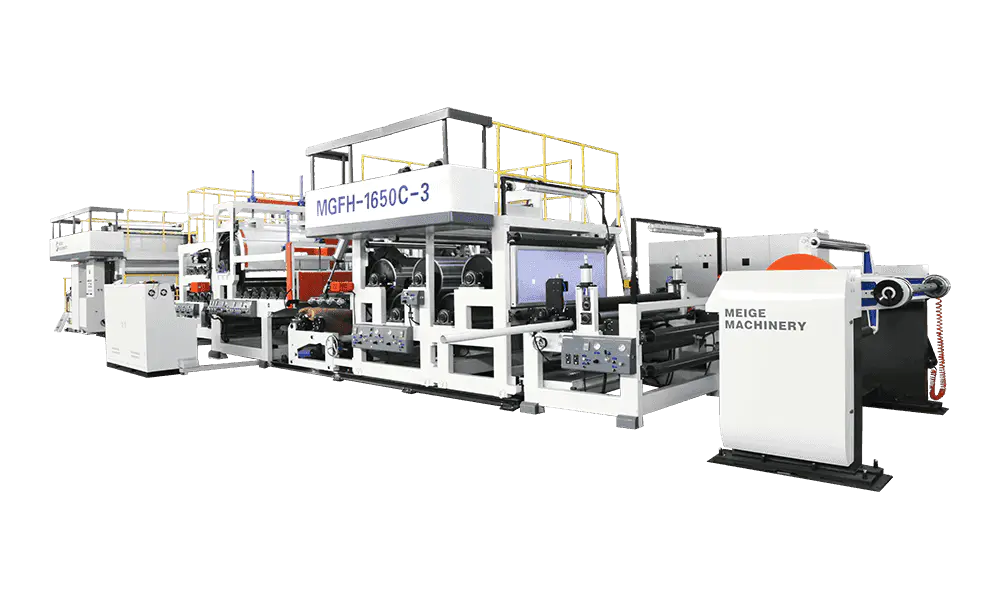
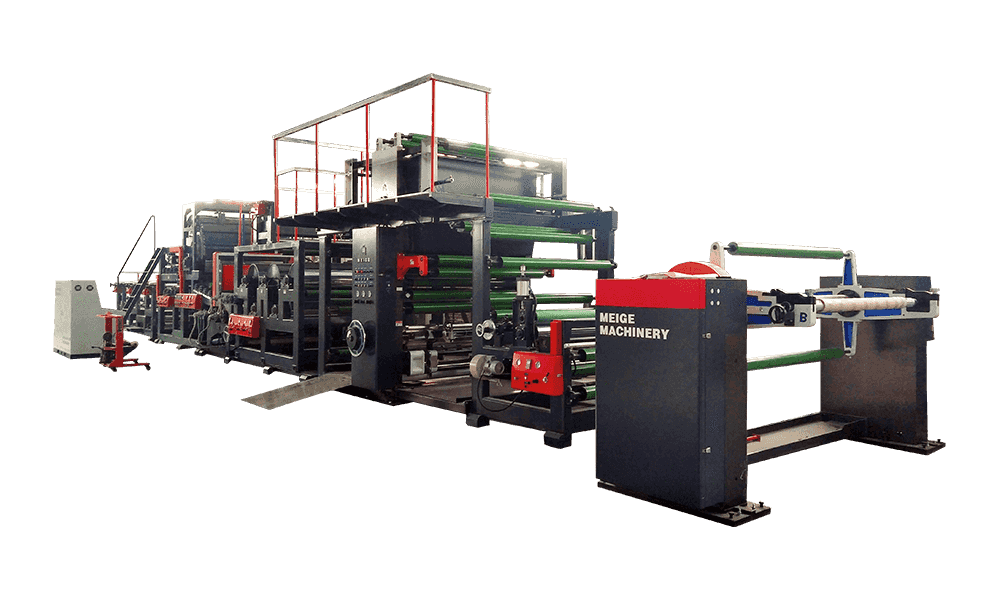 MGFH-1650D-3 PVC Composite Embossing and Coating MachineFor products needing a protective layer, this machine combines 2-3 layer glueless composite embossing with back-coating, edge cutting, cooling, and 1580 mm maximum material width.View Product →
When a protective layer or coating is part of the product specification, the machine needs more than an embossing station. The D3 configuration, for example, brings 2-3 layer glueless composite embossing together with coating capability. That is relevant for films that need a harder surface, a different sheen, or an added functional layer without turning the line into a collection of disconnected machines.
Process Stages and the Variables That Decide Quality
A laminating line is a chain of small decisions. The table below is not a specification sheet; it is a practical way to see where quality is won or lost.
| Process stage | Typical role | What to watch |
|---|---|---|
| Unwind and tension | Feeds base and overlay films at stable tension | Roll diameter changes, brake response, web alignment |
| Preheating | Brings films to a controlled temperature before nipping | Temperature uniformity, dwell time, film formulation |
| Laminating and embossing | Bonds layers and transfers the surface texture | Roll pressure, embossing depth, release, speed matching |
| Cooling | Sets the bond and stabilises the embossed pattern | Cooling capacity, web path, condensation risk |
| Coating or protective layer | Adds a functional or protective surface when required | Coat weight, curing, adhesion |
| Winding | Produces a stable roll for storage or the next process | Tension taper, edge trim, roll hardness |
A machine can have every one of these modules and still perform poorly if the transitions between them are rushed. Stable tension before the nip matters as much as pressure at the nip. Cooling matters as much as embossing depth. The best results usually come from tuning the line as a system, not from optimising one station in isolation.
Matching the Line to Your Film Structure
The first question is not “which machine is fastest?” It is “what film structure are we actually making?” A two-layer film for a furniture wrap has different demands from a three-layer film with a protective overlay for a high-wear surface. Width, roll handling, and downstream processing also narrow the choice quickly.
- Layer count: confirm whether the product is two-layer or three-layer, and whether a protective layer or coating is needed.
- Web width: match the line to the widths you run most often, not only the widest sample you hope to sell.
- Speed and dwell time: higher speed only helps when heating, nipping, and cooling can keep up with it.
- Embossing texture: deep wood grain, fine matte, and soft-touch effects place different demands on pressure and release.
- Changeover: if you run many short orders, roll handling and access matter as much as running speed.
It is easy to over-specify a line around a single premium product and then find it awkward for everyday work. A more grounded approach is to list the top five film structures by volume, then check which machine configuration handles all five without excessive compromise.
Safety, Uptime, and Operator Confidence
On a machine that handles heated rolls, moving webs, and heavy film rolls, safety is not a cosmetic feature. Guarding, nip-point protection, emergency access, and a layout that keeps operators out of awkward reaches all affect how calmly a line runs. A machine that is difficult to thread or clean will eventually lose time in small, repeated ways.
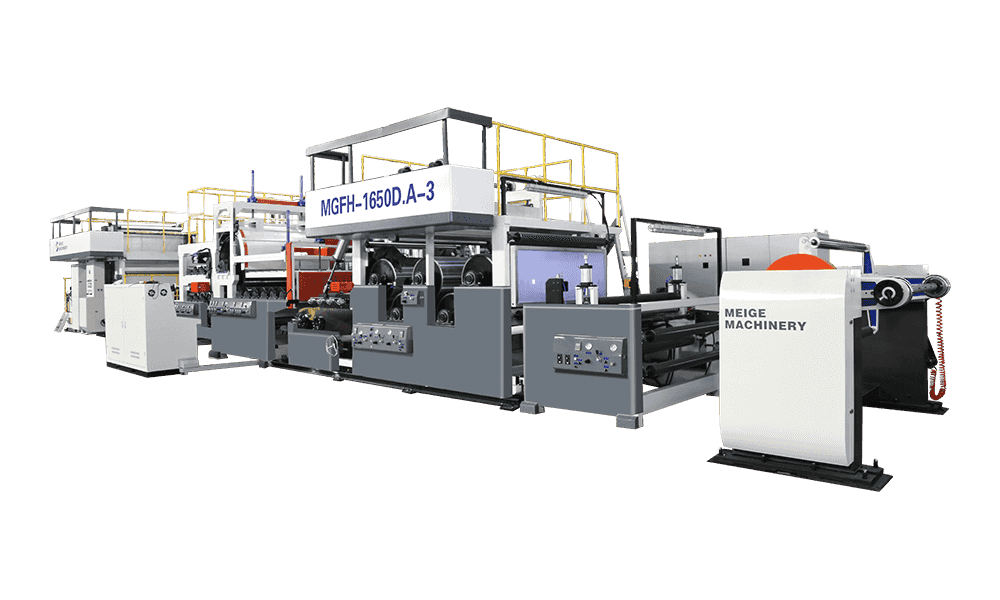 MGFH-1650D.A-3 PVC Multi-Layer Glueless Laminating MachineWith safety protection and a three-layer coating design, this PVC multi-layer glueless laminating machine supports embossing, cooling, edge cutting, and collection for decorative paper.View Product →
The D-A3 configuration reflects that practical view: appearance and safety design are treated as part of the machine, not as an afterthought. For most producers, the real test is whether the operating team can work confidently during startup, roll changes, and routine cleaning.
Quality Checks That Reveal Whether the Line Is Working
Final inspection should not be the first time a bonding problem is discovered. A few simple checks, run at production speed, tell you more than a single perfect sample made at low speed.
- Bond integrity: check peel resistance and delamination after the roll has cooled, not only at the winder.
- Visual clarity: look for haze, trapped air, flow lines, or dull patches that suggest uneven pressure or temperature.
- Texture repeatability: compare embossing depth and sharpness across the width and along the roll.
- Dimensional stability: watch for curl, shrinkage, or edge wave after storage.
- Winding quality: soft edges, starring, and inconsistent roll hardness often point back to tension or cooling issues.
Run these checks after a speed change as well as at startup. Many faults only appear when the line is asked to hold a steady condition for a long run.
Maintenance and Daily Operation
Glueless lamination is clean in principle, but it still depends on disciplined housekeeping. Embossing rolls, cooling paths, tension rollers, and edge-trim units all benefit from a short daily check rather than a long corrective shutdown.
- Clean embossing and cooling surfaces according to the supplier’s procedure.
- Check tension and brake response at both empty and full roll diameters.
- Verify temperature zones after a product change, not only at the start of the shift.
- Inspect edge trim, winding, and roll handling for early signs of misalignment.
- Keep a simple record of settings and film structures that run well.
That record is often more valuable than a binder of theoretical parameters. It shows what your line actually does with your films, your climate, and your operators.
A Practical Way to Choose the Right Machine
Start with samples, not with a brochure. Send your film structure, target texture, width, and expected run length to the machine builder, then ask for a trial that includes startup, steady running, and a roll change. For a broader view of the process, this article on the functions and advantages of PVC multilayer laminating machines is a useful starting point before you shortlist configurations.
- Define the film structure and the hand feel you want, including gloss and texture.
- Confirm layer count, web width, and whether coating or a protective layer is required.
- Test samples at the speed you expect to run, not only at a comfortable demonstration speed.
- Check safety, cleaning access, and roll handling with the people who will operate the line.
- Ask how settings are recorded, how changeovers are handled, and what support is available after installation.
A good machine should make the process more predictable. If a configuration only performs with one film and one operator, it is probably not the right fit for a working factory.
Final Thoughts
The right PVC multi-layer laminating machine is the one that makes your film structure repeatable, not the one with the longest feature list. Focus on bonding, cooling, texture control, and the everyday experience of running the line. When those basics are sound, the machine becomes a quiet part of production rather than a daily source of adjustment.
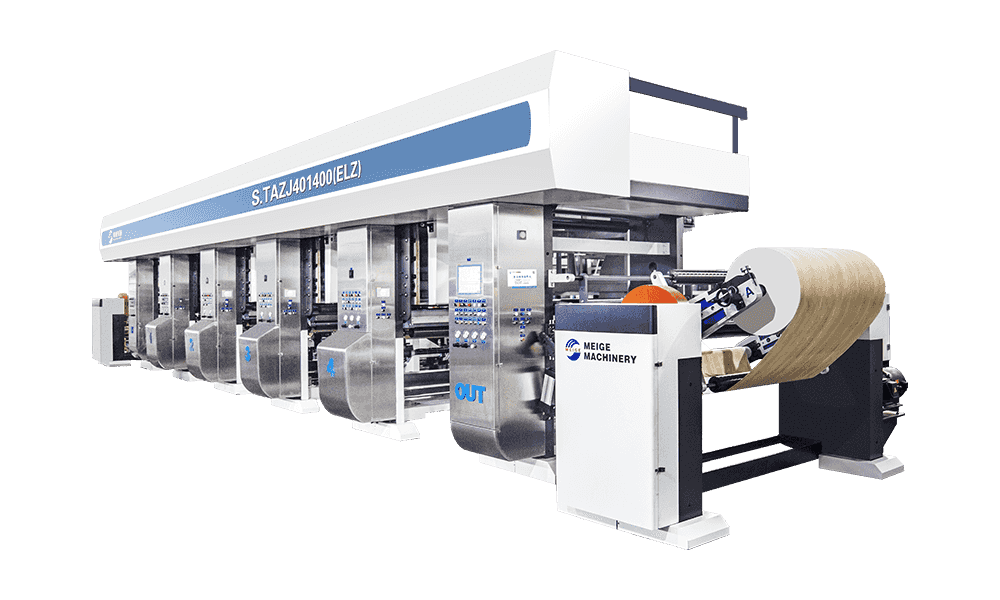
Product Categories
Recommended News
Recommended Products
The variety of models, to meet the development needs of various regions in the world.
Message Us Right Now!
Quick Links
Products
Contact Us
- Phone: +86-13067738802 (Manager Hua)
- Tel: +86-0571-61071715
- Fax: +86-0571-61071706
- Mail: [email protected]
- Add: No.32 Wujiatou, Qingke Village, Jincheng Street, Lin'an District, Hangzhou City, Zhejiang Province

Copyright © Zhejiang Meige Machinery Technology Co., Ltd. All rights reserved.
 Privacy Rotogravure Printing Machine Manufacturers