
 English
 中文简体
 русский
 فارسی
 عربى
 Deutsch
Rotogravure Printing Machine Guide: How Gravure Presses Work and How to Choose One
Rotogravure printing has a reputation for being heavy, fast and a little unforgiving, and anyone who has stood beside a well-set press knows that reputation is earned. An engraved cylinder turns, ink fills thousands of tiny cells, a doctor blade wipes the surface clean, and the web leaves the dryer with a wood grain or stone texture convincing enough that visitors reach out to touch it. That is the daily reality in decorative paper and film plants, and it is the world our team at Zhejiang Meige Machinery has worked in since 1999.
What follows is a practical walk through how a rotogravure printing machine works, which parts actually decide print quality, and how to match a press configuration to the material you intend to run. No hard sell, just the view from the machine-building side of the industry.
Content
How a Rotogravure Printing Machine Works
Gravure and rotogravure describe the same principle: the image is engraved into the surface of a cylinder instead of being carried on a plate. The cylinder is copper-plated, engraved with a pattern of cells, then chrome-finished. Ink floods the cells, a steel doctor blade scrapes the non-image surface clean, and an impression roller presses the web against the cylinder so the ink is drawn out of the cells and onto the substrate.
Once one color is down, the web passes through a dryer, then into the next printing unit. On a decorative press you might have four, five, six or seven units in line, each adding one layer of the final texture. The sequence on a modern machine generally runs like this:
- Unwind and web conditioning. The roll is spliced, tension is established, and the web is guided into the first unit without wrinkles.
- Infeed tension and register. The web is stretched to a stable, repeatable value, because grammage and elongation must stay constant or register will drift.
- Inking and doctoring. Each unit supplies its own ink, and each blade removes the surplus before the impression nip.
- Impression and transfer. The rubber-covered impression roller presses the web into the cells. Pressure uniformity across the width matters more than raw force.
- Inter-color drying. Every station dries before the next color lands, otherwise wet ink gets picked off and the surface turns cloudy.
- Final drying, cooling and rewind. The web is fully dried, cooled to stop blocking, then wound at controlled tension.
On an electronic shaft drive (ELS) machine, each printing unit has its own servo motor. Register correction happens by phasing the individual cylinders rather than by moving compensating rollers, which shortens make-ready and keeps long runs stable as the web stretches.
The Parts That Decide Print Quality
Machines vary enormously in size and automation, but the components that influence the printed result stay the same. When a job goes wrong, the cause is almost always in this short list.
| Component | What it does | What to watch |
|---|---|---|
| Gravure cylinder | Holds the image in engraved cells | Cell depth, chrome wear, and storage conditions |
| Doctor blade | Scrapes surplus ink from the cylinder surface | Blade angle, pressure, and edge condition |
| Impression roller | Presses the web into the inked cells | Hardness consistency and even pressure across the width |
| Drying units | Evaporate solvent or water between stations | Airflow balance as much as temperature |
| Register control | Keeps every color aligned to the first | Sensor reliability on low-contrast wood grain marks |
| Rewind and tension | Delivers a stable roll for the next process | Winding curve, especially on thin base paper |
Notice that only one item on that list is about the artwork. The rest is mechanical discipline, which is why two plants running identical cylinders can produce very different finished rolls.
Matching the Press to the Material
A rotogravure printing machine built for 60 g/m² decorative base paper is a different animal from one built for 80-micron PVC film. The differences show up in drying capacity, tension zones, cylinder handling and web width, so it pays to start from the substrate rather than from a catalogue page.
Decorative paper and wood grain
This is the largest family of gravure work in the furniture and flooring supply chain: melamine-facing paper, laminate overlay, engineered flooring top layers and cabinet panel surfaces. Wood grain is unforgiving because the human eye is extremely good at spotting a broken repeat or a color shift along the length of a roll. Four to seven color units are typical, and many plants choose large-diameter cylinder configurations so there is more ink volume available and fewer cylinder changes across a long production campaign. Register accuracy of a fraction of a millimetre is what separates a convincing plank from a printed one, which is why our wood grain decorative paper printing configurations are usually specified together with automatic registration rather than as an afterthought.
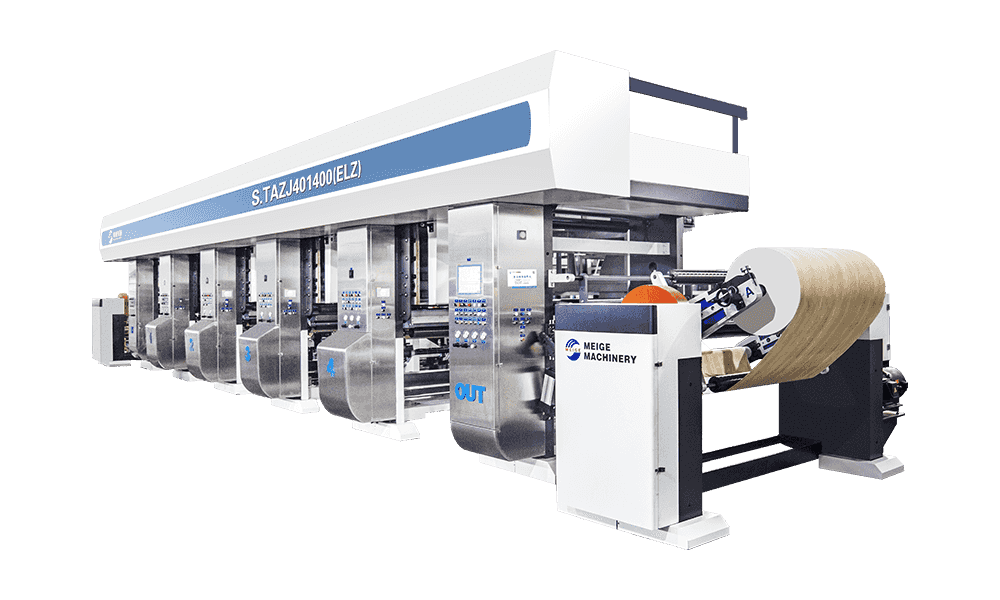
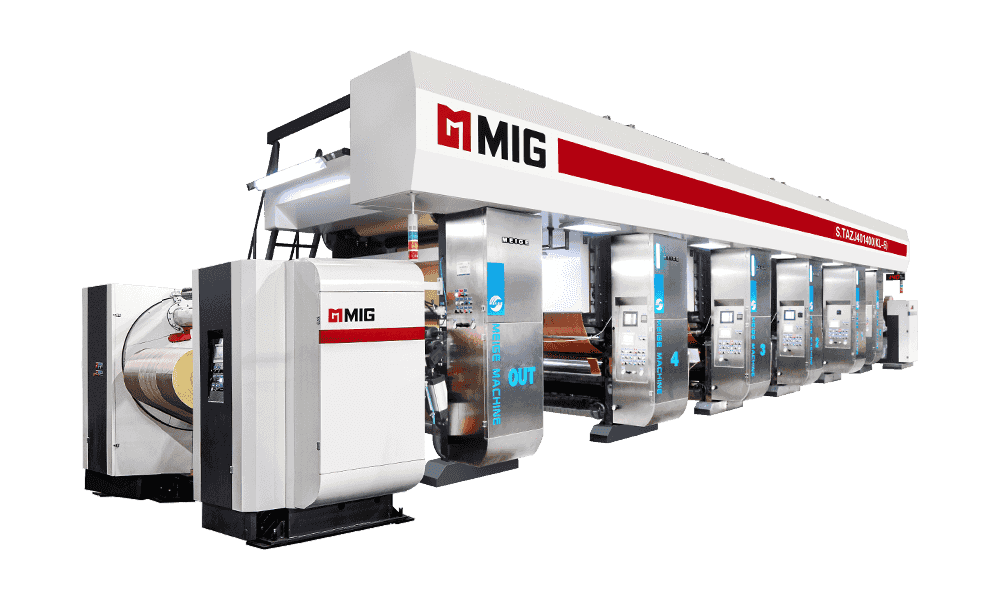
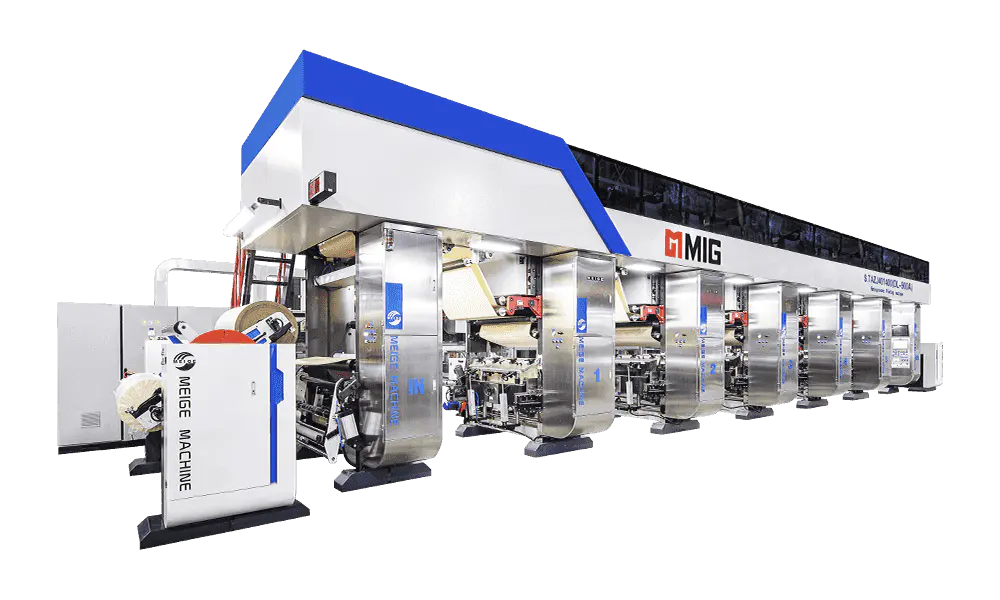
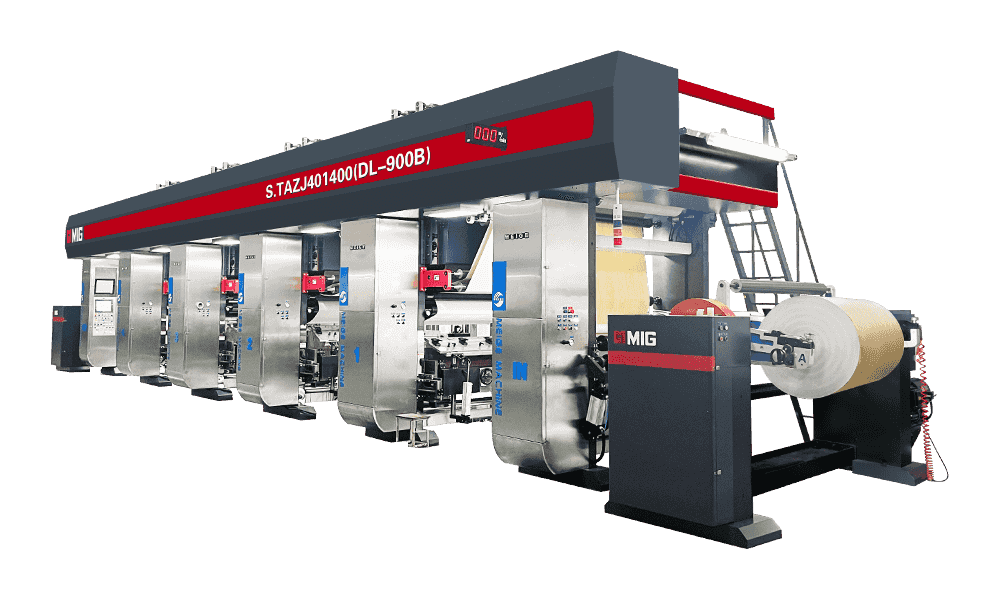
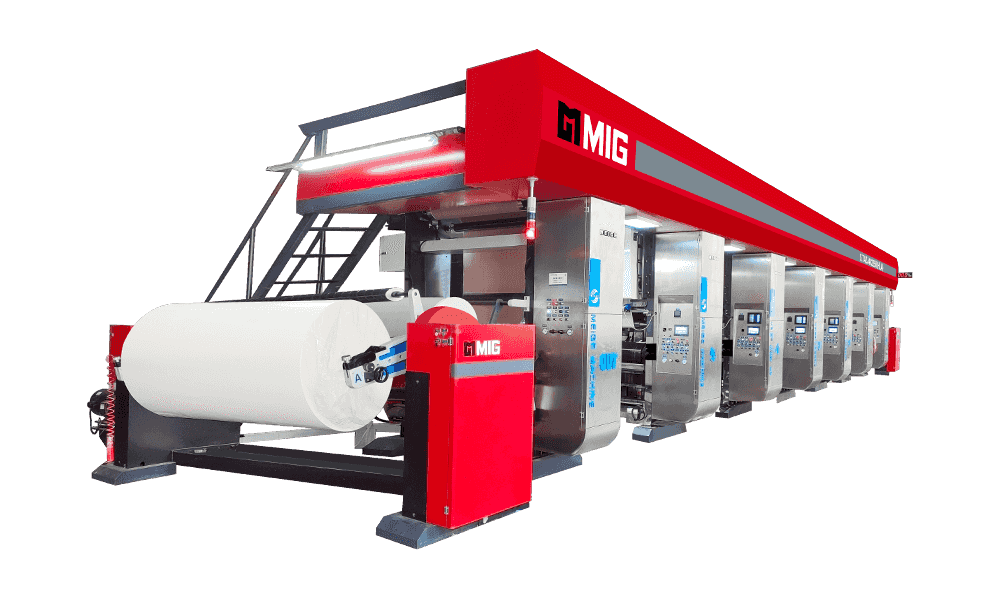
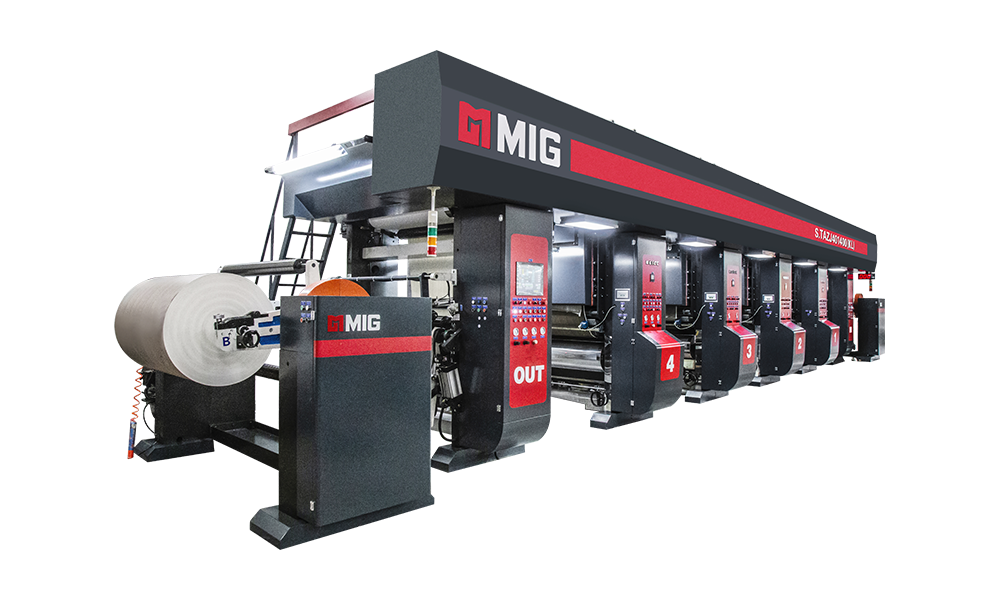 S.TAZJ401400(KL) Decorative Paper Gravure Printing MachineMedium-high speed ELS gravure press for engineered wood decorative paper, with automatic overprinting and still-image quality observation; suited to register-critical wood grain runs.View Product →
Film and foil substrates behave differently again. PVC, PP and PET absorb almost no ink, so adhesion, drying and web cooling have to be handled deliberately to avoid blocking on the rewind.
PVC, PP and PET decorative film
Decorative film lines usually combine gravure printing with a downstream laminating and embossing step, where a printed layer is bonded to a base film and then textured with a roller. The press therefore has to deliver consistent ink laydown across the full width, because any variation will be amplified by the embossing roll. Tension control matters just as much: film stretches more readily than paper, and a wandering web will show up as register error that no amount of blade adjustment can fix.
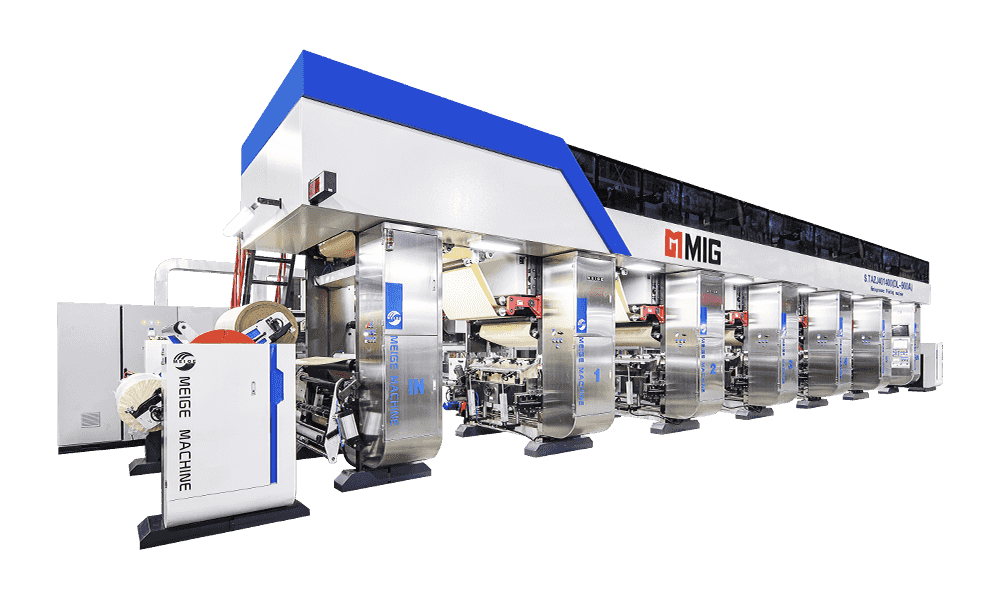
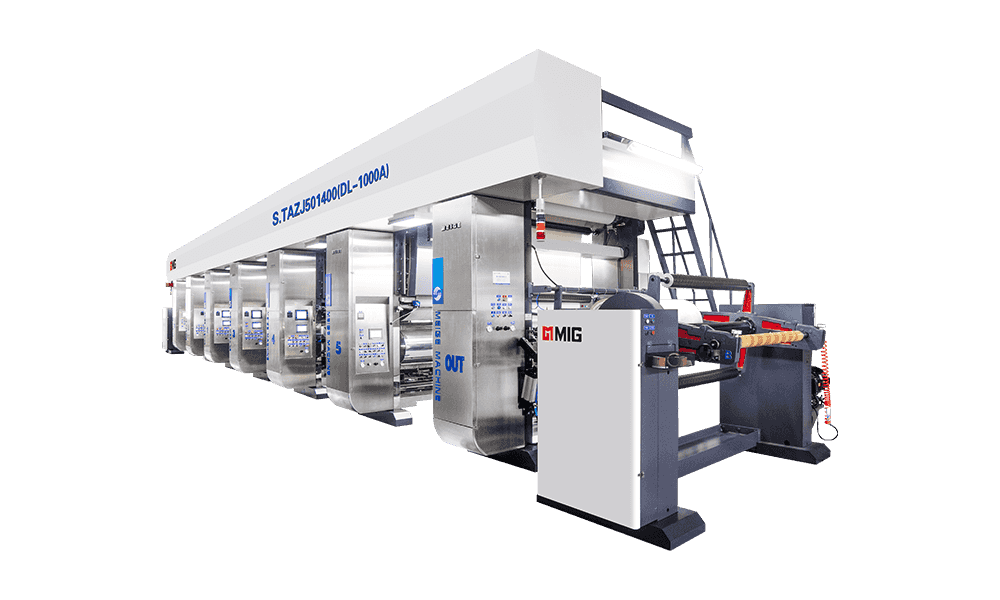
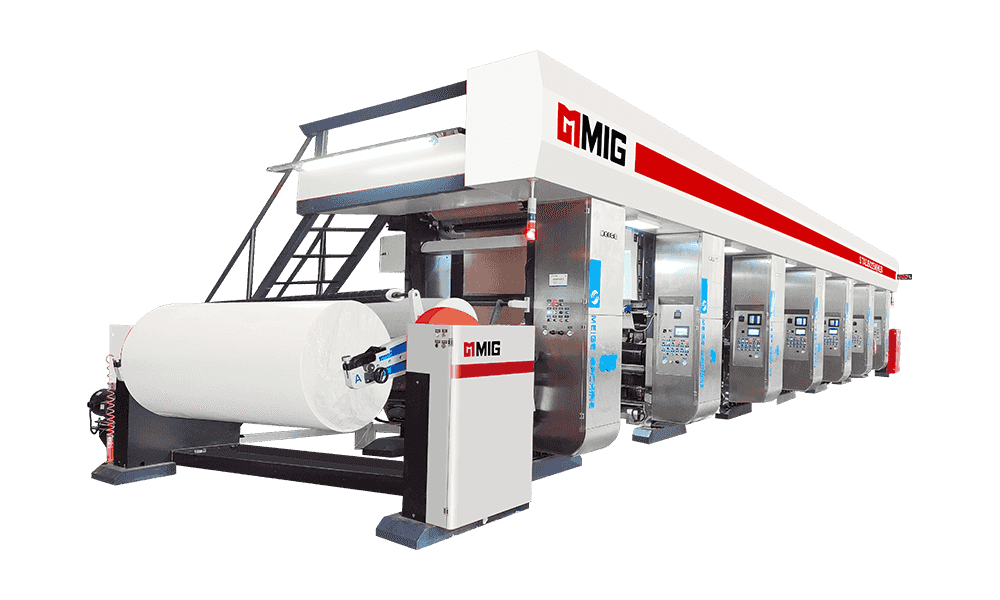
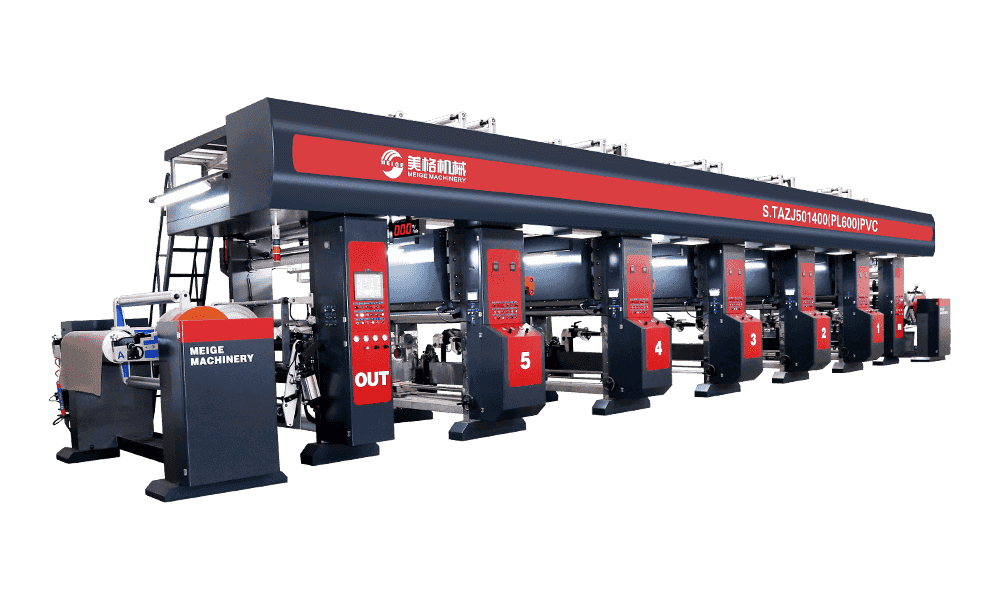 S.TAZJ501400 (PL600) PVC Film Gravure Printing MachineHigh-speed ELS gravure press for PVC composite and floor films, using full servo synchronization and computer overprinting for consistent wide-width decorative film production.View Product →
Transfer paper and transfer film
Textile transfer printing uses a different economic logic. The printed paper or film is a carrier, so the ink release behaviour, not just the visual result, becomes a quality criterion. Machines for this segment often run multi-unit configurations and need to handle both oil-based and water-based ink systems, since regulations and customer requirements vary by market. Water-based inks in particular demand generous drying capacity, because the water load is far higher than with solvent inks.
Configuration Decisions That Shape Output
When a customer asks for a quotation, the useful conversation is not about the price of a machine but about six or seven decisions that will determine what the machine can do for the next fifteen years:
- Number of color stations. Four is a workhorse for simple wood grain; six or seven gives room for base coat, grain, pore, highlight and a protective layer.
- Web width. Four-foot, six-foot and seven-foot formats suit different downstream line widths. Wider is not automatically better if your converting equipment cannot keep up.
- Cylinder diameter. Large-diameter configurations hold more ink and reduce changeover frequency, at the cost of floor space.
- Drive type. Shaft-driven or electronic shaft drive. ELS shortens make-ready and simplifies register on long repeats.
- Drying architecture. Ink chemistry decides this. Water-based work needs substantially more drying headroom than solvent work.
- Automation level. Automatic registration, viscosity control, and automated roll handling all reduce the labour content per shift.
- Integration. Whether printing and coating or embossing happen in line or in separate passes.
There is no universal best answer here. A plant running short, varied campaigns values fast changeover; a plant running one texture for weeks values stability and low maintenance. Both are legitimate, and the machine should be specified accordingly.
Equipment Around the Press
Anyone who has run a gravure department knows that the press is only part of the cost of ownership. Cylinders are heavy, expensive and easily damaged; ink has to be mixed to a repeatable viscosity; and every roll produced eventually has to be inspected and rewound before it reaches a customer.
This is why we build a wider range than presses alone: automatic cylinder washing machines that handle in-and-out printing trolleys, vertical cylinder storage with optional AGV handling, ink mixers, sample presses for laboratory work, and inspection rewinding machines. Washing affects plate life. Storage affects whether a cylinder prints cleanly after six months on the rack. Inspection rewinding catches splices, edge damage and print defects before they become a customer complaint.
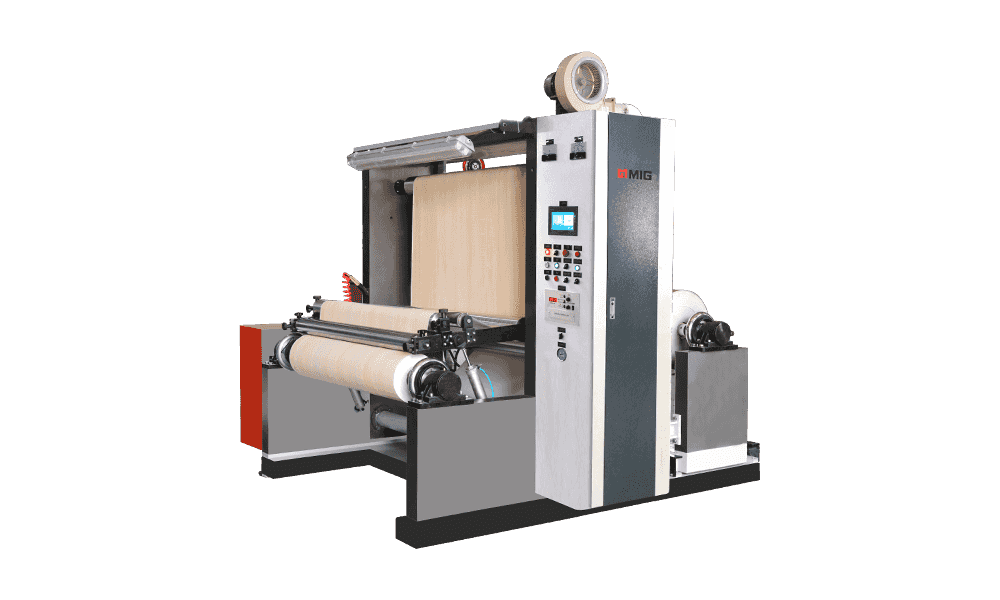 MF-1400-1650 Rewinding and Inspection MachinePost-printing inspection rewinder with automatic correction, pneumatic pressure roller and optional edge trimming, helping catch splices, edge damage and print defects before customer delivery.View Product →
For a new line, we generally suggest planning these items at the same time as the press. Retrofitting a cylinder store into an existing hall is a far more awkward project than designing the flow correctly from the beginning.
Keeping the Machine Healthy Over Time
Gravure presses are long-lived machines, and most of the problems we are asked about in the field are maintenance issues rather than design faults. A few habits go a long way:
- Replace doctor blades on a schedule rather than waiting for streaks to appear.
- Clean cylinders promptly and store them in a controlled environment, never on bare concrete.
- Track ink viscosity and temperature, because both change transfer behaviour hour to hour.
- Keep impression roller pressure records for each job so a good result can be repeated.
- Inspect dryer filters and airflow, since a slowly clogging duct shows up first as a drying problem.
- Train operators on register diagnostics, not just on start and stop.
Choosing a rotogravure printing machine is really an exercise in matching mechanical capability to a substrate, a texture and a production rhythm. Get the cylinder diameter, drying capacity, tension zones and registration approach right, surround the press with sensible cylinder and ink handling, and the machine will quietly produce consistent rolls for years. If you would like to talk through a specific material and texture, our engineers are always happy to look at samples and cylinder sets with you before anyone talks about specifications.
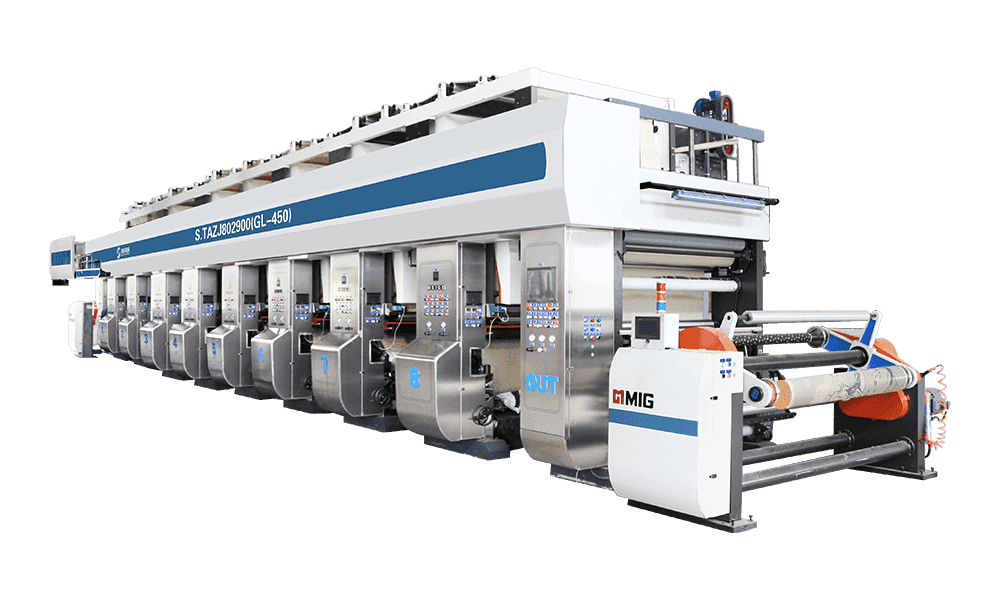
Recommended Products
The variety of models, to meet the development needs of various regions in the world.
Message Us Right Now!
Quick Links
Products
Contact Us
- Phone: +86-13067738802 (Manager Hua)
- Tel: +86-0571-61071715
- Fax: +86-0571-61071706
- Mail: [email protected]
- Add: No.32 Wujiatou, Qingke Village, Jincheng Street, Lin'an District, Hangzhou City, Zhejiang Province

Copyright © Zhejiang Meige Machinery Technology Co., Ltd. All rights reserved.
 Privacy Rotogravure Printing Machine Manufacturers