
 English
 中文简体
中文简体 русский
 فارسی
فارسی عربى
عربى Deutsch
What You Need to Know Before Buying a Large-Scale Gravure Printing Machine
Content
- 1 How a Large-Scale Gravure Printing Machine Actually Works
- 2 Where Large-Scale Gravure Printing Is Used
- 3 Key Technical Specifications to Evaluate
- 4 Gravure vs. Flexo at Scale: Choosing the Right Technology
- 5 Gravure Cylinder Management: The Hidden Operational Cost
- 6 Environmental and Compliance Considerations
- 7 What to Evaluate When Sourcing Commercial Gravure Printing Equipment
How a Large-Scale Gravure Printing Machine Actually Works
Gravure printing is an intaglio process — meaning the image is engraved directly into a cylindrical surface, and ink is transferred from those recessed cells onto the substrate as it passes through the press. In a large-scale gravure printing machine, this process runs at high speed across wide web widths, making it one of the most efficient methods available for long-run, high-quality print production.
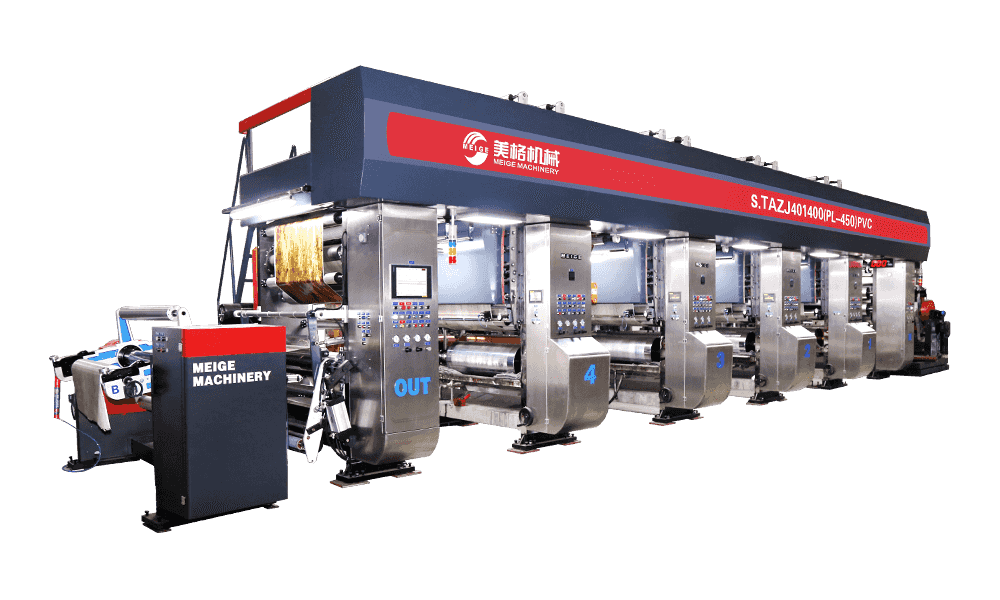
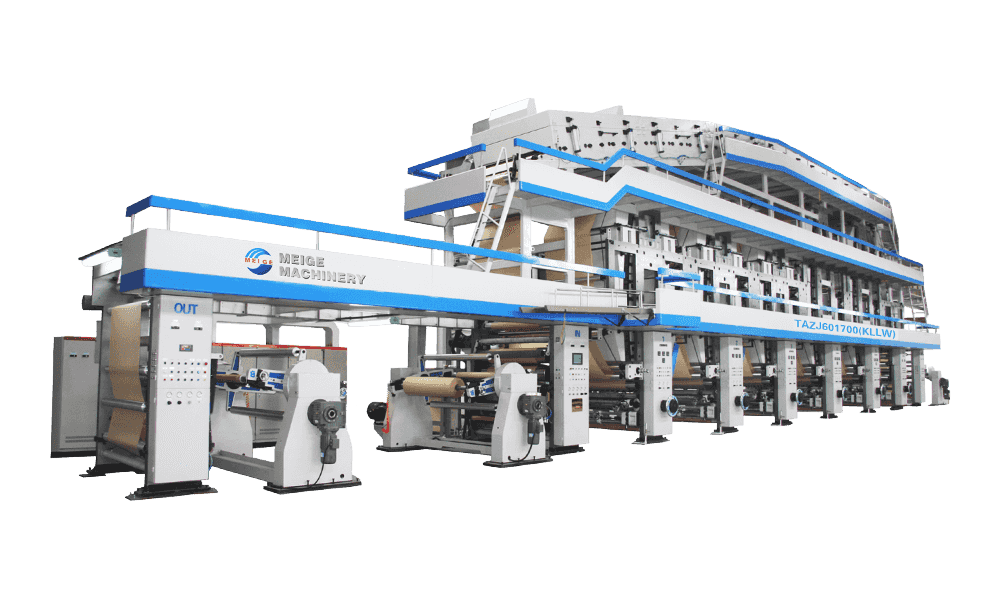
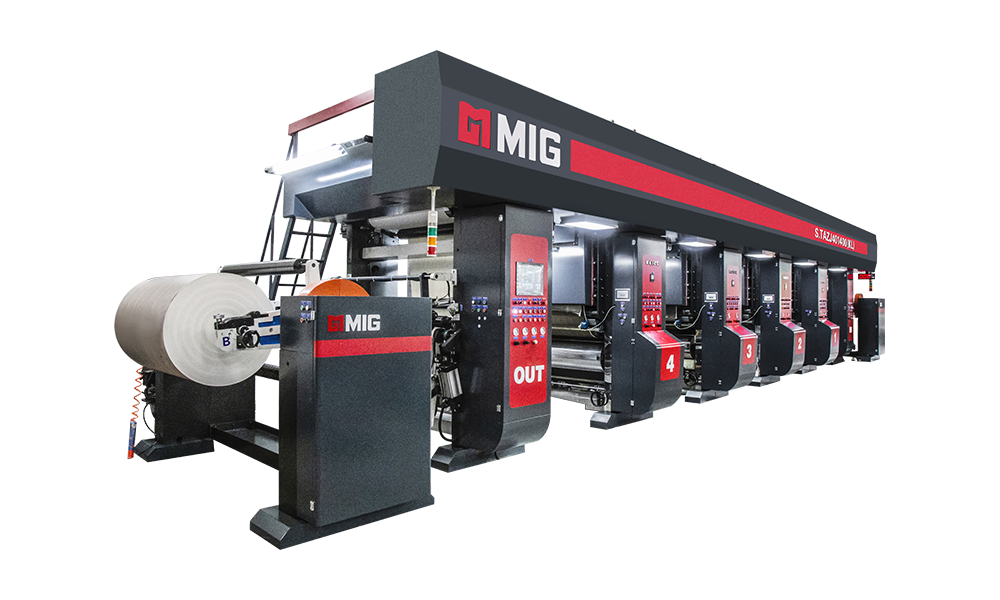
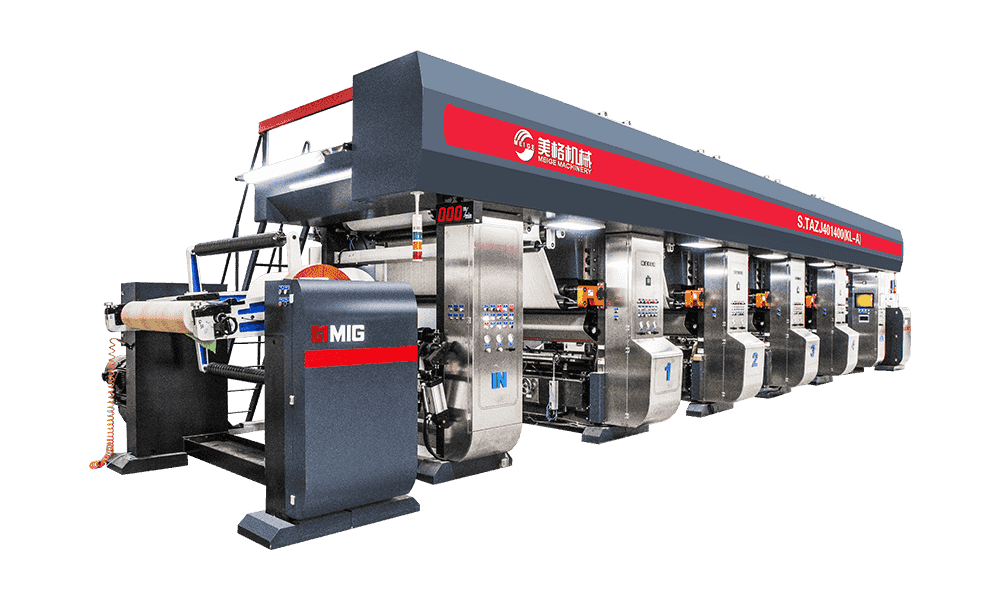
The core components of an industrial gravure printing machine include the engraved gravure cylinder, an ink fountain, a doctor blade that wipes excess ink from the cylinder surface leaving ink only in the engraved cells, an impression roller that presses the substrate against the cylinder, and a drying unit that cures the ink before the next color station. Most commercial gravure printing equipment runs multiple color stations in-line — typically 6 to 10 — allowing full-color printing in a single pass.
What distinguishes gravure from other print technologies at scale is the consistency and depth of ink laydown. Because ink volume is controlled by cell depth on the cylinder rather than by pressure or dot gain, gravure delivers exceptionally stable color reproduction across extremely long runs — millions of linear meters without meaningful quality drift. This is why it remains the preferred technology for packaging films, flexible laminates, and publication printing where color consistency is non-negotiable.
Where Large-Scale Gravure Printing Is Used
Understanding where high-speed gravure printing presses are deployed helps clarify whether this technology fits your production requirements. Gravure is not a general-purpose printing method — it's purpose-built for specific applications where volume, quality, and substrate versatility are the priorities.
- Flexible packaging: Snack food bags, stand-up pouches, retort packaging, and frozen food films are among the highest-volume applications for gravure printing machines for packaging. The ability to print on BOPP, PET, PE, CPP, and aluminum foil substrates at high speed makes gravure the dominant technology in flexible packaging globally.
- Decorative laminates: Furniture surface films, flooring laminates, and decorative paper printed with wood grain, stone, or abstract patterns require the fine detail and color consistency that large-scale gravure printing machines deliver reliably across wide web widths.
- Publication and catalog printing: High-volume magazines, mail-order catalogs, and newspaper supplements historically used gravure for its speed and image quality. While digital has taken some of this volume, gravure remains cost-competitive for runs above approximately 500,000 copies.
- Security printing: Banknotes, stamps, and high-security documents use gravure for its characteristic ink embossment and the difficulty of replicating engraved cylinder patterns — a built-in anti-counterfeiting property.
- Wallcovering and textile: Wide-format gravure presses are used for continuous pattern printing on wallpaper and textile substrates where repeat accuracy and color fidelity over long production runs are critical.
Key Technical Specifications to Evaluate
When comparing industrial gravure printing machines, the specification sheet can be overwhelming. These are the parameters that actually drive production performance and total cost of ownership.
Web Width and Print Width
Web width determines how much substrate the machine can process per pass. Large-scale gravure printing machines for flexible packaging typically run between 800mm and 1600mm web width. Publication gravure presses can exceed 3000mm. Wider webs increase output per hour but require larger roll handling infrastructure and more complex tension control systems. Match web width to your actual substrate supply — buying capacity you can't feed is wasted capital.
Print Speed
Modern high-speed gravure printing presses run at 200 to 400 meters per minute under production conditions, with some machines rated to 600 m/min for specific substrates. Maximum rated speed and sustainable production speed are different numbers — always ask for real-world throughput data under the ink and substrate conditions relevant to your jobs. Running consistently at 80% of rated speed is common; running consistently at 95% requires exceptional process control.
Number of Print Stations and Color Deck Configuration
Standard commercial gravure printing equipment is configured with 6, 8, or 10 color stations. Packaging applications requiring process color plus spot colors, white, and varnish often need 8 or 10 stations to complete jobs in a single pass. Each additional station adds cost, length, and complexity — but the alternative is multiple passes, which multiplies registration errors and reduces throughput. Specify station count based on the most complex jobs you expect to run regularly, not your simplest jobs.
Drying System
Gravure printing uses solvent-based or water-based inks, and effective drying between each color station is essential to avoid set-off, blocking, and solvent entrapment in laminates. Industrial gravure machines use hot-air dryer tunnels between stations, with temperature and airflow controlled independently per station. For solvent ink systems, an integrated solvent recovery unit is both an environmental compliance requirement and a meaningful operating cost offset — solvent recovery systems can reclaim 90–95% of solvent emissions for reuse.
Registration and Tension Control
Registration accuracy — how precisely each color aligns with the previous — is a core quality metric in multi-color gravure printing. Modern large-scale gravure printing machines use servo-driven cylinder positioning with optical registration systems that correct in real time, achieving registration tolerances of ±0.1mm or better at full speed. Tension control across the web affects both registration and substrate deformation, particularly with extensible films. Look for closed-loop tension control systems with zone-by-zone adjustment capability.
Gravure vs. Flexo at Scale: Choosing the Right Technology
For buyers evaluating large-scale printing investment, the most common comparison is between gravure and flexographic printing. Both are web-fed, high-speed technologies used for packaging and labels, but they have meaningfully different cost structures and quality profiles.
| Factor | Large-Scale Gravure | Wide-Web Flexo |
| Image Quality | Exceptional, especially in tonal gradients | Very good; gap narrowing with HD flexo |
| Cylinder / Plate Cost | High (engraved steel or chrome cylinders) | Lower (polymer plates, faster makeready) |
| Economical Run Length | 500,000m+ to amortize cylinder cost | Viable from shorter runs |
| Color Consistency on Long Runs | Excellent; minimal drift | Good; requires more press intervention |
| Substrate Versatility | Wide range including delicate films | Wide range; some limits on very thin films |
| Makeready Time | Longer; cylinder changes take more time | Faster job changeover |
| Machine Footprint | Large; requires significant floor space | Comparable at equivalent web widths |
The practical conclusion: if your core business is high-volume, long-run flexible packaging or decorative printing where image quality and color stability are differentiators, a large-scale gravure printing machine justifies its higher entry cost. If you run shorter, more varied jobs where makeready efficiency matters more than absolute image quality, wide-web flexo is the more flexible investment.
Gravure Cylinder Management: The Hidden Operational Cost
Gravure cylinders are the most significant recurring cost in operating a gravure printing machine for packaging or any other application. Each new job requiring new artwork needs new cylinders — typically one per color station. A full set of 8 cylinders for a packaging job can cost $3,000 to $8,000 depending on size and engraving complexity, before a single meter of substrate is printed.
This cost structure has two important implications. First, gravure is economical only when run lengths are long enough to amortize cylinder cost into an acceptable per-unit contribution. Second, cylinder inventory management — storage, tracking, re-chrome plating for repeated jobs, and eventual replacement — is a genuine operational discipline that requires space, process, and investment.
Electromechanical engraving (EME) and laser engraving have significantly reduced cylinder lead times compared to older chemical etching methods, and digital cylinder engraving systems now allow artwork-to-cylinder turnaround in 24–48 hours for standard work. If your production model includes frequent new job introductions, understanding your cylinder supply chain is as important as the press specification itself.
Environmental and Compliance Considerations
Operating a large-scale gravure printing machine involves environmental compliance obligations that vary by region but are consistently tightening globally. Solvent-based gravure inks emit volatile organic compounds (VOCs) during printing and drying, which are regulated under air quality frameworks in most major manufacturing jurisdictions.
- Solvent recovery systems: Thermal oxidizers or activated carbon solvent recovery units are standard on modern industrial gravure printing machines. Recovery systems typically capture 90–95% of solvent emissions, reducing both environmental impact and operating cost through solvent reuse.
- Water-based ink transition: A growing number of flexible packaging gravure operations are transitioning to water-based ink systems to reduce VOC emissions and simplify compliance. Water-based gravure requires modified drying systems and adjusted cylinder cell geometry, but the technology is mature for many substrate and application combinations.
- Wastewater management: Ink washup and cylinder cleaning processes generate solvent- or water-contaminated waste streams that require proper containment and disposal infrastructure. Factor this into facility planning for any new gravure installation.
- Energy consumption: High-speed gravure printing presses with multi-zone drying systems are energy-intensive. Heat recovery from drying exhaust and variable-speed drives on major motors are standard efficiency features on newer machines that meaningfully reduce energy cost per meter printed.
What to Evaluate When Sourcing Commercial Gravure Printing Equipment
Purchasing a large-scale gravure printing machine is a capital decision that will affect production capacity and operating economics for 15–25 years. The machine specification matters, but so do the factors around it.
New vs. Rebuilt Equipment
The used and rebuilt gravure press market is substantial, and a professionally rebuilt industrial gravure printing machine from a reputable equipment dealer can offer 60–70% of new machine cost at comparable performance — particularly for proven platforms from manufacturers like Windmöller & Hölscher, Cerutti, Bobst, or Rotomec. Key due diligence points include cylinder bearing condition, drying system capacity, registration system generation, and whether the control system has been modernized. Older machines with outdated PLCs and HMIs carry hidden upgrade costs that can close the price gap with new equipment quickly.
Manufacturer Support and Parts Availability
A gravure press running at 300 m/min generates significant value per hour of uptime — and significant cost per hour of unplanned downtime. Evaluate the manufacturer's regional service network, spare parts lead times, and remote diagnostics capabilities before committing. For operations in markets distant from major equipment manufacturing centers, this consideration can outweigh a moderate price difference between suppliers.
Automation Level
Modern high-speed gravure printing presses offer varying levels of automation for job changeover, register setting, viscosity control, and defect detection. Fully automated register setting can reduce makeready waste from 1,000–2,000 meters to under 300 meters per job change — a significant material and time saving at high print speeds. In-line inspection systems using camera-based defect detection are increasingly standard on commercial gravure printing equipment and reduce the risk of defective product reaching converting or end-use customers.
Total Cost of Ownership Modeling
Purchase price is only one input. A complete total cost of ownership model for a large-scale gravure printing machine should include: energy consumption per million meters printed, solvent or ink cost and recovery rates, cylinder amortization per job type, planned maintenance labor and parts, operator headcount required per shift, and expected uptime percentage based on the manufacturer's maintenance schedule. Running this analysis across two or three competing machines at your actual job mix frequently changes the ranking from what purchase price alone would suggest.
Recommended Products
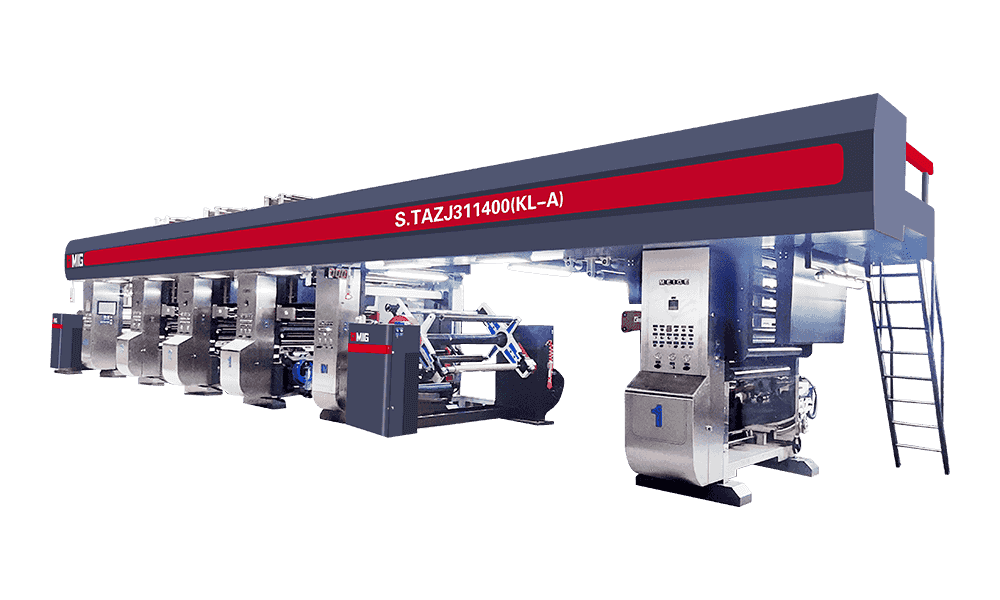
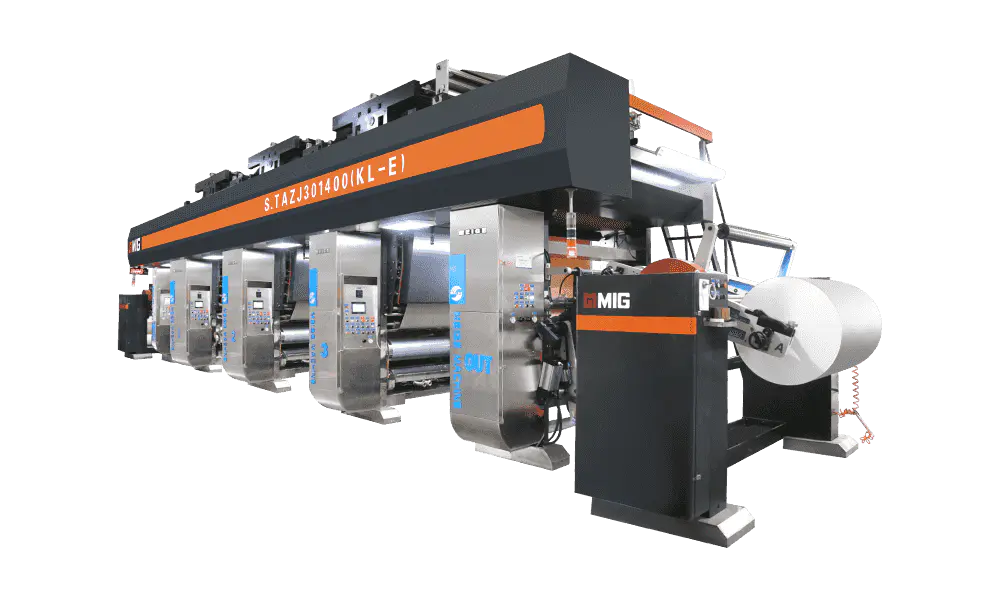
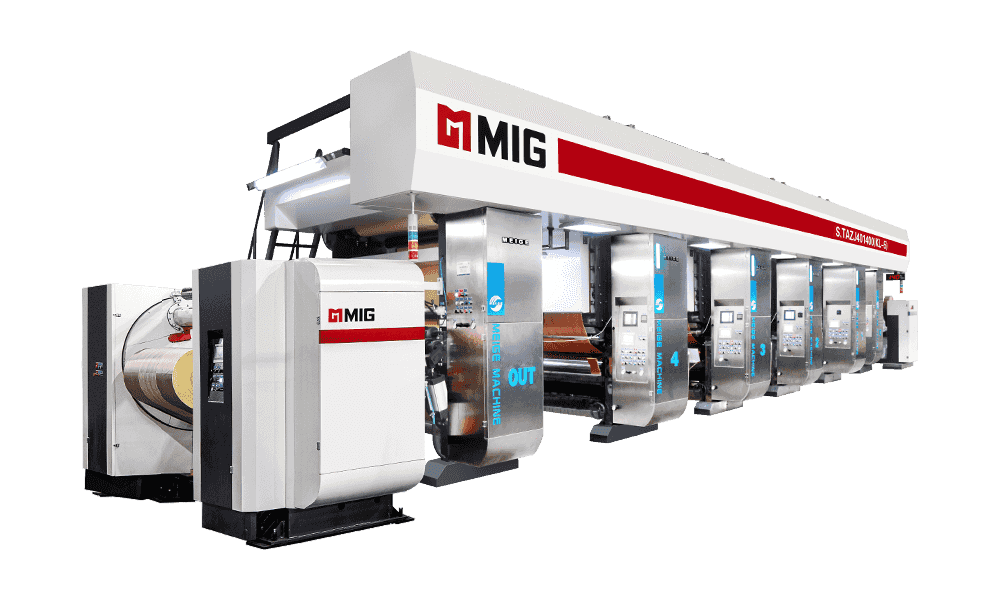
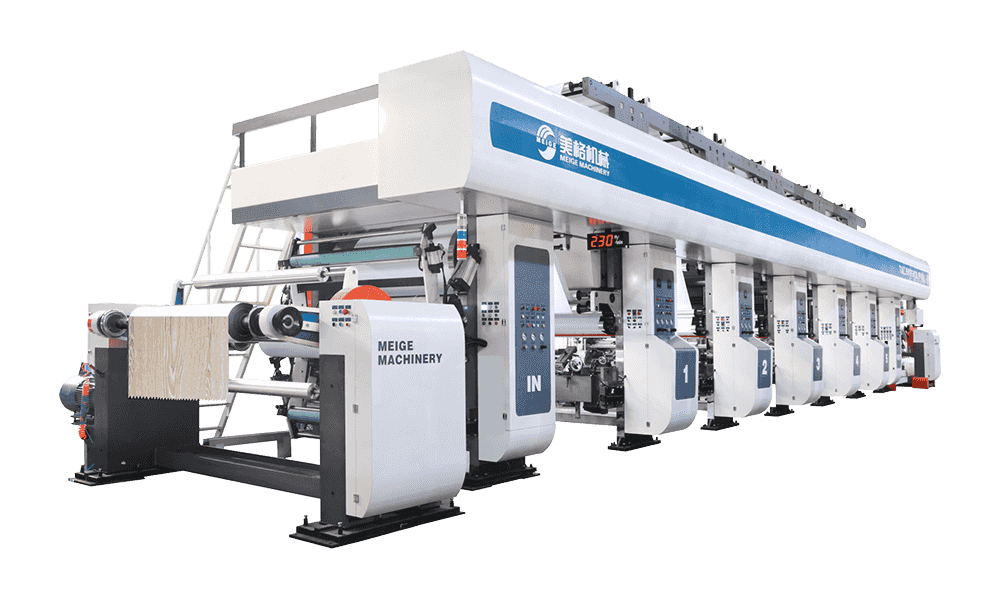
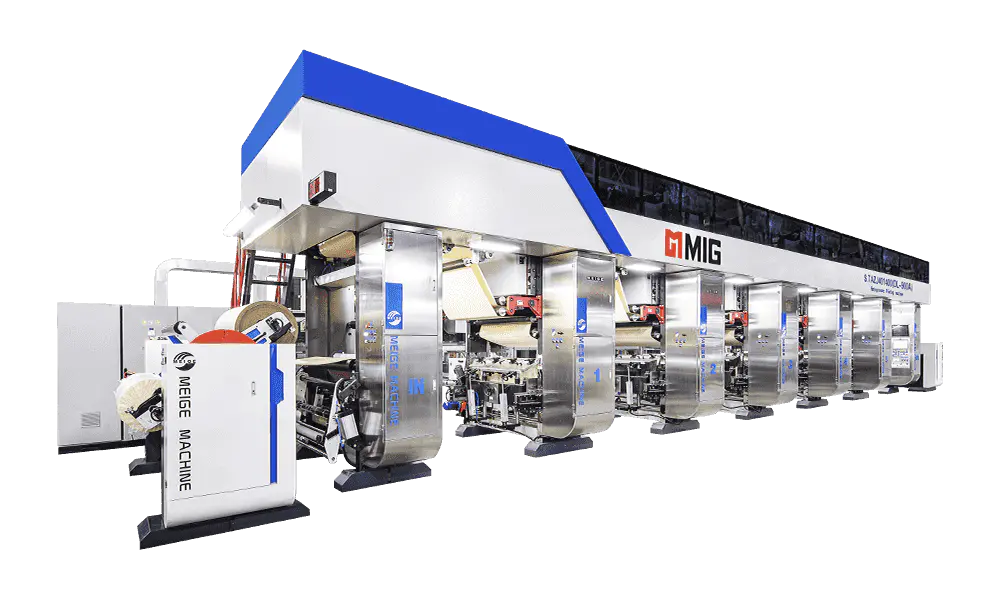
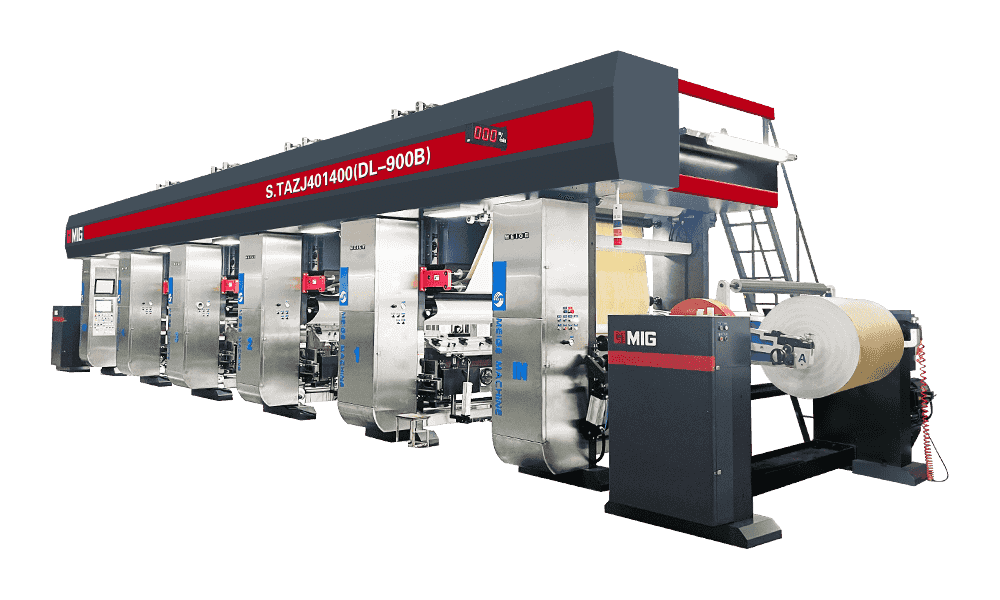
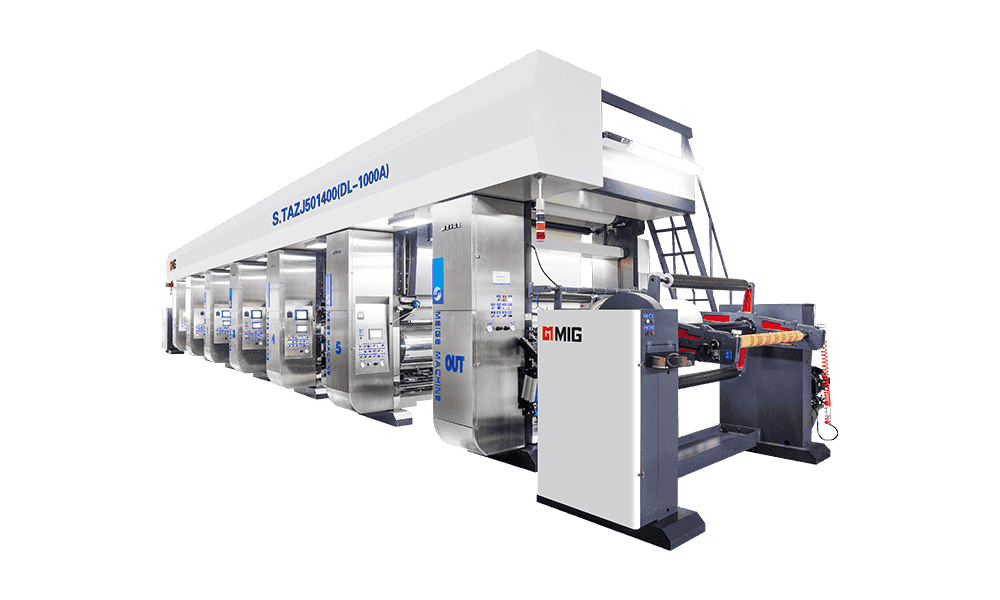
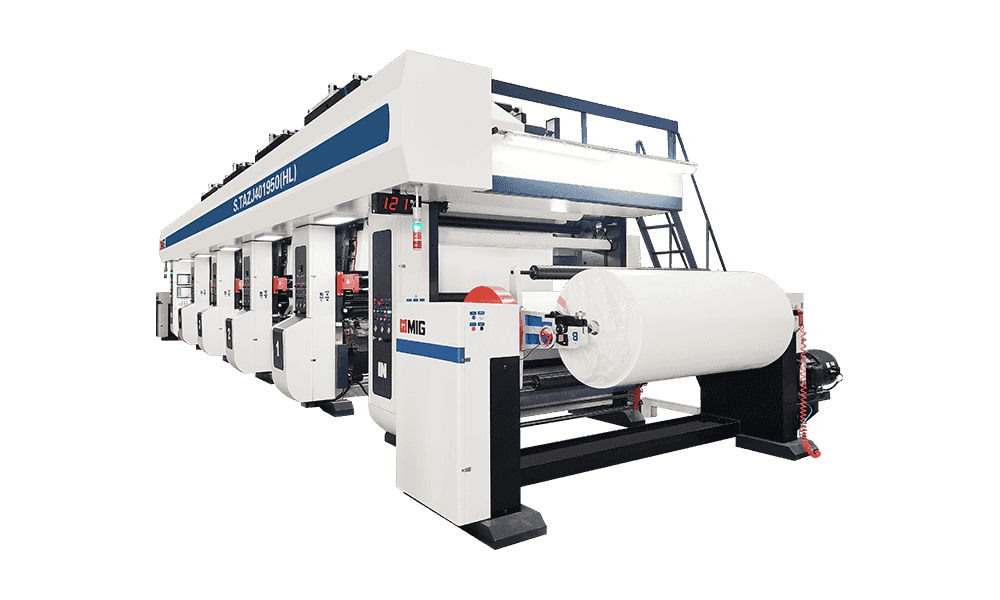
The variety of models, to meet the development needs of various regions in the world.
Message Us Right Now!
Quick Links
Products
Contact Us
- Phone: +86-13067738802 (Manager Hua)
- Tel: +86-0571-61071715
- Fax: +86-0571-61071706
- Mail: [email protected]
- Add: No.32 Wujiatou, Qingke Village, Jincheng Street, Lin'an District, Hangzhou City, Zhejiang Province

Copyright © Zhejiang Meige Machinery Technology Co., Ltd. All rights reserved.
 Privacy Rotogravure Printing Machine Manufacturers