
 English
 中文简体
中文简体 русский
 فارسی
فارسی عربى
عربى Deutsch
Decorative Paper Gravure Printing Machine: A Practical Selection Guide
When you walk into a decorative paper plant, the conversation rarely starts with machine color counts. It starts with a reject pile: sheets with skipped gravure cells, visible streaks, or misaligned wood grain that cannot be sold. The cause is often a printer that was chosen by price or speed alone. The solution is to evaluate a decorative paper gravure printing machine as a complete system, where electronic shaft control, cylinder size, drying capacity, and color unit count work together. If you compare those criteria first, the rest of the decision becomes much clearer.
Content
What Actually Determines Print Quality on Decorative Paper
Decorative paper printing is not packaging printing. The substrate is often light, porous, and sensitive to tension changes. The pattern repeat may be 800 mm or 1,400 mm, and the customer expects the same wood grain to appear identically on every sheet. That repeatability depends on four subsystems.
First, the drive system. A mechanical shaft press links every color unit through gears and line shafts. As wear accumulates, you adjust registers manually and watch output drift. An electronic shaft drive, commonly labeled ELS, controls each unit independently with servo motors. It holds registration at speed and makes set-up changes faster. This is why many wood grain printers in the market now specify ELS as the standard option.
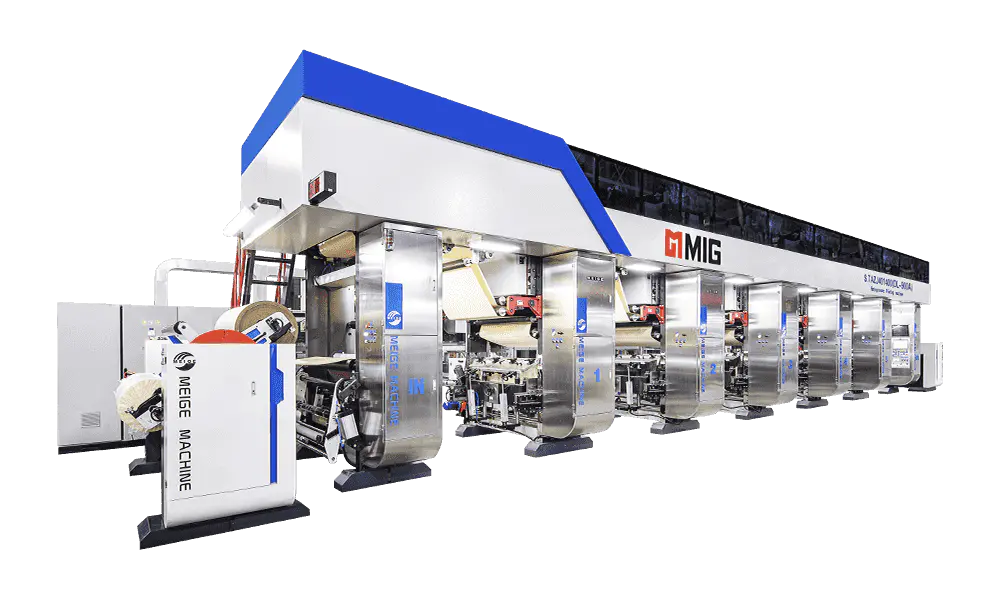
Second, the cylinder diameter. Decorative wood grain patterns are long. If your standard repeat exceeds 1,000 mm, a small cylinder will force you to change patterns mid-run or accept a mismatch. Large diameter cylinders above 1,400 mm are a recurring need in this industry. The furniture paper rotogravure printing line often benefits from a super-large diameter cylinder so the grain continues across the full sheet without interruption.
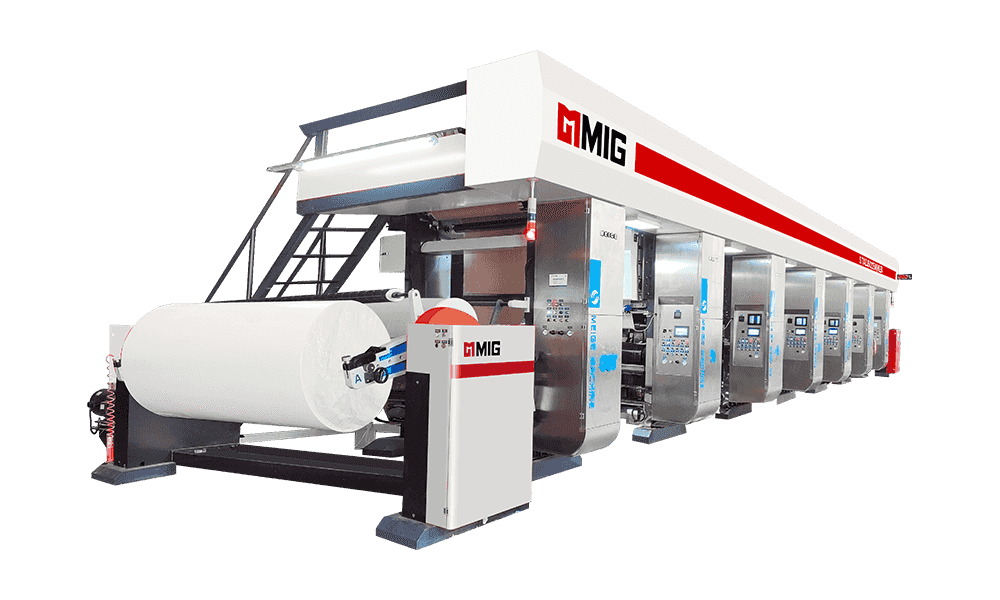
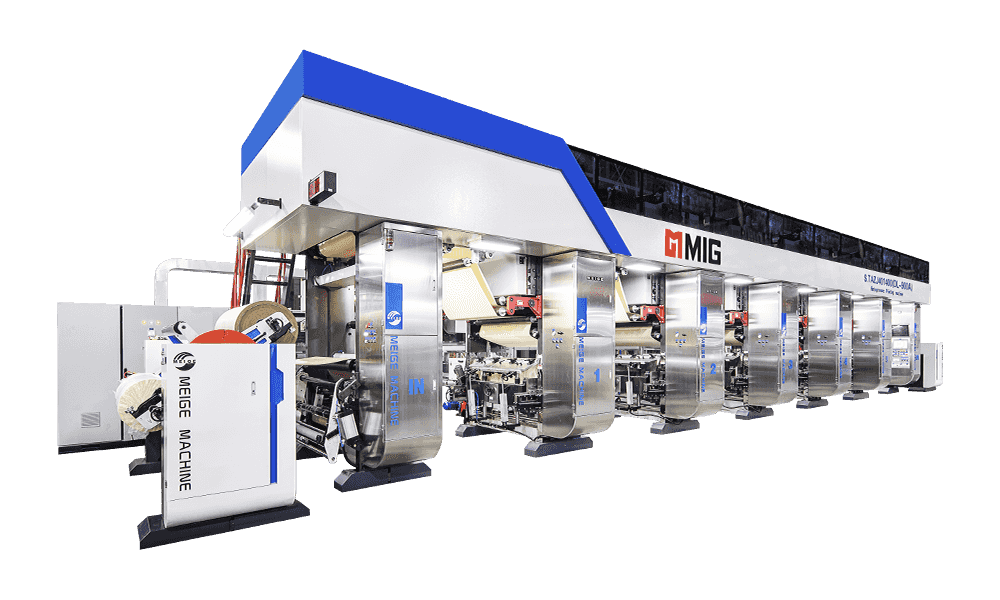 4-Foot ELS Gravure Printing Machine with Super Large Cylinder for Wood Decorative PaperThis machine supports cylinder diameters up to 900 mm, ideal for continuous long wood grain patterns. It ensures precise overprinting and efficient drying, addressing common issues like trapped solvents and haze in decorative paper production.View Product →
Third, the drying and ventilation system. Decor paper is printed with water-based and solvent-based inks. If the air flow or temperature is not balanced between color units, solvent remains trapped, the ink picks onto the next cylinder, and you see blisters or haze. A properly sized dryer with controlled air velocity and temperature is a non-negotiable purchase criterion.
Fourth, the doctor blade and ink system. A precision doctor blade removes surplus ink from the cylinder. If the blade is uneven, you get streaks and inconsistent cell volume. The ink circulation, viscosity control, and filtration all affect whether the engraved pattern transfers cleanly.
When these four systems work together, the press produces repeatable decorative paper. When one is undersized, the whole line becomes a compromise.
Matching Machine Series to Your Production Mix
No single printer can serve every decorative paper job without compromise. Your product mix should determine the number of color units and whether you need coating or lamination capabilities in the same line.
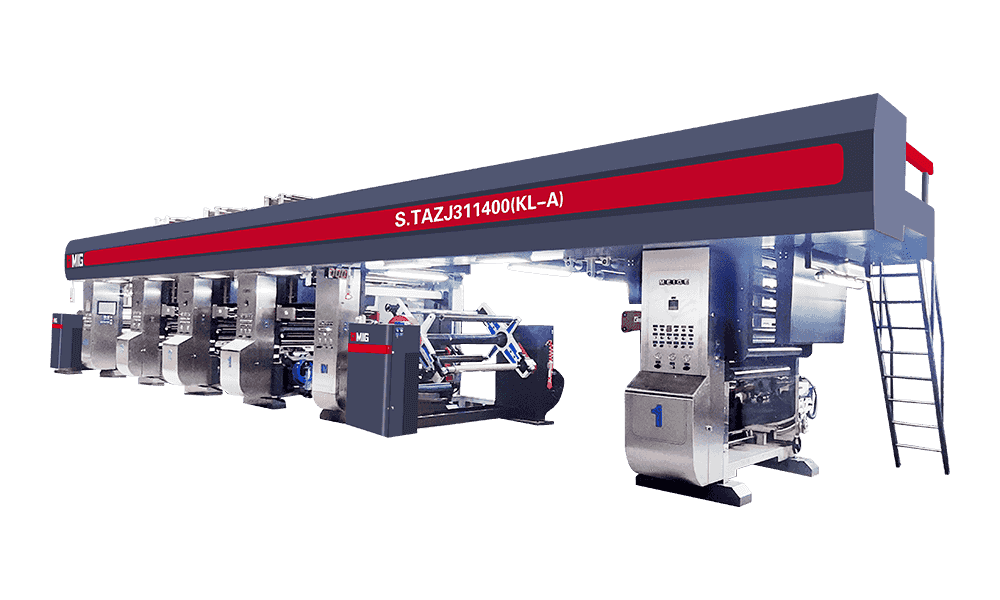
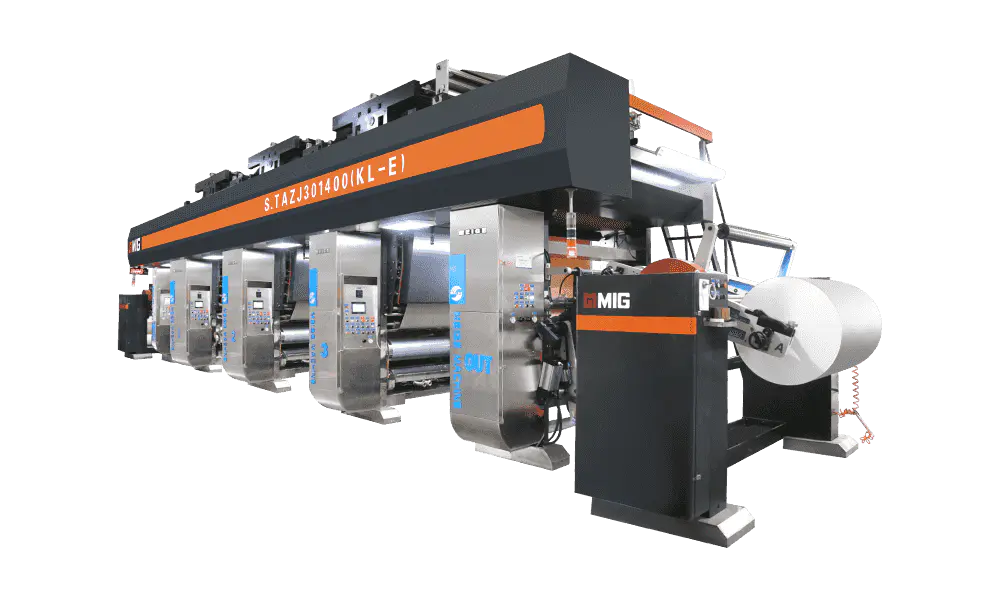
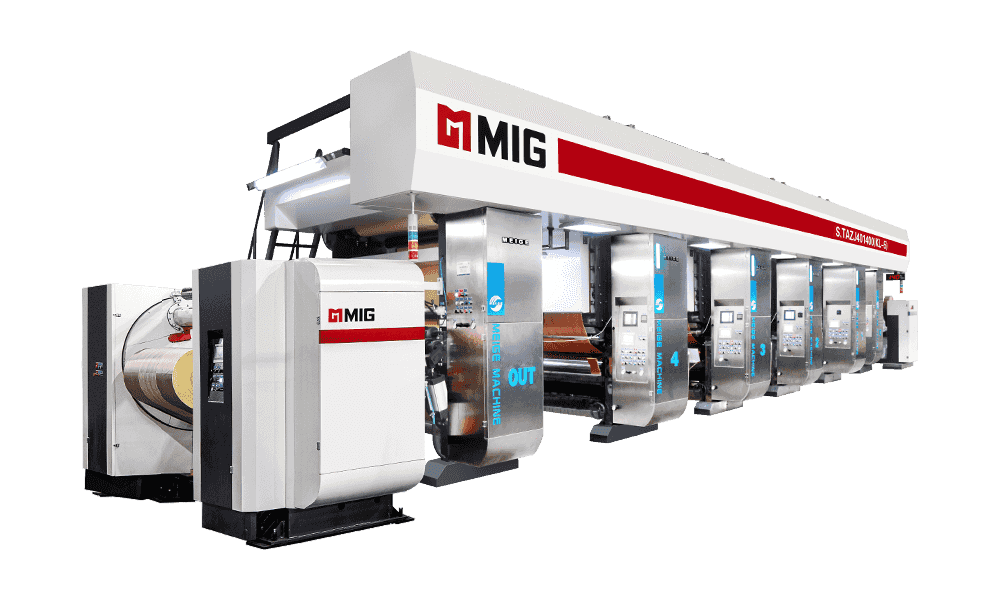
For furniture and cabinet panel paper, the typical run is four to six colors on a 1,400 mm web. The printed surface must match a reference board, and the pattern repeat often involves a large cylinder. A high-speed ELS press in the KL or HL range handles this work well. If your order book also includes wood grain with automatic registration, you can save man-hours by adding an automatic wood grain registration system.
For impregnated and melamine-faced paper, printing is only one step. You also need to apply resin or adhesive and emboss a texture. A combined gravure printing, coating, and embossing line saves floor space and eliminates an additional conveying process. This is where the impregnation base paper printing machine concept becomes relevant: you can print on base paper and then coat it in one continuous pass.
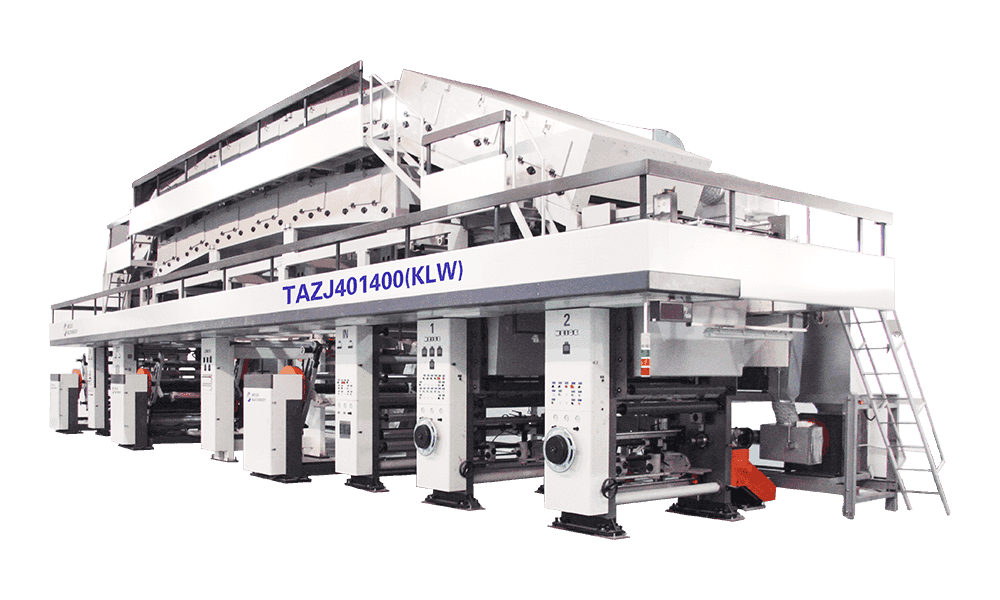 Multifunctional Gravure Printing, Coating, and Embossing Line for Prepreg PaperThis all-in-one unit combines printing, coating, and embossing in a continuous pass, saving floor space and handling. It is specifically designed for pre-impregnated paper, offering full servo control and automated material changes.View Product →
For PVC decorative film, the press configuration differs. PVC film is less porous and more sensitive to tension, so handling and drying need specialized design. For transfer printing paper used in textile or synthetic leather, the machine must accept both oil-based and water-based inks and provide enough color units for a continuous pattern.
If you produce both decorative paper and PVC film, keep in mind that the two materials require different web tension profiles. A press with adaptive tension control across the unwind, in-feed, and rewind sections will reduce stretch on PVC while keeping paper from wrinkling. This is more important than a high-press speed rating.
Choosing the series is not about picking the most powerful press. It is about matching the machine to the material and the finishing steps that follow.
Specifications You Should Compare Before Buying
Use the table below as a starting point when you evaluate a quote. The actual configuration will depend on your web width, pattern repeat, and speed expectations.
| Series | Color groups | Drive type | Typical fit |
|---|---|---|---|
| KL | 4 to 6 | ELS | Medium-high speed furniture paper |
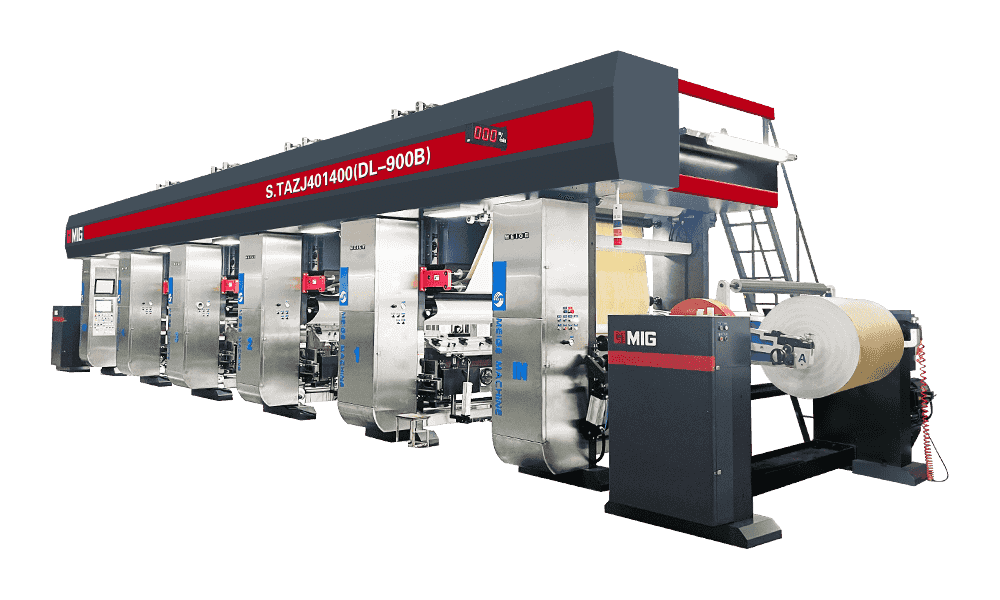
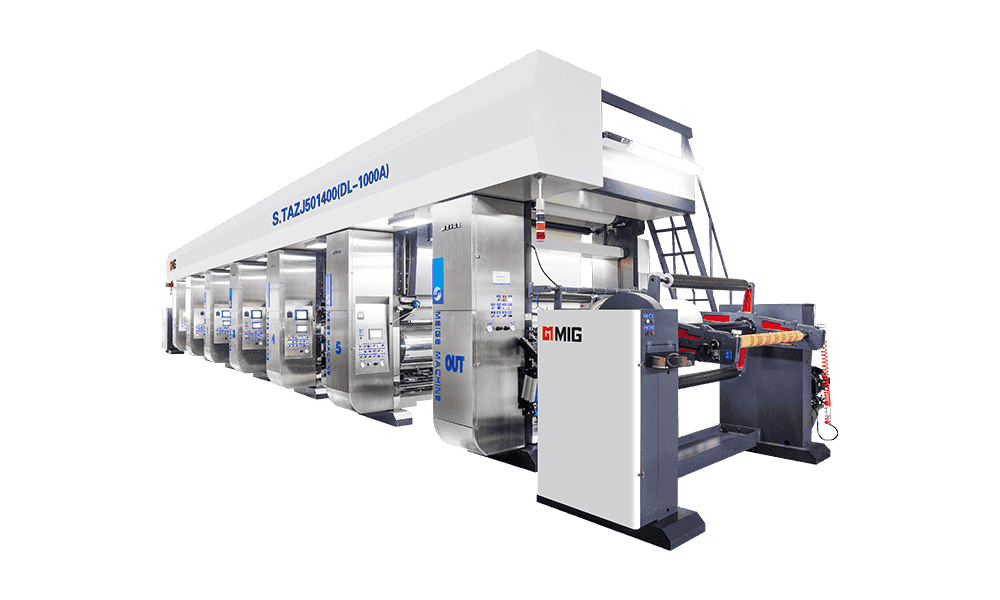
| DL | 4 to 6 | ELS | Large diameter cylinders, long repeat wood grain |
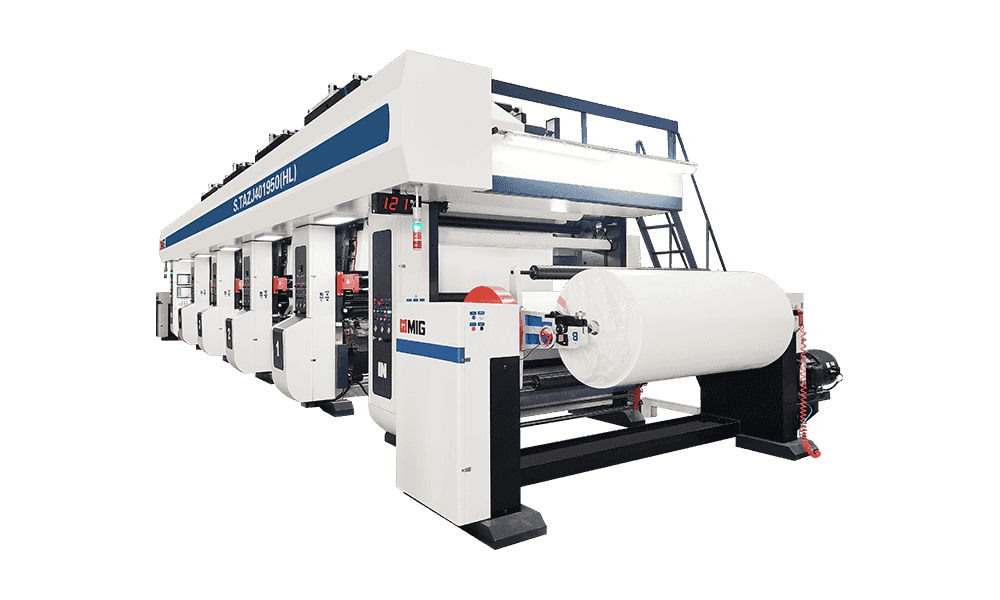
| HL | 6 to 7 | ELS | High color count, complex patterns |
| MG | 4 | ELS | High speed, compact footprint |
| LLW | 4 to 6 | ELS | Printing plus coating and embossing |
Notice that drive type is consistent across these series. That is not a coincidence. Once a factory has invested in electronic shaft technology, it makes sense to use it across the whole product family. It also simplifies operator training and spare parts management.
Beyond the Press: Auxiliary Equipment That Shapes Output
What happens before and after printing consistently determines whether your monthly reject rate stays under 2 percent or creeps toward 5. A clean roller and a protected storage area prevent plate damage and ink residue from entering the next job. An inspection and rewinding station lets you catch defects early, before they reach the customer.
The plate washing process matters more than many buyers expect. If your operators clean rollers manually with solvents, the cleaning time and consistency vary. An automated washing machine reduces solvent exposure and keeps the cells clean. After washing, the rollers need to be stored without touching each other. Intelligent storage systems keep them organized and available for the next order.
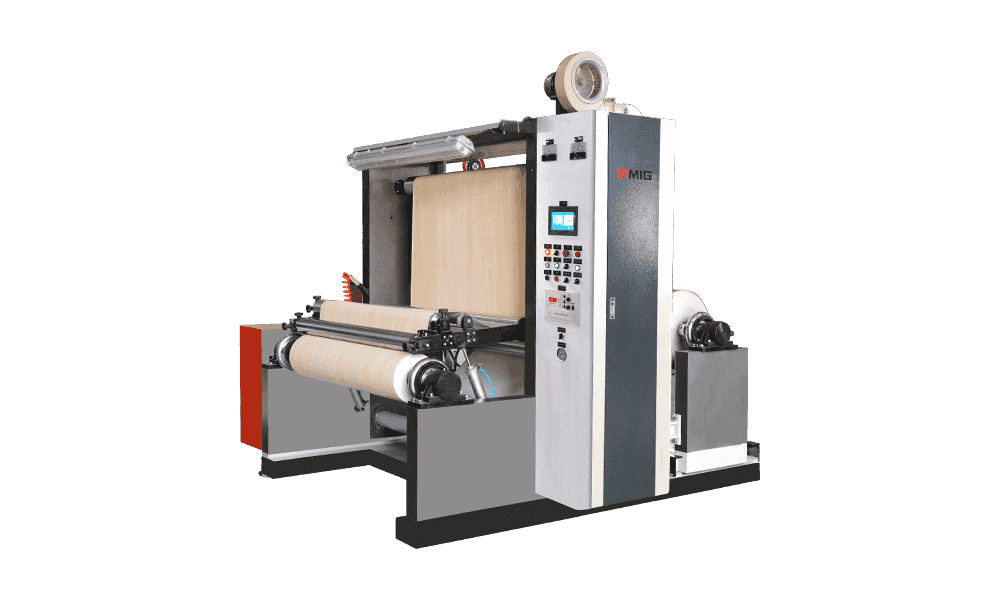 Rewinding and Inspection Machine for Quality Control of Printed Decorative PaperThis machine facilitates final quality inspection, rewinding, and trimming of printed rolls. It features automatic tension control and a large observation area, helping detect defects before lamination to avoid costly waste.View Product →
A rewinding and inspection machine is your final check for print defects. It can trim, splice, and verify the surface before the roll is packed. For decorative paper, this is not a luxury. A single defective roll can hold several thousand square meters, and catching a scratch at the unwind station is far cheaper than having it discovered at the laminating line.
If you are building a long-term production base, you should also consider how the press interacts with sample presses, ink mixers, and logistics equipment. A sample press allows you to test a new design on the actual substrate before committing the full production run. That shortens product development cycles.
Conclusion
A decorative paper gravure printing machine is a long-term investment. The specifications that matter most are not the fastest speed number on a brochure. They are the stability of registration at your typical operating speed, the drying capacity for your ink system, the cylinder diameter for your pattern repeat, and the auxiliary equipment that protects the investment after the press is installed.
Start with your product mix. If you print long-run furniture paper and cabinet panels, choose a machine with ELS drive, enough color units, and adequate drying. If your business includes impregnated paper or PVC decorative film, look for a combined line that can handle coating or lamination. And always budget for the plate washing, storage, and inspection equipment that keeps quality consistent.
A well-matched machine does not just print patterns. It prints the same pattern, repeatedly, shift after shift. That is the real benchmark.
Product Categories
Recommended News
Recommended Products
The variety of models, to meet the development needs of various regions in the world.
Message Us Right Now!
Quick Links
Products
Contact Us
- Phone: +86-13067738802 (Manager Hua)
- Tel: +86-0571-61071715
- Fax: +86-0571-61071706
- Mail: [email protected]
- Add: No.32 Wujiatou, Qingke Village, Jincheng Street, Lin'an District, Hangzhou City, Zhejiang Province

Copyright © Zhejiang Meige Machinery Technology Co., Ltd. All rights reserved.
 Privacy Rotogravure Printing Machine Manufacturers