
 English
 中文简体
中文简体 русский
 فارسی
فارسی عربى
عربى Deutsch
How to Choose a Decorative PVC Printer for High-Volume Film Production
If your production plan is measured in thousands of linear meters of PVC decor film, the choice of a decorative PVC printer decides your cost per roll more than any other variable. A production machine has to hold tight register across a stretchy web, dry heavy ink films without blocking, and stay consistent from roll start to roll end. The most useful way to judge a press is not by its rated maximum speed but by the quality of output at the speed your film can actually tolerate.
This guide is written for film converters and surface finishing plants that need a roll-fed gravure line rather than a short-run digital printer.
Content
- 1 What a decorative PVC printer means in practice
- 2 Why gravure is the usual first choice for PVC decor film
- 3 Technical checklist for a production-grade decorative PVC printer
- 4 Matching press width and color count to your product mix
- 5 Do not stop at the printer: coating, lamination, and embossing
- 6 Final procurement checklist
What a decorative PVC printer means in practice
Searching the phrase "decorative PVC printer" brings up several different machine types. A flatbed UV printer is a decorative PVC printer for rigid sheets and display panels. It handles short runs and personalized work well, but it is not built for continuous kilometer-long rolls of flexible PVC film. In furniture foil, cabinet film, wall panel decoration, and edge banding, the machine that does this work is generally a roll-fed rotogravure press.
This second machine prints by transferring ink from engraved metal cylinders onto a moving web. Because every revolution uses the same engraved cells, the pattern stays consistent after tens of thousands of meters. That repeatability is essential for wood-grain, stone, and abstract designs that have to match across different production lots.
A line organized this way is often described as a decorative PVC film printing machine. It contains an unwind, an infeed tension zone, printing stations, inter-station dryers, and a rewind. Additional stations can apply a base coat, topcoat, or protective layer before the film reaches the winder.
Why gravure is the usual first choice for PVC decor film
Film converters choose gravure for PVC decoration because of ink laydown and repeatability. Gravure cylinders hold ink in thousands of small cells, and the doctor blade removes only the excess ink from the cylinder surface. The result is a dense, controlled color deposit that survives the solid colors and fine detail common in decorative patterns.
PVC film is smoother and less absorbent than paper. It does not pull solvent into its surface, so the printed image depends on the dryer to remove solvent before the next printing station. A press designed for film needs longer dryer paths, adjustable air volume, and stable web temperatures. This is one reason why a converted paper gravure press often performs poorly on PVC film.
Wood-grain printing also demands clean transitions between tone levels. Rotogravure reproduces natural grain because the engraved cell depth controls tonal density, not a halftone dot that may become visible at normal viewing distance. That characteristic keeps gravure at the center of decorative PVC printing projects.
Technical checklist for a production-grade decorative PVC printer
Before comparing models, write down what your finished film has to pass: color match, adhesion, gloss, flexibility, and surface defects. Then check the machine areas below, because each one affects a different part of the printed roll.
| Area | Why it matters for PVC film | What to verify |
|---|---|---|
| Drying and web temperature | Too much heat makes PVC film relax and stretch; too little heat leaves solvent trapped. | Dryer length, air velocity, exhaust volume, and temperature settings for each zone. |
| Tension control | Thin film stretches easily, which shifts color-to-color register. | Dancer and load-cell positions, minimum tension setting, and automatic taper control. |
| Registration and drive type | Mechanical line shafts can accumulate error across long runs. | Electronic shaft drive availability and register tolerance during starts and stops. |
| Cylinder capacity | Pattern repeat length depends on cylinder diameter and circumference. | Maximum cylinder size, quick-change system, and repeat range for your design library. |
| Unwind and rewind quality | Poor winding creates telescoped rolls, edge damage, and blocked rolls. | Core gripping, rewind diameter, tension profile, and automatic splicing options. |
After checking these machine-level features, ask how the surrounding room affects the work. Temperature and humidity changes modify both PVC film width and ink viscosity. A consistent pressroom environment is therefore part of the printing system, not an optional facility detail.
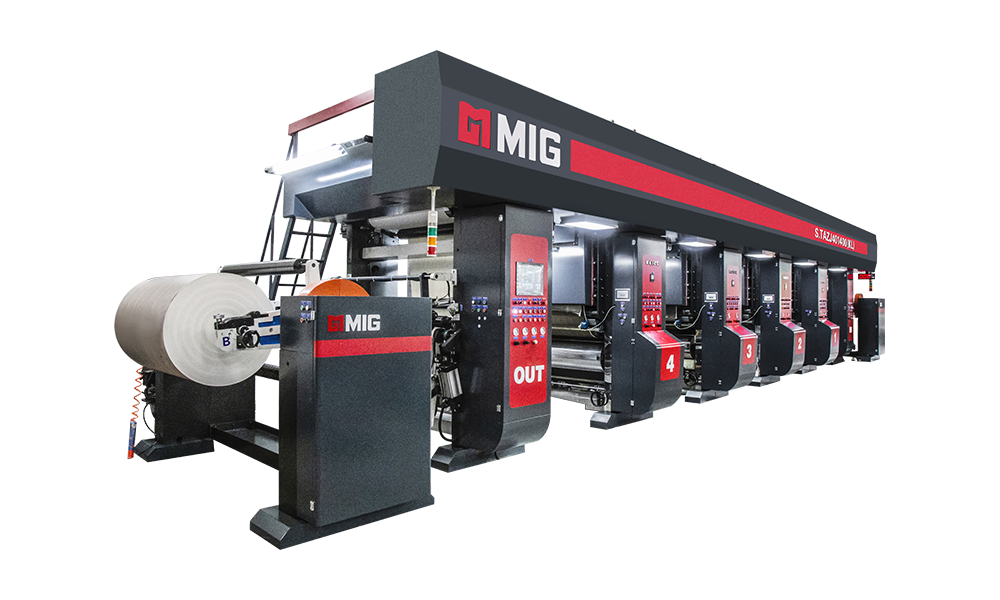
Meige's PL450 is a practical example of a dedicated decorative PVC printer. It is a four-color, high-speed electronic-shaft press designed for PVC film rather than a modified paper machine.
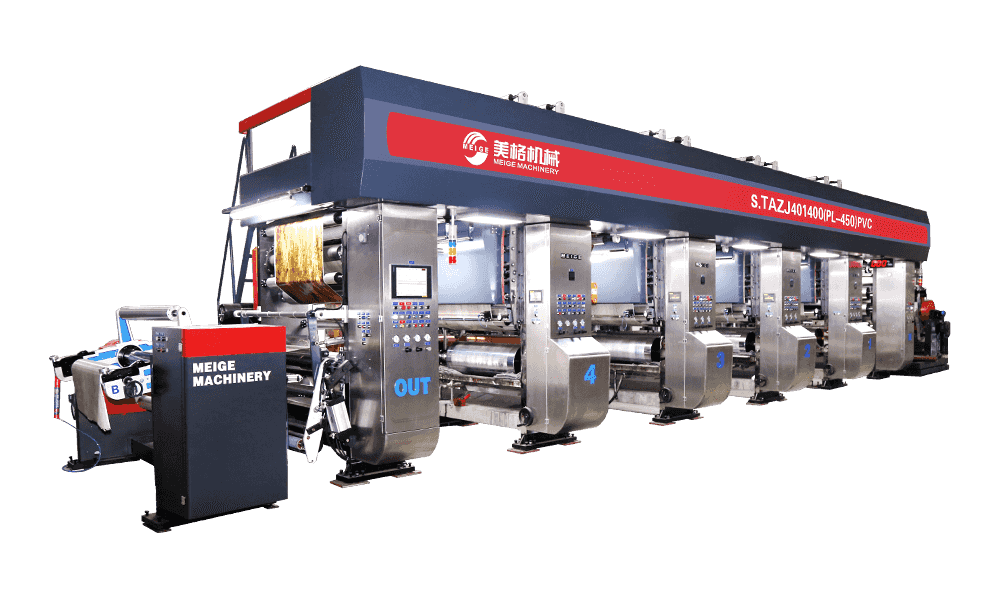 S.TAZJ401400 (PL450) 4-Color ELS PVC Gravure Printer for Decorative FilmA four-color high-speed electronic-shaft gravure press built specifically for PVC composite and floor film, featuring servo synchronization and automated material handling. It suits producers focusing on standard 1,400 mm class decorative film printing.View Product →
Matching press width and color count to your product mix
The right color count depends on the design system. Four stations are enough for many three-color wood and marble patterns when one station is used for a base or topcoat. A six-color line adds flexibility for more complex decorative layers, and a seven-color line is common when the producer wants to print full-color effects with less ink overlap.
The web width should match your most profitable finished roll width. Wide presses can always run narrower material, but they consume more floor space and require larger rolls in handling and storage. A narrower machine may give faster changeovers for a short-run product line.
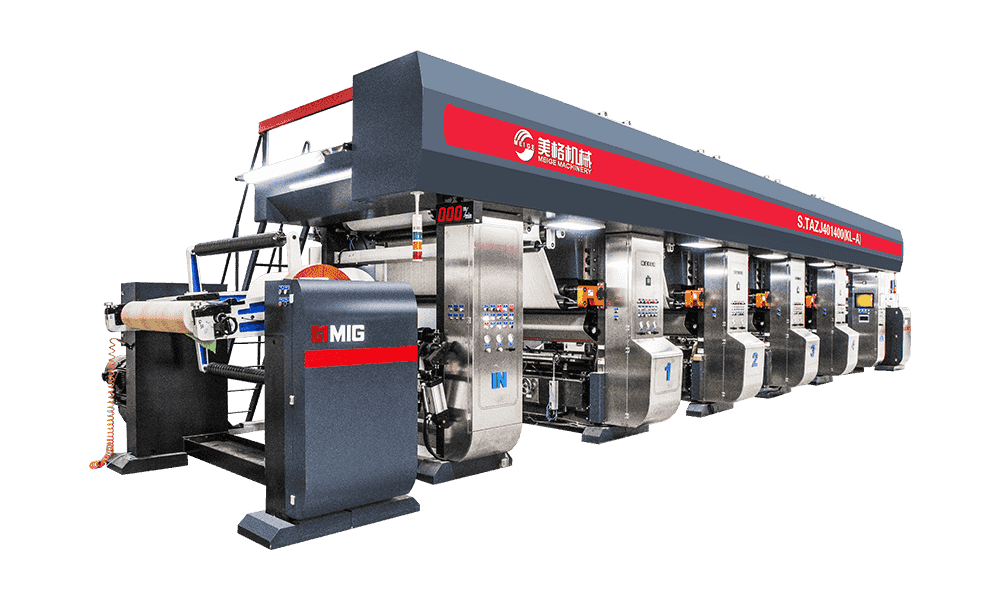
If your volume is centered on 1,400 mm class film, a PL450 line is a straightforward fit. When your production plan calls for wider decorative film and larger cylinder capacity, the PL800 is the higher-output configuration in the same PL family.
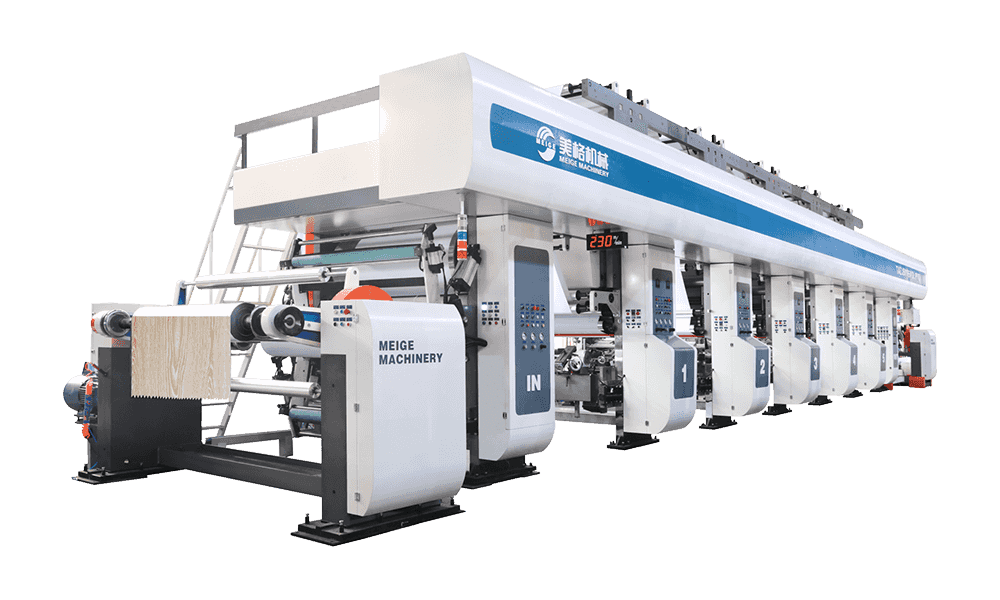 S.TAZJ501650 (PL800) Large-Diameter ELS PVC Gravure Printing MachineAn extra-large-diameter PVC printing machine from the PL family for wider formats and larger cylinder capacity (Ф 280–800 mm). It supports 4- and 5-foot widths, making it suitable for higher-output engineered wood decorative film production.View Product →
Do not stop at the printer: coating, lamination, and embossing
Printed PVC film is rarely the final surface. It may need a protective topcoat, a clear overlay film, or an embossed texture to match the printed wood grain. These finishing operations change the pressure, temperature, and tension that the printed roll must survive.
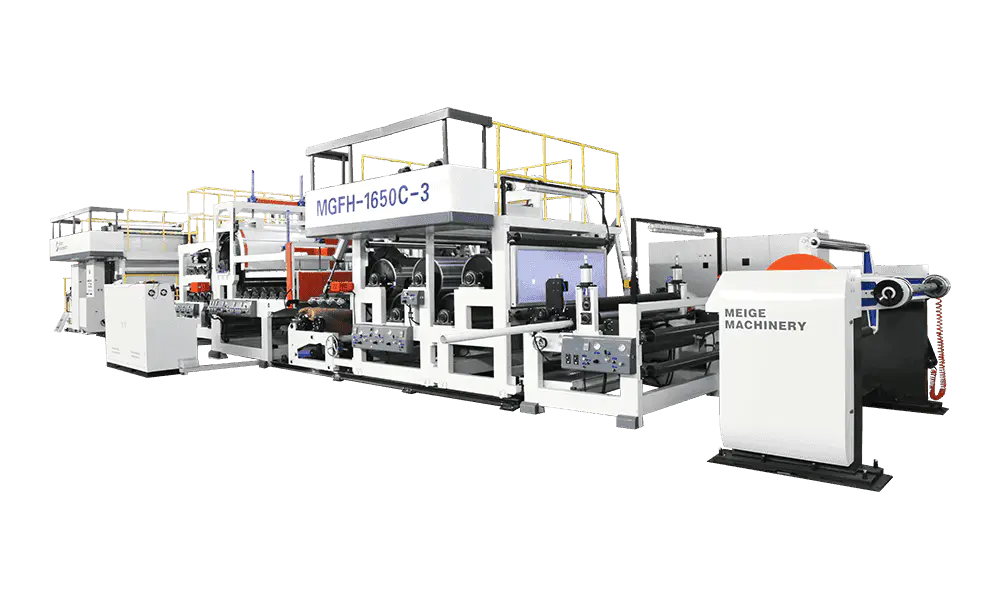
A decorative PVC printer purchase should therefore be evaluated together with the coating and laminating steps that follow it. If your final product is a two- or three-layer construction, a glueless lamination and embossing line removes the cost and complexity of solvent-based adhesives while protecting the printed layer.
Meige builds this downstream step as a separate line in the FH series, so the printer and the finishing system can be specified as one integrated production flow rather than as unrelated machines.
Final procurement checklist
After you have narrowed the list to one or two decorative PVC printer models, use the following practical checks before placing an order:
- Run the actual PVC film grade you will use, at the speed you intend to run commercially.
- Print a long enough repeat to see color consistency across roll changes and cylinder changes.
- Observe register recovery after a normal stop, an emergency stop, and a re-start.
- Measure the web temperature profile through the dryer to confirm the film is not being damaged.
- Check whether the supplier can quote a complete package: printing, coating, lamination, rewinding, and cylinder handling.
- Ask for distance, commissioning, training, and spare parts support before you sign.
A decorative PVC printer is not a single machine; it is the center of a material flow that starts with raw film and ends with a protected, embossed surface. If you evaluate only the printing station, you may buy a fast press and have a weak production line. If you evaluate drying, tension control, finishing integration, and ease of changeover, you will get the roll quality your customers can rely on.
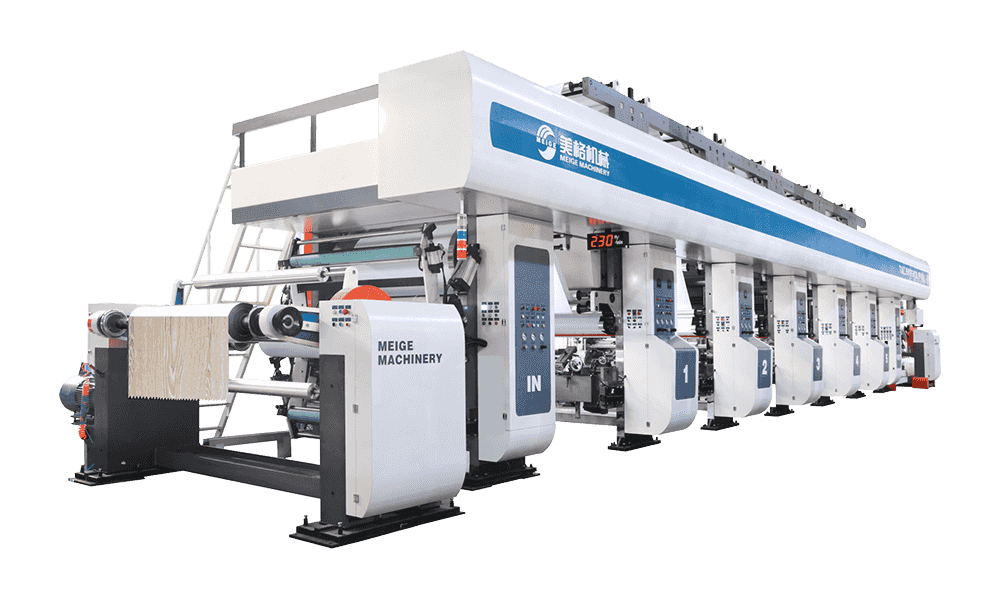
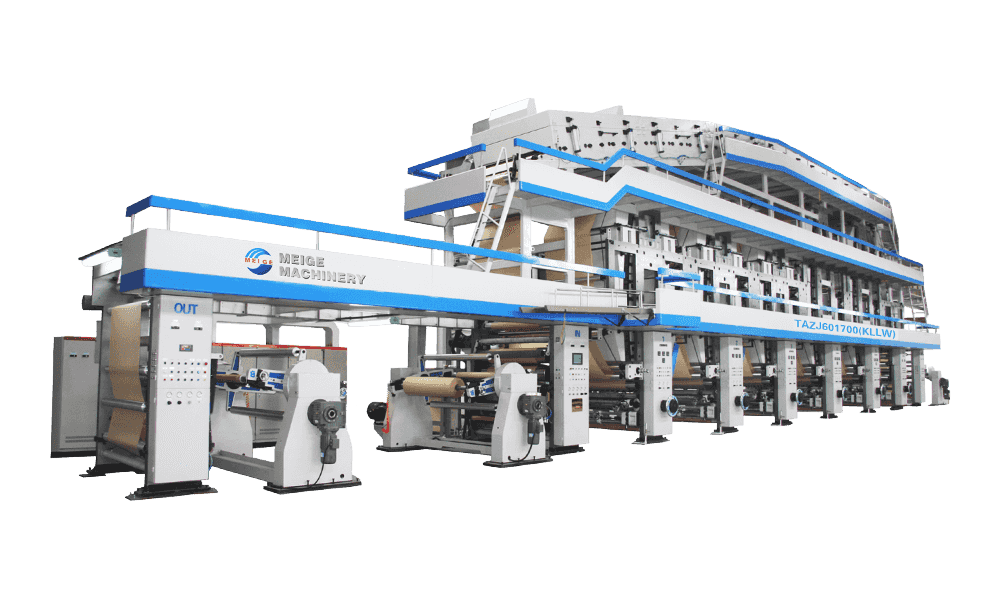
Recommended Products
The variety of models, to meet the development needs of various regions in the world.
Message Us Right Now!
Quick Links
Products
Contact Us
- Phone: +86-13067738802 (Manager Hua)
- Tel: +86-0571-61071715
- Fax: +86-0571-61071706
- Mail: [email protected]
- Add: No.32 Wujiatou, Qingke Village, Jincheng Street, Lin'an District, Hangzhou City, Zhejiang Province

Copyright © Zhejiang Meige Machinery Technology Co., Ltd. All rights reserved.
 Privacy Rotogravure Printing Machine Manufacturers