
 English
 中文简体
中文简体 русский
 فارسی
فارسی عربى
عربى Deutsch
How a Rotogravure Printing Machine Works and Why So Many Factories Use It
Content
What Is a Rotogravure Printing Machine?
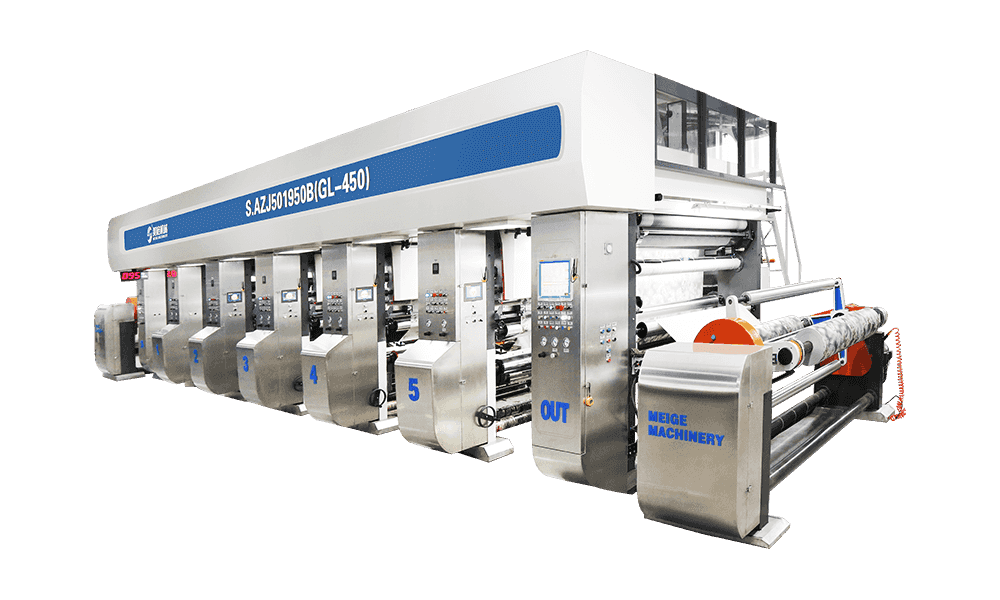
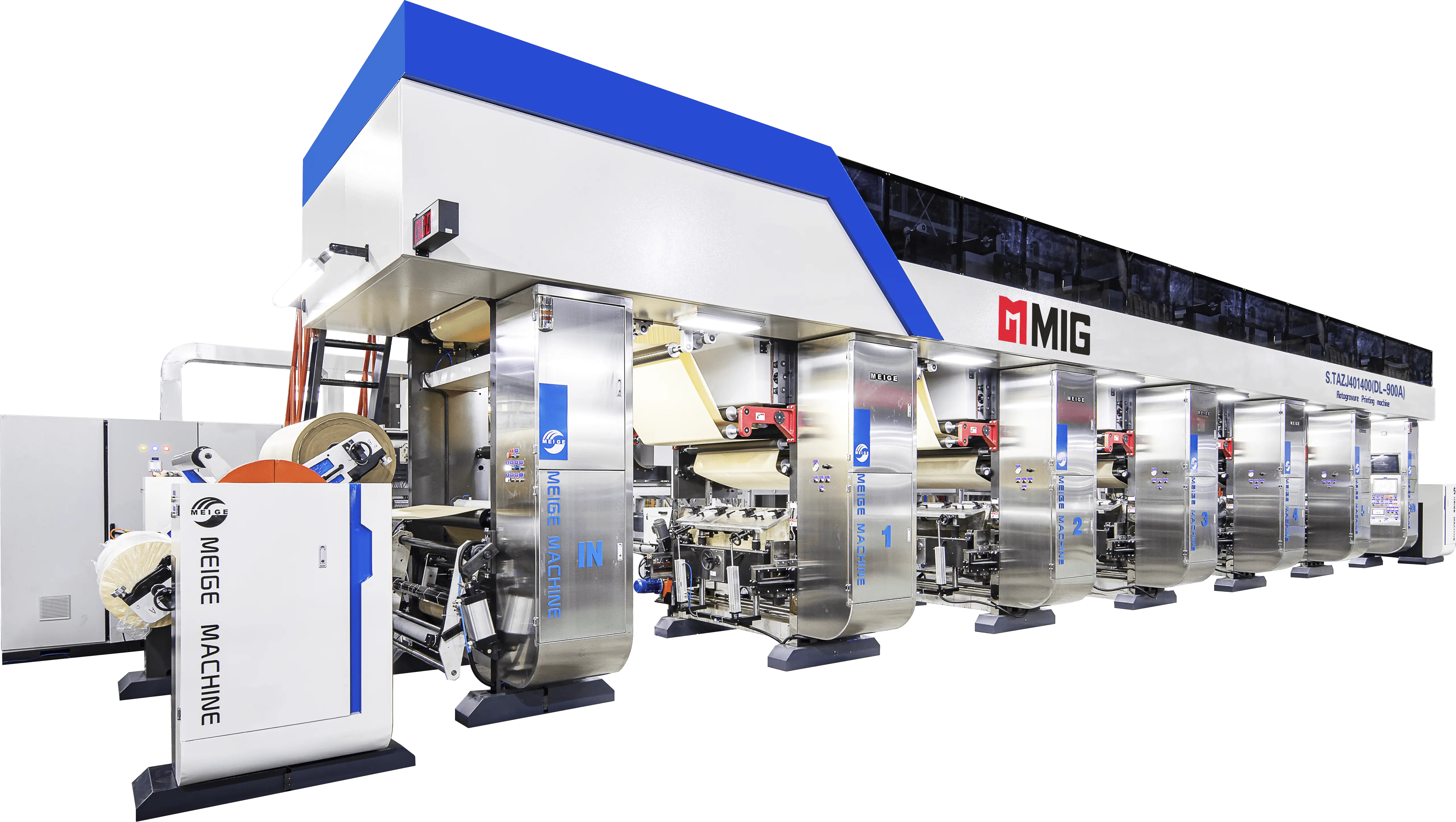
A Rotogravure Printing Machine is a high-speed industrial printing system widely used for large-scale printing tasks such as flexible packaging, plastic films, decorative paper, and labels. Unlike other printing technologies, rotogravure printing transfers ink from engraved cylinders directly onto the substrate. These engraved cells hold precise amounts of ink, allowing the machine to produce sharp images, rich colors, and consistent print quality even during long production runs.
Because of its stability and excellent color reproduction, the rotogravure printing process is commonly used in industries that require mass production and high image quality. Many packaging manufacturers rely on rotogravure printing machines to print food packaging, snack wrappers, cosmetic packaging, and pharmaceutical materials.
How a Rotogravure Printing Machine Works
The working principle of a rotogravure printing machine is based on engraved printing cylinders. Each cylinder contains thousands of tiny engraved cells that carry ink. During operation, the cylinder rotates through an ink fountain, and the cells fill with ink. Excess ink on the surface is removed by a doctor blade so that only the ink inside the cells remains.
When the substrate—such as plastic film, paper, or aluminum foil—passes between the printing cylinder and the impression roller, the ink transfers from the engraved cells onto the material. This process repeats for each color unit, allowing multi-color printing with excellent alignment and consistency.
Main Printing Process
- Ink filling: The gravure cylinder rotates through the ink tray.
- Doctor blade cleaning: Excess ink is scraped off the cylinder surface.
- Ink transfer: Ink inside the engraved cells transfers onto the substrate.
- Drying process: A drying system removes solvent before the next color is printed.
Key Components of a Rotogravure Printing Machine
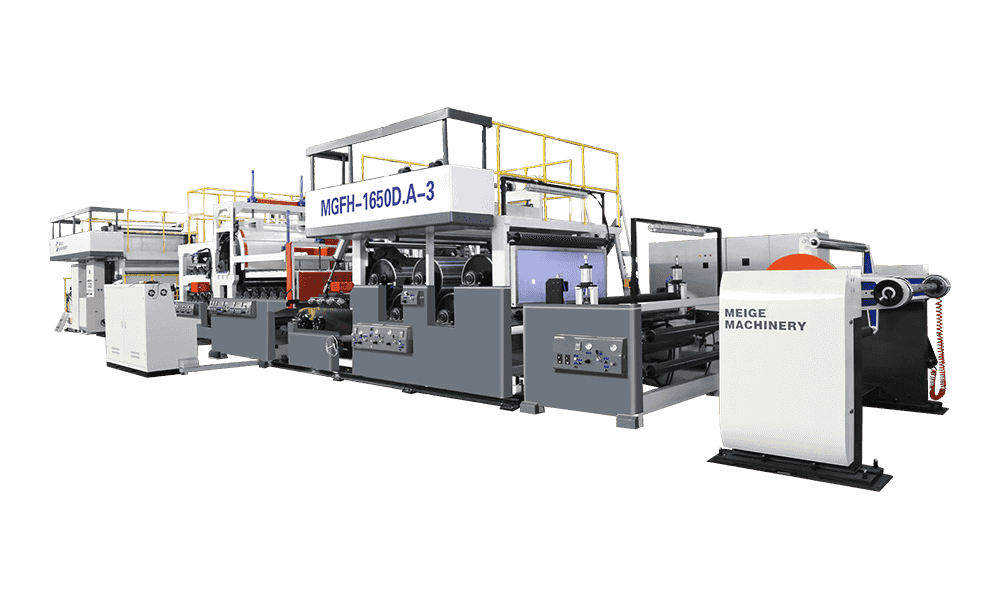
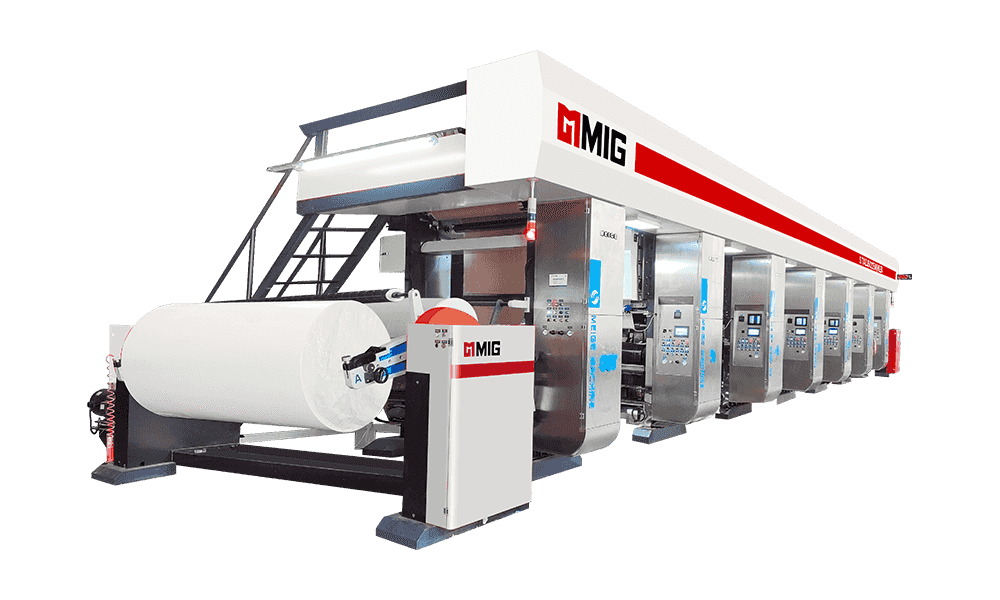
A typical rotogravure printing machine contains several essential components that ensure precise printing and stable production. Each part plays an important role in maintaining print quality and production efficiency.
| Component | Function |
| Gravure Cylinder | Engraved roller that stores and transfers ink to the substrate. |
| Doctor Blade | Removes excess ink from the cylinder surface. |
| Impression Roller | Presses the substrate against the printing cylinder. |
| Drying System | Evaporates solvent after each printing unit. |
| Unwinding & Rewinding Unit | Controls material feeding and finished roll collection. |
Advantages of Using a Rotogravure Printing Machine
Many manufacturers choose rotogravure printing machines because they deliver excellent print quality and reliable production performance. While the initial cylinder cost can be higher than other printing technologies, the long-term efficiency often makes it worthwhile for high-volume production.
- Exceptional print quality with rich and consistent colors.
- Very high printing speeds suitable for mass production.
- Stable performance during long production runs.
- Excellent for printing on flexible materials like plastic films and foils.
- High durability of printing cylinders for repeated jobs.
Common Applications of Rotogravure Printing Machines
Rotogravure printing technology is commonly used in industries where large volumes and high-quality graphics are required. Its ability to handle different substrates makes it especially popular in packaging and decorative printing.
- Flexible packaging such as snack bags, coffee pouches, and frozen food packaging.
- Plastic film printing for household and industrial products.
- Decorative paper for furniture and laminate panels.
- Label printing for consumer goods.
- Gift wrap and wallpaper printing.
How to Choose the Right Rotogravure Printing Machine
Selecting the right rotogravure printing machine depends on several production factors. Companies should evaluate their printing materials, production volume, and required print quality before making a decision. A well-matched machine can significantly improve production efficiency and reduce operational costs.
Important Selection Factors
- Maximum printing width and number of color stations.
- Compatible materials such as plastic film, paper, or foil.
- Printing speed and production capacity requirements.
- Drying system efficiency and energy consumption.
- Automation level and registration accuracy.
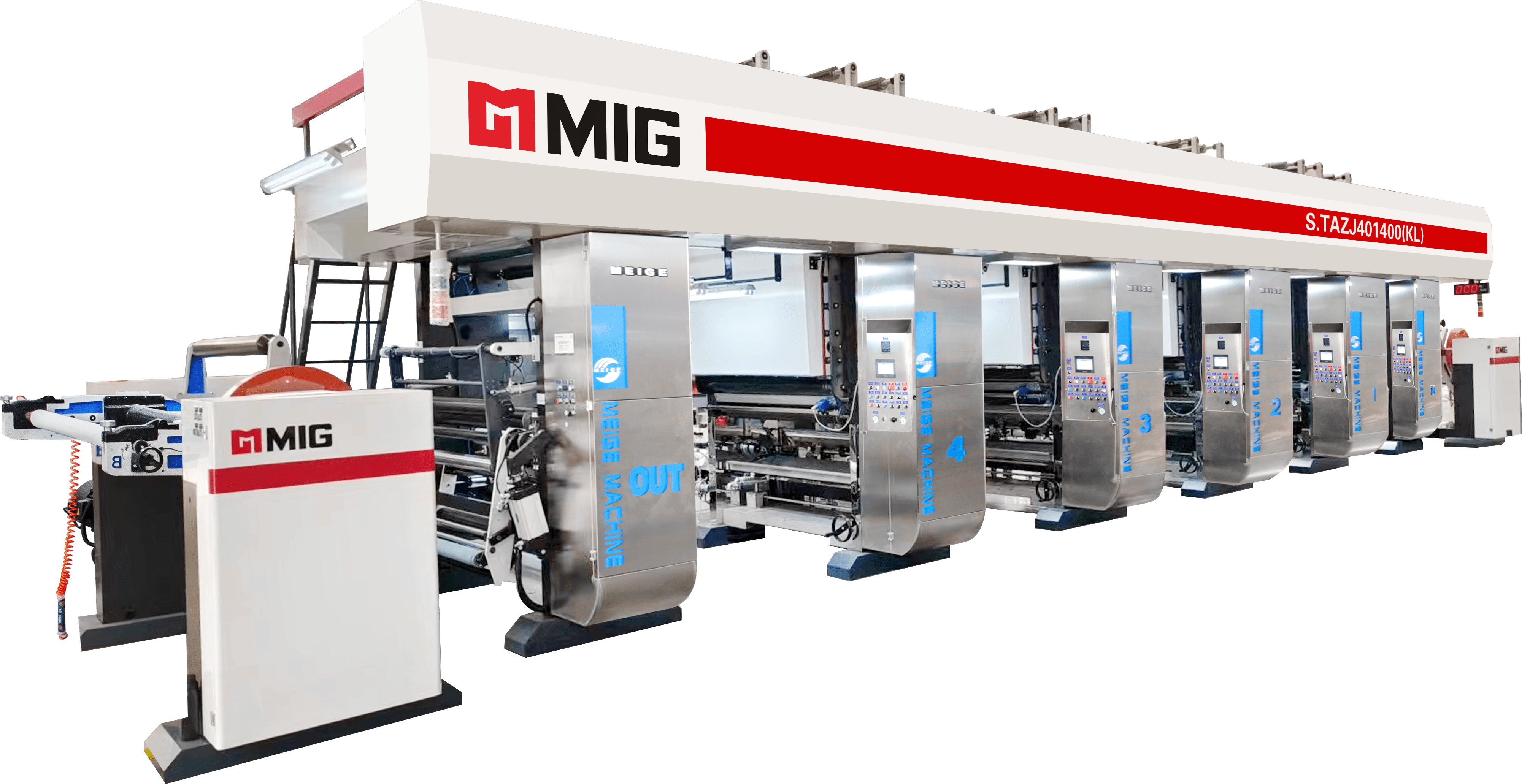
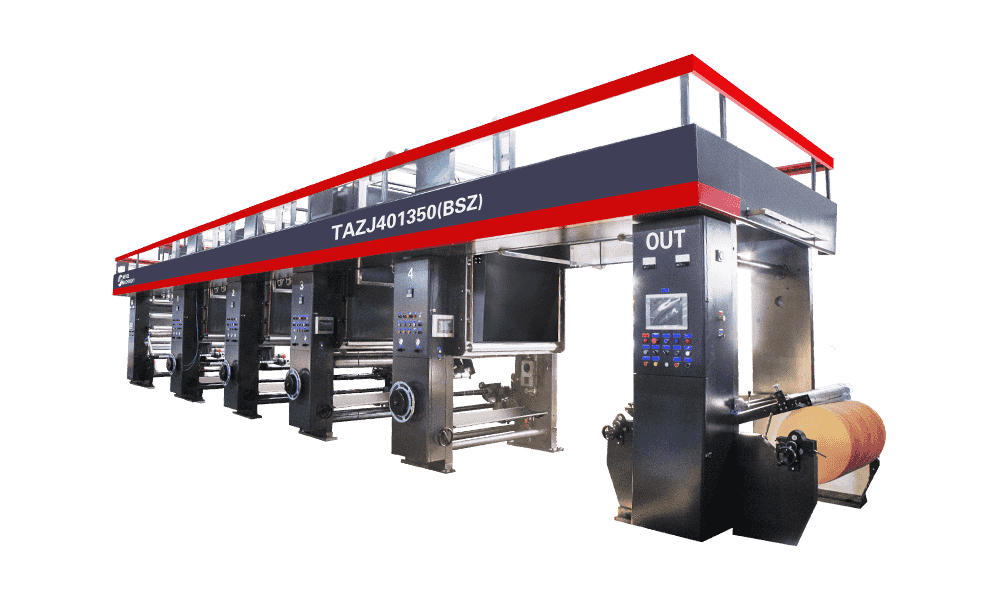
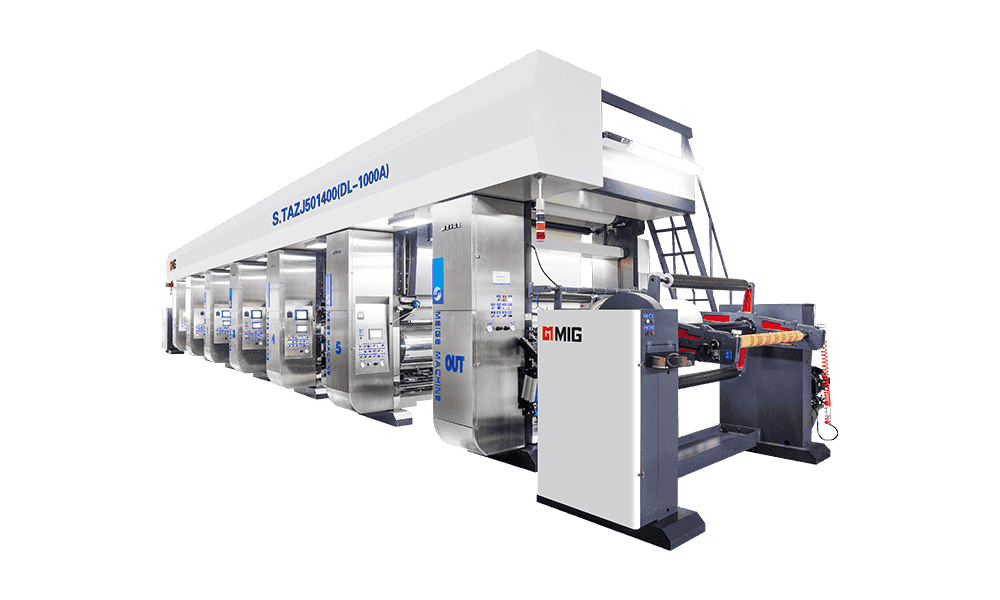
Modern rotogravure printing machines often include automated tension control, digital registration systems, and advanced drying technology. These features help manufacturers maintain stable quality while increasing productivity and reducing material waste.
Recommended Products
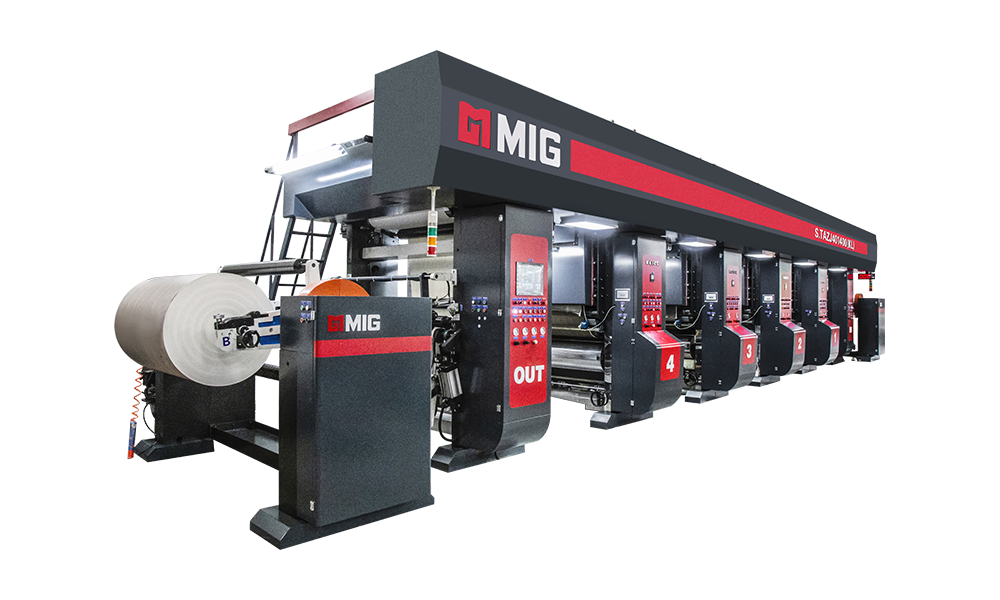
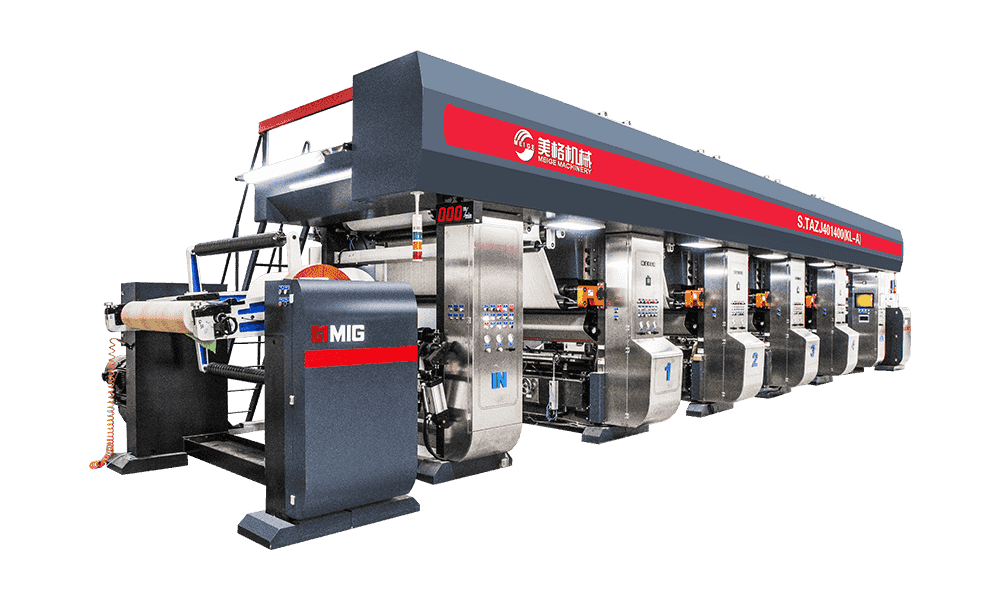
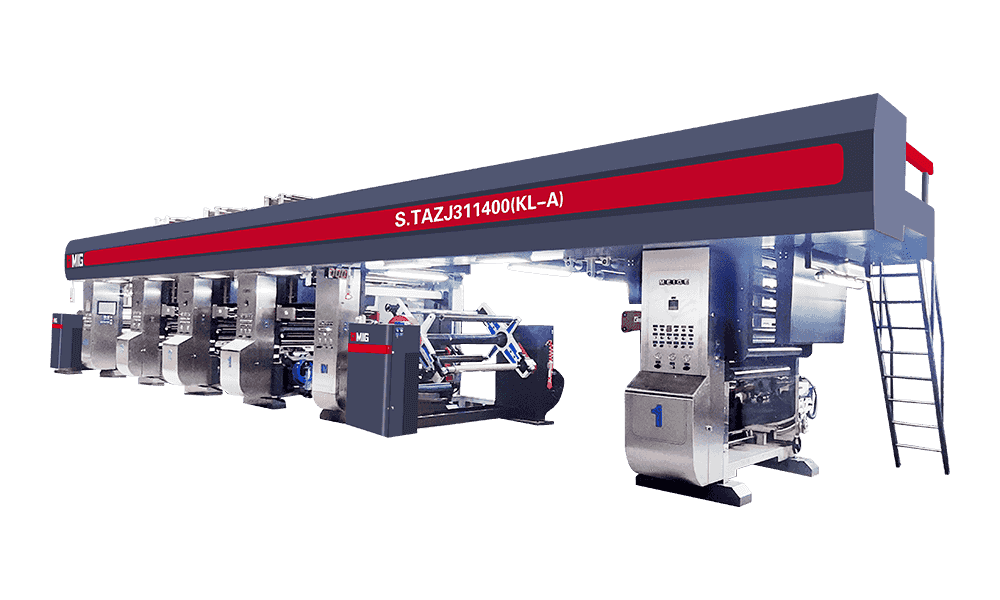
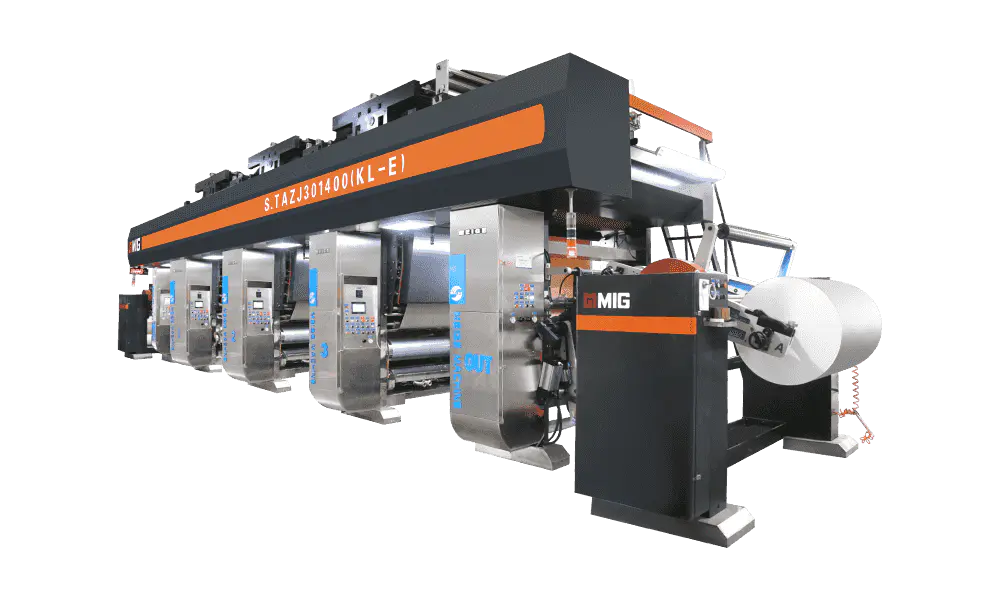
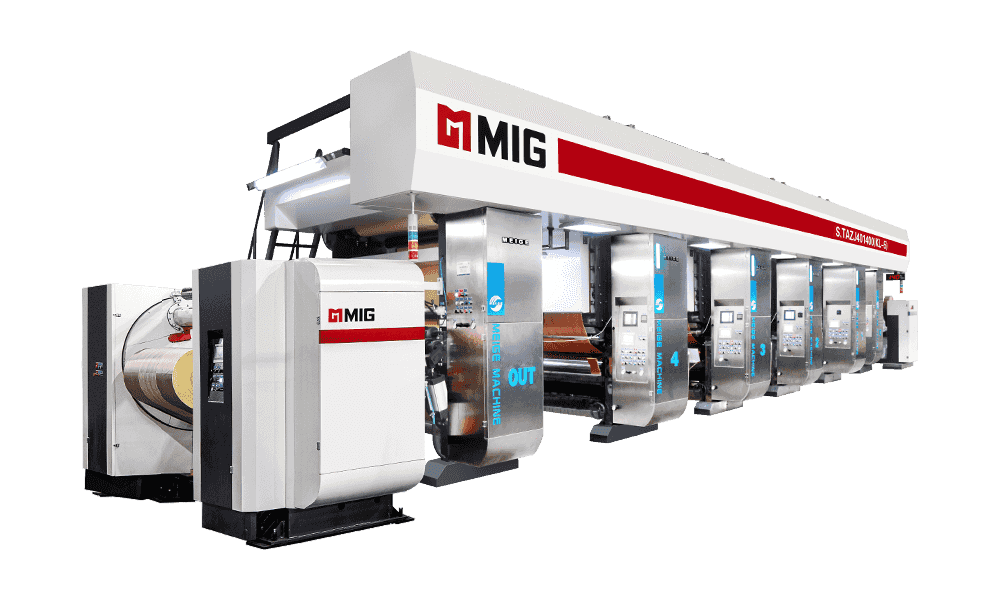
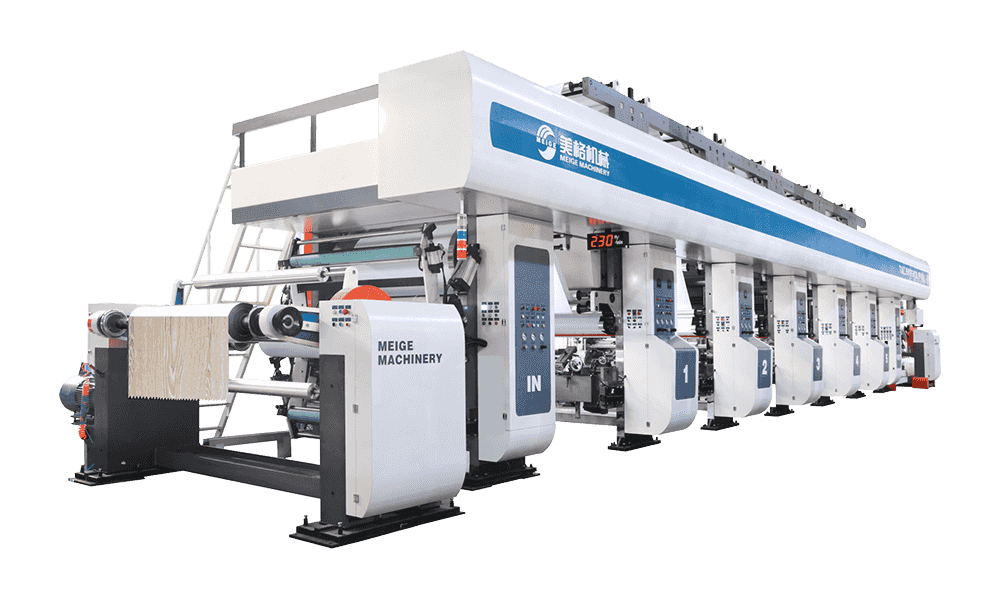
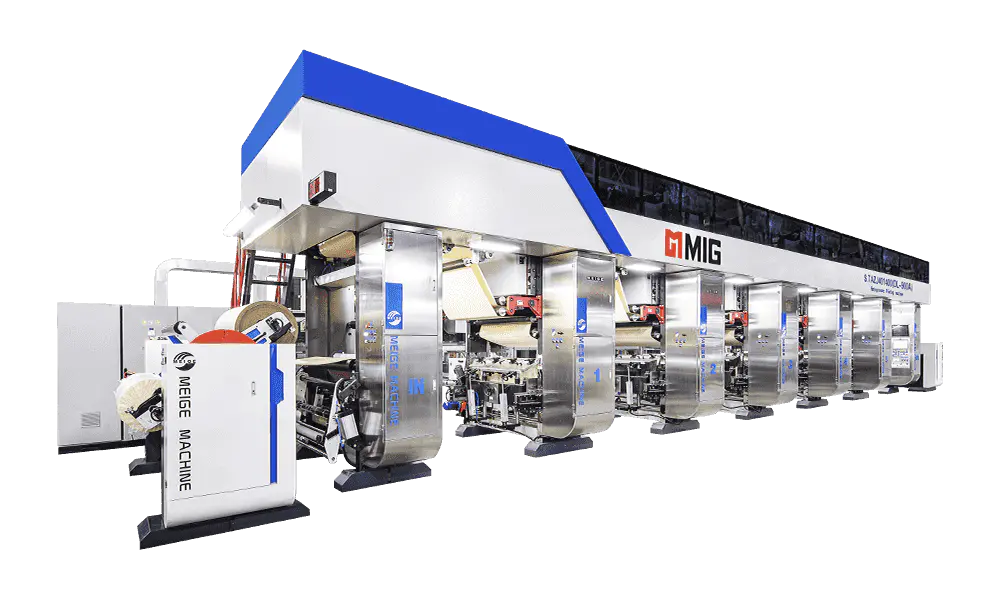
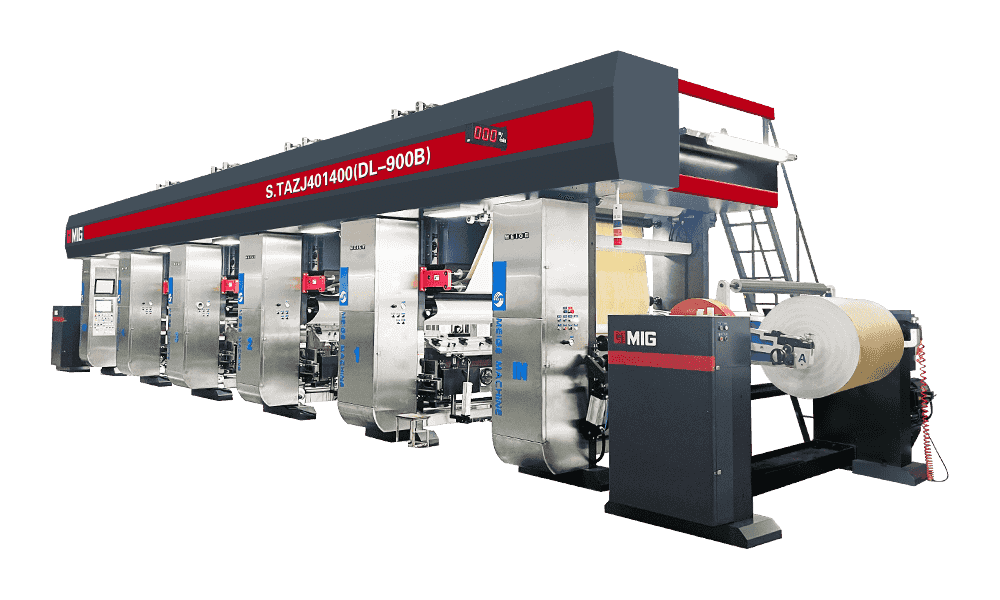
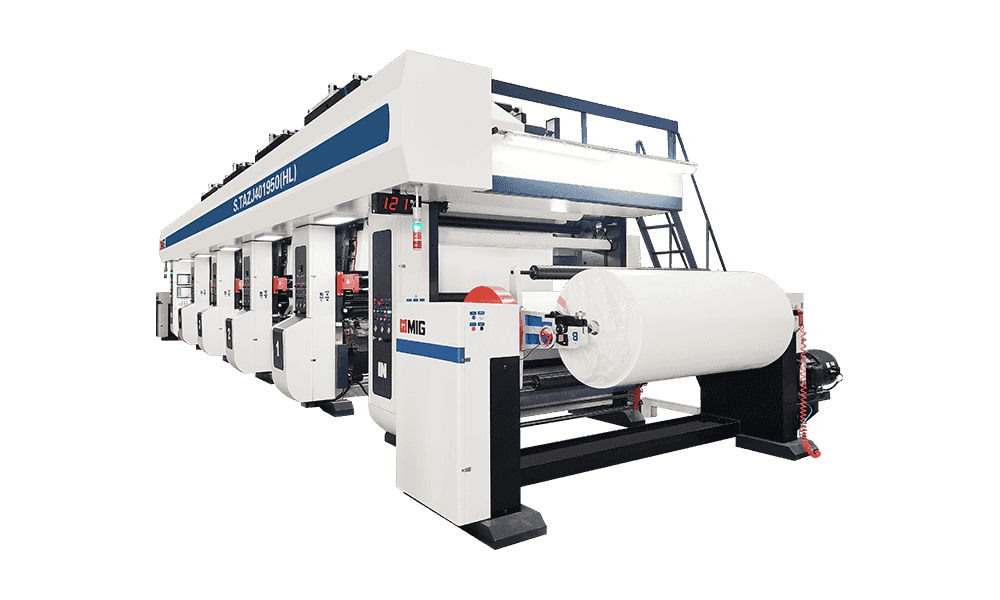
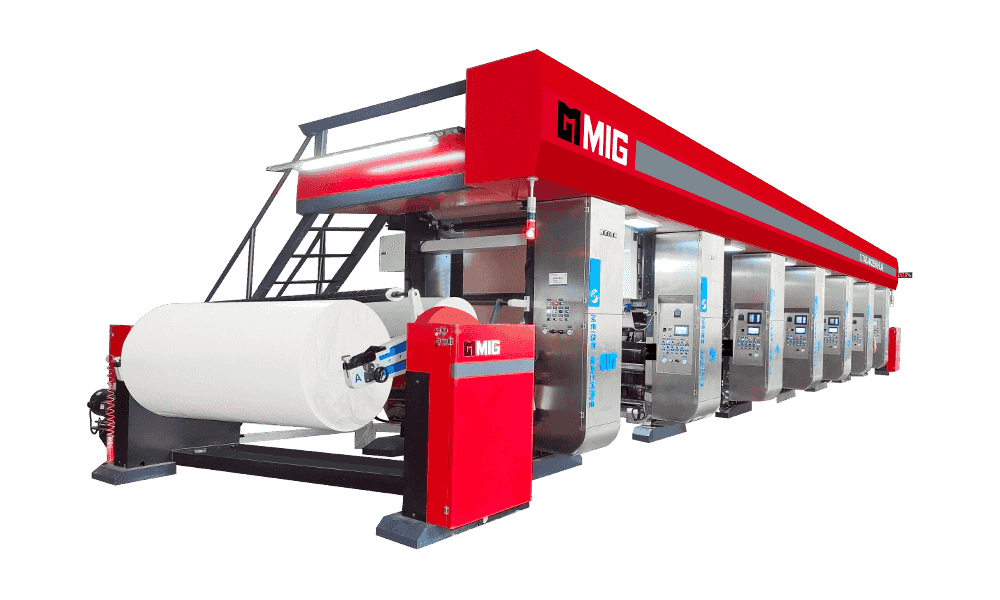
The variety of models, to meet the development needs of various regions in the world.
Message Us Right Now!
Quick Links
Products
Contact Us
- Phone: +86-13067738802 (Manager Hua)
- Tel: +86-0571-61071715
- Fax: +86-0571-61071706
- Mail: [email protected]
- Add: No.32 Wujiatou, Qingke Village, Jincheng Street, Lin'an District, Hangzhou City, Zhejiang Province

Copyright © Zhejiang Meige Machinery Technology Co., Ltd. All rights reserved.
 Privacy Rotogravure Printing Machine Manufacturers